
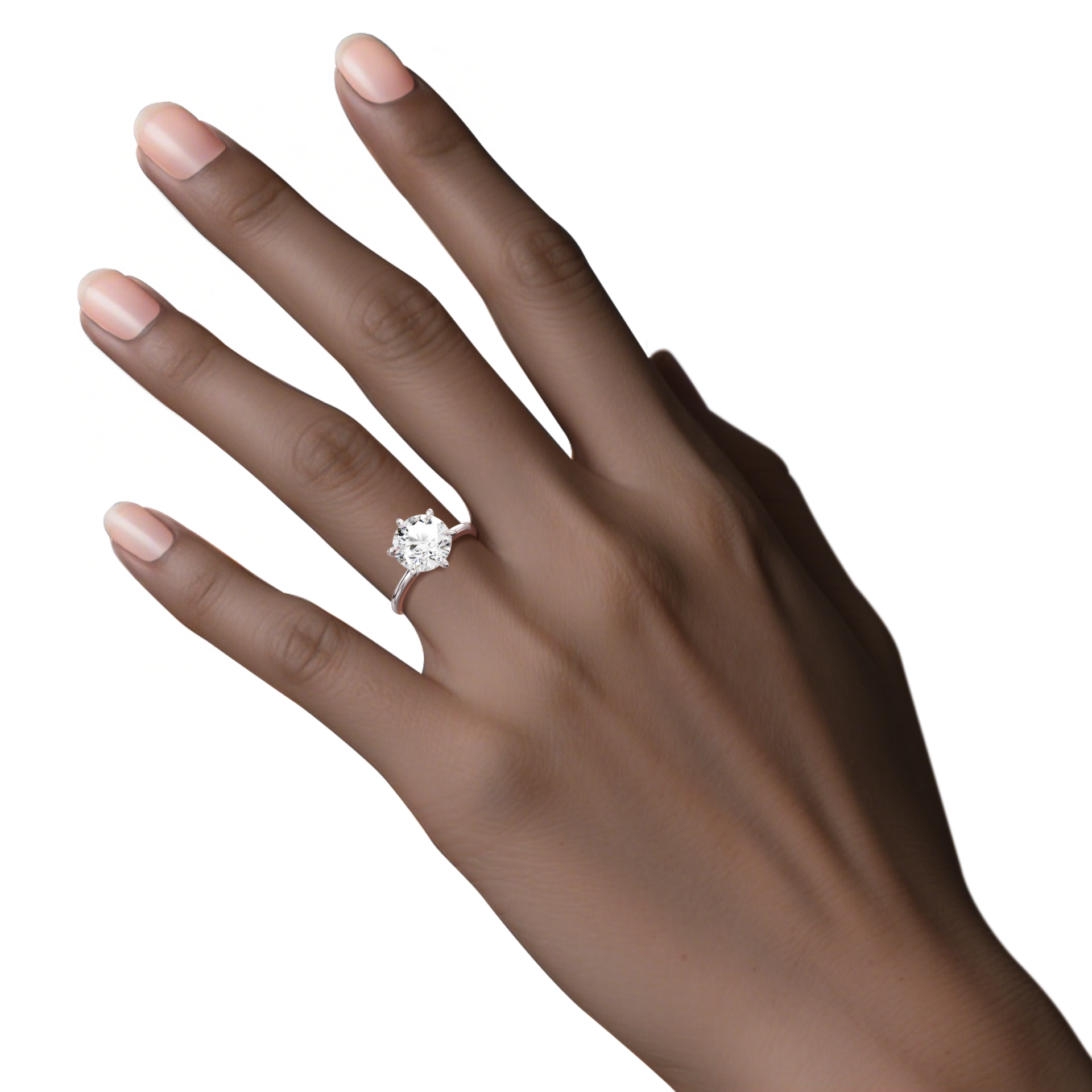
Comparative Lens: Where Ethics Meets Optics
Define the choice, define the risk profile. In the high-stakes moment of choosing lab created diamond wedding rings, the decision carries both sentiment and duty of care. Picture a couple under time pressure, budget in hand, browsing cases that gleam under LED spots (not unlike a contract review at 5 p.m.). Some lean toward an emerald and diamond wedding ring to balance color with fire. Recent trade data shows lab-grown share rising year-over-year, while disclosure rules tighten and provenance audits increase. So the scene is set: beauty, cost, and compliance. But which ring structure actually meets a reasonable standard of diligence for daily wear and long-term value? Let’s move from the display case to the facts, and ask the only question that matters: what protects your interests and your finger?

Here, a few technical anchors help. Hardness is not the same as toughness. A diamond’s lattice is Mohs 10 and Type IIa stones can be near-nitrogen-free, yet settings and wear patterns still govern durability. Mined supply chains can be opaque; lab channels allow tighter chain-of-custody and batch-level grading. The issue is simple and complex at once — funny how that works, right? We now transition from the surface shine to the structural truth.

Deeper Layer: The Hidden Gaps in Traditional Pairings
Why do classic mixes struggle in daily wear?
Let’s center the real-world use of an emerald and diamond wedding ring. Emeralds bring lush color, yet they often carry fissures that are oil- or resin-filled. That is routine, but it is still a treatment. In daily knocks, those fills can weep or cloud. Diamonds, by contrast, are ultra-hard, and their edge can abrade adjacent stones if the micro-prongs or channel edges are misaligned. The flaw in the old solution is not romance; it is mismatch. Mohs 7.5–8 on one side, Mohs 10 on the other. Add soap, heat, or ultrasound cleaning, and the emerald’s inclusion profile can shift. Meanwhile, mined sourcing may rely on fragmented documentation, making warranty and repair chains slow and uncertain.
Now the lab part. HPHT and CVD growth let designers spec diamond size, girdle thickness, and fluorescence to support protective settings. You can cut pavilion depth and crown angle with intent, so the diamond halo shields the emerald rather than rubs it. Look, it’s simpler than you think: align material science with setting geometry, and half the “mystery repairs” vanish. The pain point most buyers feel—chips, clouding, or loose micro-pavé after a year—is not bad luck. It is an engineering gap. Better lattice control, tighter tolerances, and transparent grading close it without inflating cost. That is the quiet upgrade many couples actually need.
Forward Look: Principles That Future-Proof the Ring
What’s Next
Here is the technology story, in plain terms. CVD chambers grow Type IIa diamonds with low nitrogen and minimal strain. That means cleaner scintillation and fewer stress traps at the girdle. HPHT post-treatments can fine-tune color without masking inclusions. Pair that with CAD/CAM modeling and finite-element checks, and you can place prongs and bezels to diffuse impact on the emerald. In other words, the lab-built diamond does double duty: it shines and it stabilizes. When you compare mined mixes with calibrated lab diamond wedding rings, the latter enable design choices that are preventive rather than reactive—fewer emergency resets, fewer “what happened?” calls. That reduces lifecycle cost and keeps the ring within a sane maintenance schedule. Small detail, big result.
We can square the circle. The earlier section showed the mismatch risk; this one shows the control levers. Better growth control (HPHT/CVD), smarter angles, and verified chain-of-custody add up to less friction. So, how should you evaluate options today? Use three practical metrics: (1) material compatibility, tested by hardness, toughness, and inclusion treatments disclosed in writing; (2) setting engineering, shown by prong geometry, halo clearance, and polishing that will not abrade the emerald; and (3) documentation integrity, including growth method, grading report, and repair pathway. Meet those benchmarks and the ring will do what it should—celebrate, not stress—day after day. If you want a stable path from case to ceremony to everyday wear, this is the rule-of-thumb worth keeping. For those mapping choices with care, an informed partner like Vivre Brilliance can help define the specs without the noise.