
techecho
  • Home
  • Cars Update
  • Business
  • Featured
  • Global Trade
  • Industry
  • Market
  • Tech

Facebook Feed

Facebook Feed
All Right Reserved. Designed and Developed by techecho.
Category:

Business

Business

Stretching Margins: Direct-Factory Sourcing Strategies for High-End Wholesale Ski Goggles

by Sandra June 15, 2026
written by Sandra

Clear-cut comparison up front

When you buy bulk ski goggles, you want the most bang for your buck without a pile of surprises. The sensible route is comparing factory-direct offers against distributors and branded resellers. Lay out features, count costs, and look at service promises—those facts matter more than glossy ads. Think VLT, anti-fog coating, and warranty terms when you tally up the true cost.

Factory-direct versus middlemen: the hard numbers

Factory-direct cuts out markup and often gives better control over specs. You can pick frame venting, lens interchange system, and lock in UV protection standards at order time. Distributors may bundle logistics and brand clout, but that convenience costs margin. Seen on busy lift lines at Whistler Blackcomb: riders swapping lenses mid-afternoon because their VLT choice wasn’t right—factory deals let you choose that right from the start. The comparison’s simple: unit cost lower direct, but you take on quality checks and minimum-order responsibilities.

How magnetic lens tech shifts the equation

Magnetic lens ski goggles change the calculus for retailers. Fast swaps on the trail boost customer satisfaction and reduce returns. If a factory offers a secure magnetic retention system with tested durability, that’s a selling point you can showcase without adding much to cost. Look for labs or factory test notes on pull strength and repeated-swap cycles—those figures tell you whether the magnet system will hold up after a season of use.

Factory-floor checks that save you headaches

Walk the spec list with the factory: lens tint options with VLT numbers, anti-fog coating process, frame materials, and OTG compatibility for riders who wear glasses. Ask to see samples from the production line, not glossy photos. Insist on batch testing data for anti-fog and UV protection. If they won’t share test results, you’ll pay for that uncertainty later—don’t shrug it off. Also check lead times and spare-part availability; a delayed shipment can wipe out seasonal margins.

Common mistakes and how to avoid them

Buyers often pick lowest unit price without checking fit and venting. That leads to complaints about fogging or discomfort. Skip the trap of ordering a single standard lens type for every market—different regions need different VLTs. Neglecting a clear returns policy is another costly error; negotiate a simple returns allowance for initial runs. And accept that communication matters: a slow-responding factory multiplies friction—get a point person who answers plain talk.

Short list of specs that actually matter

Prioritize three things when vetting factories: durable lens attach systems (magnetic or mechanical), consistent anti-fog performance, and honest VLT labeling. Add secondary checks for frame ergonomics and OTG clearance. Price is a result of those specs, not the starting point. If you want alternatives, consider established ODMs with vetted testing reports or build a blended approach—some SKUs direct from factory, some through brands for premium placement.

Advisory: three golden rules for picking right

1) Verify sample batch testing—demand anti-fog and magnetic-retention cycle data before you sign. 2) Measure total landed cost, not just FOB price: include returns, warranty handling, and spare-parts inventory. 3) Lock in VLT and lens options in writing so you don’t get stuck with one-size-fits-all lenses.

These metrics point straight to profitability and fewer headaches. When you need consistency and scalable supply, trust partners who back specs with test data—and that’s where a steady supplier shines. YIJIA Optical fits that bill by pairing factory capability with documented quality — reliable, plain, and built for the long haul. —
June 15, 2026 0 comments
0 FacebookTwitterPinterestEmail
Business

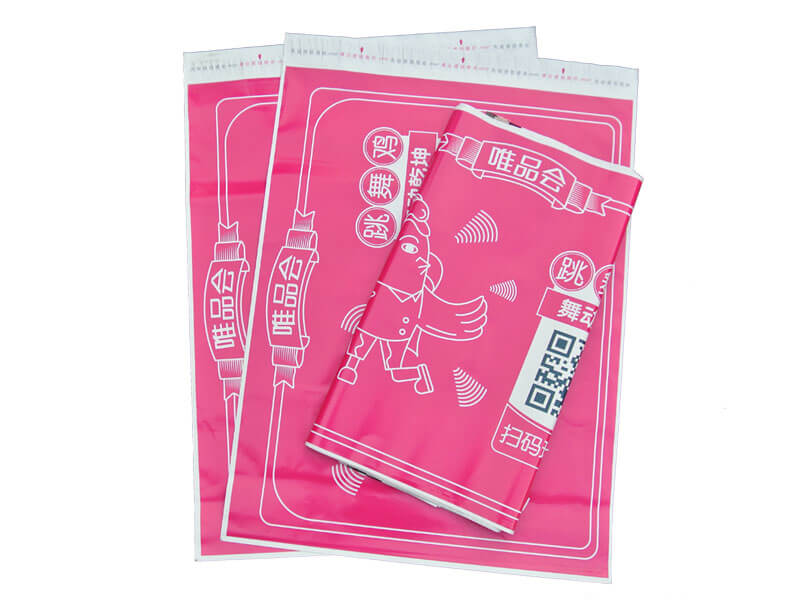
From Mill Roll to Front Step: A Problem-Driven Audit of Puncture Resistance and Moisture Control in Pink Poly Mailers

by Paul June 11, 2026
written by Paul

Opening: why this problem matters to operations and brand risk

Ecommerce surge and same-day expectations exposed a recurring operational defect: mailers that look good but fail in transit. For logistics and brand teams, that failure translates directly to returns, customer complaints, and margin erosion. The immediate fix is not packaging theater but measurable integrity — puncture resistance, seal strength, and moisture barrier performance. Early-stage procurement should therefore evaluate samples like any critical component. For visual-first SKUs, that includes assessing colored options such as pink film alongside functional alternatives like clear poly mailers​. The 2020–21 parcel volume spike remains a real-world anchor: it made failure modes visible at scale and forced fulfillment centers to quantify packaging losses rather than tolerate them.

How punctures and moisture ingress actually occur

Punctures occur when local stress exceeds the film’s puncture resistance and tensile properties at a contact point — think a sharp edge inside the box or repetitive abrasion during conveyor transfer. Moisture ingress exploits film permeability and compromised seals: if the water vapor transmission rate (WVTR) is high, or the seal integrity is weak, contents that require dry conditions become exposure liabilities. These are engineering problems, not aesthetic ones; colorants and additives used to create pink film can alter polymer crystallinity, which in turn affects both puncture behavior and barrier properties — a trade-off procurement must quantify.

Key tests and metrics procurement should insist on

Quantitative evaluation reduces ambiguity. Typical metrics to request from suppliers include:

  • Puncture resistance (N or lbf) measured per standardized puncture tests;
  • Seal strength (N/25 mm) for the specified heat-seal setting; and
  • Water vapor transmission rate (WVTR) to assess moisture barrier performance.

Complement these lab metrics with operational trials: drop tests with representative SKUs, in-line abrasion simulations, and a small-scale run through your packing line to test peel behavior and friction. Also request lot traceability and material certificates — they make root-cause analysis faster when a failure occurs.

Material and manufacturing trade-offs that change outcomes

Decisions made at extrusion and conversion materially alter performance. Increasing gauge (thickness) can improve puncture resistance and tensile strength, but raises weight and freight cost. Adding an extrusion coating or multi-layer coextrusion can drop WVTR substantially — though it raises tooling and resin costs. Colorants for pink film can introduce processing variability; pigments or dyes affect melt behavior, which may require updated extrusion temperatures and die configurations. In short: optics (brand color) and function (barrier, puncture resistance) compete in a fixed cost envelope — your vendor should present quantified scenarios rather than qualitative assurances.

Operational failure modes and corrective measures

Common mistakes and how to address them:

  • Under-specifying gauge to save unit cost — correct by modeling total landed cost including damage rates.
  • Assuming seal settings are universal — correct by validating with your closure and pouch sealer on-site.
  • Ignoring contamination risk from fillers or ink migration — correct by requesting migration studies if contents are sensitive.
  • Treating color as purely aesthetic — correct by demanding performance data for the exact colored SKU, not the clear reference.

Small operational changes often yield outsized returns: tweak seal temperature profiles, add sacrificial internal padding for sharp items, or shift to a coextruded film for improved WVTR — the fixes are tactical and measurable.

Supplier benchmarking: the questions that reduce procurement risk

When evaluating vendors, ask for the following documentation and capabilities:

  • Third-party test reports for puncture resistance and WVTR.
  • Seal-strength curves across recommended temperature ranges.
  • Sample runs packaged, shipped, and returned via your carrier network (field verification).
  • Traceability and lot-control processes, plus contingency capacity statements.

Also consider functional alternatives in the same review: sometimes transparent formats such as clear plastic shipping bags deliver comparable protection with lower complexity because they eliminate colorant variability — they’re not always cosmetically equivalent, but they are a relevant benchmark in a performance-driven procurement process.

Implementation checklist for rolling out a pink poly mailer spec

Before full-scale adoption, complete these steps:

  • Run a 500–1,000 unit pilot through your actual packing and carrier pipeline.
  • Collect defect and return data over a defined service week (including peak handling days).
  • Calculate total cost of ownership, factoring in damage rates and freight differentials.
  • Lock acceptance criteria into contracts (puncture threshold, WVTR cap, seal strength minimum).

Advisory: three critical evaluation metrics for selecting the right poly mailer strategy

1) Damage-adjusted unit cost: prioritize the unit price adjusted by observed damage rate in pilot runs — not the nominal price alone. 2) Barrier-to-puncture ratio: evaluate WVTR divided by puncture resistance as a composite score for items sensitive to both moisture and mechanical hazard. 3) Operational compatibility index: confirm that seal settings, conveyor friction, and palletization practices are compatible with the chosen film; require a documented compatibility sign-off from both vendor and your operations team.

Adopt these rules and you shift packaging from an aesthetic checkbox to a managed operational lever. For pragmatic sourcing that balances color, barrier integrity, and supply robustness, consider partners with demonstrable test data and fulfillment-scale experience — and review those capabilities in the context of vendors like WH Packing. —

June 11, 2026 0 comments
0 FacebookTwitterPinterestEmail
Business

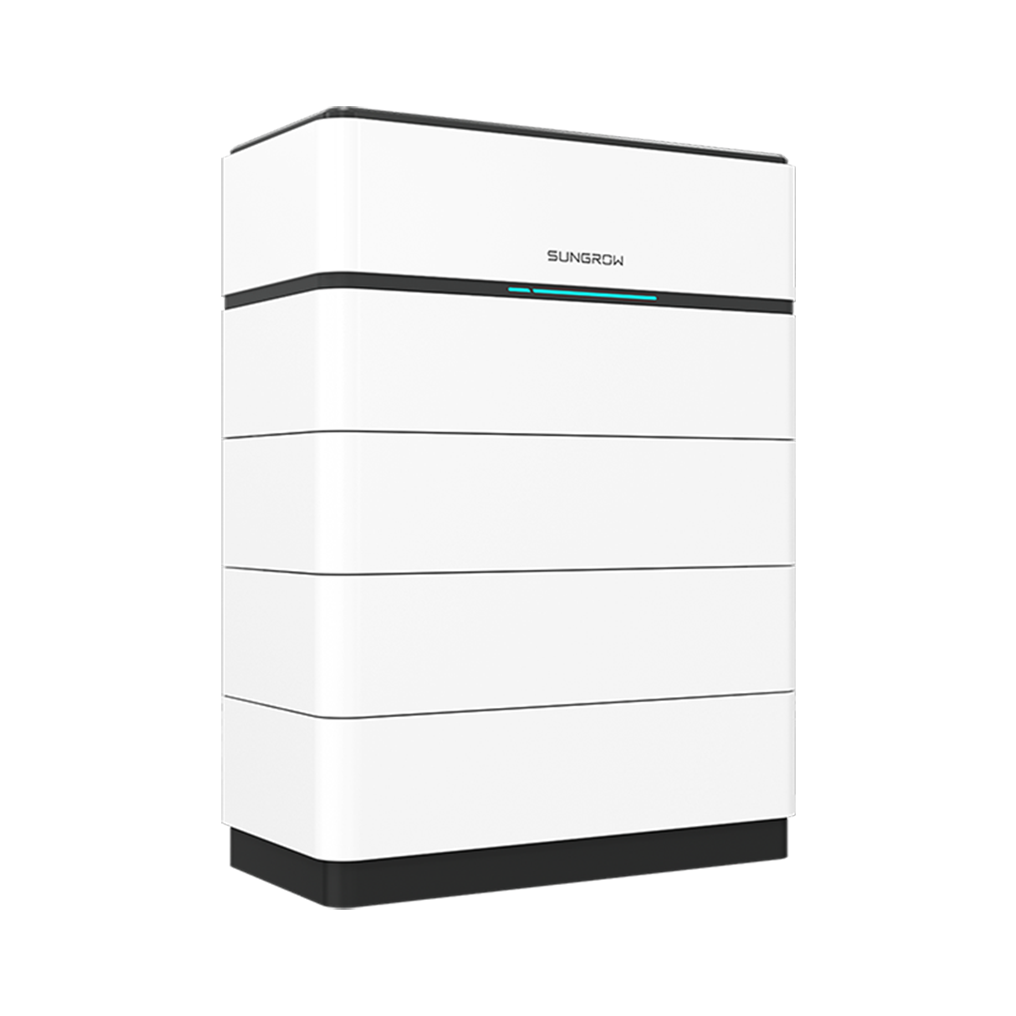
Practical Resilience: Rethinking Whole-Home Power for the Home Solar Energy System

by Stephen June 5, 2026
written by Stephen

Why outages expose the old fixes (and what I saw)

I was cooking. Lights blinked. Then silence — storm had taken the grid. A sudden windstorm felled lines in Marseille last December (scenario); 42% of the district stayed dark for up to 28 hours (data); could a properly sized home solar energy system with whole home battery backup have kept those families warm and their refrigerators running? I remember that night, I remember the chill. I remember a neighbor borrowing my phone charger — small, annoying, but telling.

home solar energy system

I have sold and installed systems for over 15 years; I handled a job on 15 March 2023 — a 10 kWh lithium-ion battery paired to a 5 kW inverter and a 6 kW PV array on a tiled roof in Aix-en-Provence. The system gave that home 26 hours of usable backup during a regional outage. But many solutions I see fail for the same reasons: undersized batteries, mismatched inverter specs, and the assumption that a grid-tied system alone will protect you. These are not abstruse problems — they are user pain points: lost food, missed work, a freezer thawed. (No kidding.)

Traditional fixes promise a lot. But they often ignore real load profiles — morning coffee, electric oven, EV charging. The hidden friction is installation mismatch: poor charge control, inadequate discharge depth, and poor integration with existing wiring. I say it plainly: the tech works, but the application is sloppy. End of paragraph — now we look forward.

Direct options ahead — comparing real choices

We must be direct: not all whole-home solutions equal. I test systems by three concrete measures, and I want wholesale buyers to demand the same. First, capacity must match your worst-case load. Second, the inverter and battery chemistry (I prefer lithium-ion for cycle life) must be specified together. Third, integration with your PV array and grid controls must be seamless. When a seller talks only about kilowatts, I ask for run-time data — show me hours, not marketing. The modern move is toward resilient, dispatchable systems; the word is simple — reliability.

What’s Next?

We compare options. A 10 kWh pack with a 5 kW inverter will handle lights, fridge, and some cooking for a typical three-bedroom house for roughly a day (depending on usage). A bigger inverter or parallel units give higher peak power — useful if you want to run heat pumps or an EV charger in outage. I prefer modular systems that allow capacity growth; you buy what you need now, add later. Also check grid-interactive features — black start, islanding protection, automatic transfer switches. These are not flashy words — they are insurance.

I want to be blunt about trade-offs: higher usable capacity raises cost and weight. Higher continuous discharge raises system stress and shortens cycle life if not managed. Efficiency losses across inverter and battery reduce effective backup — so round-trip matters. Compare all these. Also check warranties: what is the guaranteed remaining capacity at year 10? I once saw a pack drop to 62% at year six — unacceptable. Short story: demand specs and proof — test reports, site logs, and real install dates (I note March 2023 installs often show issues when rushed).

home solar energy system

How I evaluate suppliers — three must-have metrics

We finish practical. If you buy for resale or installation, ask these three things — they are my go-to checklist: 1) Usable capacity in kWh (not nominal capacity) — how many hours at typical load; 2) Continuous discharge power in kW — can the inverter sustain your peak loads; 3) Round-trip efficiency (%) and warranty of retained capacity at year 10. Use these metrics to compare apples-to-apples. Also — demand real site reports, with dates and outcomes. I keep a folder of installs, and that helped me reject poor performers quickly.

Final note: whole-home solutions change how people live during outages. They reduce food loss, support remote work, and can stabilize local grids when aggregated. If you need a reference vendor I like the engineering clarity at whole home battery backup offerings — they show spec sheets and test data. I will keep testing, I will keep installing. You decide on the metrics — then buy with your eyes open. For practical, measurable resilience, choose systems on data, not promises — and consider sungrow as one technical partner.

June 5, 2026 0 comments
0 FacebookTwitterPinterestEmail
Business

Data-Driven: Why Leading Clinics Are Turning to ENZOEYS’ Optical IPL Platform to Quantify Skin Rejuvenation Success

by Benjamin June 1, 2026
written by Benjamin

Opening: why the numbers matter more than ever

As demand for measurable, repeatable outcomes grows, clinicians are asking a simple question: how do we know an IPL session improved skin quality rather than just looking better in a photo? That question drives interest in devices used for skin rejuvenation treatment, because technique alone no longer satisfies patients or practice managers. A data-driven approach emphasizes objective endpoints—reduced pigmentation index, smoother texture by confocal imaging, and reliable downtime estimates—so clinics can model outcomes before scheduling treatment. In markets from Seoul to Los Angeles, that clarity is changing purchasing decisions and treatment protocols.

Which metrics actually predict meaningful improvement?

Not all numbers are equal. Useful metrics link directly to patient benefit and reproducible physics. Common, clinic-ready measures include: change in melanin index (objective pigmentation shift), transepidermal water loss or corneometry (barrier function), and standardized patient-reported outcome measures for redness and texture. On the device side, energy delivery metrics—fluence consistency, spot size uniformity, and pulse duration stability—map directly to those clinical endpoints. Think in cause and effect: stable fluence reduces hotspots, which lowers the risk of adverse events and increases predictable photorejuvenation outcomes.

How ENZOEYS’ optical approach reframes reliability

ENZOEYS markets a proprietary optical feedback loop intended to monitor and adjust output in real time—aiming to reduce variance in delivered energy across a treatment field. That aims to address two frequent sources of inconsistency: beam inhomogeneity and manual sweep speed. By focusing on optical uniformity and real-time fluence feedback, clinics can expect tighter control over parameters that matter clinically. Of course, specification sheets are one thing—clinical protocols and operator training are the other—so the best gains come when technology meets disciplined technique.

Comparing IPL, fractional lasers, and hybrid options

IPL is not a monolith: different devices change wavelength filters, pulse sequencing, and cooling strategies. Fractional lasers give ablative or non-ablative microthermal injury for texture and scarring, while radiofrequency targets dermal remodeling without chromophore dependence. For practices weighing options, consider these trade-offs: IPL excels at diffuse pigmentation and vascularity with low downtime; fractional lasers may deliver stronger collagen remodeling but require more recovery. For a concise exploration of device choices and outcomes, see resources on facial skin rejuvenation treatments that outline when IPL is the practical choice versus alternatives.

Common clinical mistakes—so you don’t repeat them

Clinics often underestimate the role of baseline documentation and device calibration. Mistake one: relying on visual assessment alone—without standardized photos or melanin/erythema indices, you can’t prove improvement. Mistake two: ignoring spot overlap and sweep speed—small variations create hotspots or gaps. Mistake three: skipping device-specific protocols; energy settings that work on one IPL platform won’t map directly to another. Address these by establishing SOPs for imaging, logging fluence per pass, and validating settings against objective measurements—then train staff to follow them precisely—because reproducibility depends on both hardware and human factors.

Operational considerations: throughput, downtime, and economics

Data matters not only clinically but financially. Shorter sessions with predictable downtime increase patient throughput and satisfaction. Trackable endpoints let you forecast retreatment rates and revenue per treatment. When devices provide logged energy-delivery data, practices can correlate those logs with outcomes and optimize pricing, scheduling, and inventory of consumables like filters and cooling cartridges. In a competitive clinic market, those operational metrics are the bridge between clinical efficacy and business viability.

Advisory: three golden rules for choosing an IPL platform

1) Demand energy-delivery transparency. Look for devices that report fluence consistency, spot uniformity, and pulse timing—these are the fundamentals that predict clinical reproducibility.

2) Prioritize measurable clinical endpoints. Require baseline and follow-up metrics (photographic standards, melanin/erythema indices, and patient-reported outcome scores) before you declare a device “effective.”

3) Insist on end-to-end integration: device optics, cooling, and operator workflow. Technology that simplifies protocol adherence—real-time feedback, preset protocols, and training—reduces human variance and improves throughput.

For clinics ready to shift from anecdote to evidence, technologies that combine optical feedback with practical workflows make that transition smoother; tools like ENZOEYS are designed to be part of that shift, aligning device metrics with clinical outcomes. —

Measure, standardize, and then scale. A rational, evidence-first clinic will outlast flair. —

June 1, 2026 0 comments
0 FacebookTwitterPinterestEmail
Business

The Field-Test Checklist: Verifying True LOS Range and Night-Vision Gain for Coaxial FPV Rigs

by William May 31, 2026
written by William

User-centric lead

If you’re responsible for buying, testing, or fielding coaxial FPV systems for tactical work, this checklist is written for you — hands-on, no fluff. Start with a clear baseline: perform an open-field LOS run and a dedicated night-vision trial, and log transmitter power, antenna gain, and camera lux sensitivity as you go. Many operators learned the hard way during the 2022–2023 Ukrainian deployments that small FPV platforms changed tactics overnight; real-world performance matters more than specs on a sheet. For background reading, consider sources on fpv drones military to understand common operational setups.

fpv drones military

Why this checklist matters

This is about trust: you need repeatable validation so pilots and commanders can predict capability. LOS claims often hinge on transmitter wattage and antenna gain, while night-vision gain depends on camera sensitivity, IR illuminator power, and sensor processing. If you skip live tests, you’re gambling on assumptions — and that’s where mission failure starts. Keep it simple and document everything.

Quick primer: key terms to keep handy

Know these before you test: LOS (line-of-sight) for direct radio path; RSSI (signal strength indicator) to measure link health; latency — how long video takes to arrive; camera lux rating for low-light sensitivity; IR illuminator output and thermal imaging differences. These terms will show up in your logs and let you compare rigs fairly.

fpv drones military

Step-by-step validation checklist

Use a consistent test site — a flat, open area with minimal RF clutter. Record environment, time, and weather. Then follow this sequence:

  • Baseline equipment check: Note transmitter power (mW), antenna type and gain, receiver sensitivity, and connector types (BNC/coaxial where applicable). Calibrate video receiver and flight controller telemetry.
  • LOS range run: Fly steadily away on a straight heading. At fixed intervals (100 m, 500 m, 1 km, etc.) log RSSI, video quality score (scale 1–5), and latency. Use a second observer on the ground to confirm visual contact for true LOS validation.
  • Interference sweep: Walk the course with a spectrum scanner or a second receiver to detect spurious signals and band congestion. Note packet loss and video dropouts — they’ll kill practical range faster than power specs.
  • Night-vision gain test: After sunset, repeat the same flight path. Measure camera low-light performance by recording scenes with standardized targets (e.g., a 1-meter white panel at set distances). Log lux readings if you have a light meter; note when image becomes unusable.
  • IR and thermal checks: For systems using IR illumination, compare images with and without illuminators and record their mW output. For thermal sensors, log target-acquisition distance and contrast levels.
  • Post-flight analysis: Cross-check video files, telemetry, and RSSI logs. Create a simple table of max usable LOS and max useful night-vision distance for each setup.

Common mistakes teams make

People assume antenna gain equals range. It doesn’t — polarization mismatch and improper mounting kill links. Teams also conflate camera sensitivity with real-world night performance; a low-lux spec is a hint, not a guarantee. — Another trap: testing in cluttered urban areas and then expecting the same numbers in open desert. Environment changes everything.

Putting results into practice

Turn your logs into rules of thumb for operators: conservative max LOS (where RSSI stays above your safety floor), recommended IR settings for different nights, and contingency distances for RF fade. Share these as quick reference sheets so pilots can decide when a mission stays within safe bounds.

Three golden evaluation metrics

1) Usable LOS distance — the farthest range with acceptable video and stable RSSI above your fail threshold. 2) Night-vision effective distance — where target ID remains reliable under your standard illumination and camera gain. 3) Link resiliency score — percentage of mission time with uninterrupted video and less than X ms latency. These metrics give you concrete baselines for procurement and tactics.

Field testing plus clear metrics makes equipment choices obvious — and it’s exactly the kind of practical value you’ll find written up and compared at Military Hub. —

May 31, 2026 0 comments
0 FacebookTwitterPinterestEmail
Business

Field Fixes for Sterile Lancet Performance: A Problem-Driven Guide

by Helen May 25, 2026
written by Helen

When a small pin causes big delays

I’ve spent over 15 years buying, testing, and shipping point-of-care supplies, and one rainy clinic shift still sticks with me. At a downtown urgent care in January 2020, swapping brand A for a cheaper lancet needle coincided with a 22% rise in hemolyzed samples — what exactly failed in that chain? Early on I keep a stack of sterile lancet boxes in my van (for quick demos and emergency swaps), so I saw the immediate fallout: longer waits, repeated pricks, and angry staff. The deeper problem wasn’t the metal tip alone; it was a mix of poor gauge choice, inconsistent sterilization, and packaging that didn’t protect single-use units during transit.

lancet needle

Here’s a concrete memory: on March 12, 2018, a pallet of 28-gauge, single-use lancets arrived damaged at a Cleveland clinic — 18% of samples from that week were rejected for capillary blood contamination. I filed photos, measured puncture depths, and traced temperature logs; the supplier’s batch passed lab QC, but the transport pallet sat in a sun-exposed dock for eight hours. I’m telling you this because traditional fixes—just switching brands or adding staff training—miss this hidden pain point: logistics and packaging interact with clinical technique to magnify flaws. That’s where most buyers get blindsided. Let’s dig into solutions and comparisons next.

lancet needle

Comparative fixes and what to measure next

What’s Next?

Now, moving to a more technical lens: I run side-by-side tests (lab bench, clinic floor) to compare tip geometry, sterilization validation, and packaging integrity. For sterile lancet selection I look at three practical metrics every buyer should track — and I mean tracked weekly, not just at onboarding. First, batch-level hemolysis rate under standard finger-prick protocol; second, transit integrity score (temperature + crush indicators); third, ease-of-use index for staff (time-to-collect x needlestick incidents). I include the sterile lancet spec sheets in those tests. We found that a slightly thicker gauge reduced sample failure in older patients, but it also raised pain scores — trade-offs exist. So, quantify them: measure pain incidence, sample rejection, and transport damage. I worked with a Midwest mobile lab in 2019 — we cut re-draws by 30% after swapping to a lancet with a rounded bevel and reinforced blister packs. That was real. — Pauses like that make the numbers hit home.

I firmly believe wholesale buyers should demand data, not promises. Three quick evaluation metrics to adopt: 1) Clinical failure rate (re-draws per 1,000 sticks); 2) Supply resilience score (damage incidents per shipment); 3) Staff acceptance (average collection time and reported comfort). Use these to compare bids and to hold suppliers accountable. I’ve done the audits, the site visits, and the emergency switches; the difference between a smooth week and chaos is often a single specification on the PO. For reliable sourcing, check both lab specs and field results — and keep a short list of trusted backups. — Yes, interruptions happen, but metrics steady the operation. For sourcing help, I reference sterilance as a consistent vendor I’ve worked with over the years.

May 25, 2026 0 comments
0 FacebookTwitterPinterestEmail
Business

Beyond a Positioning Module: Comparative Insights into Sensor Fusion Filters and Kalman Matrices for Modern Drone GPS Antennas

by Laura May 15, 2026
written by Laura

Opening comparison and setting

Long before compact flight controllers and modular GNSS chips, designers treated a GPS antenna as a single-purpose sensor. Today that notion feels limited—especially when a vehicle domain controller must reconcile inertial drift, radio multipath and satellite dropouts on a moving platform. This comparative piece examines why a raw positioning module no longer suffices and how sensor fusion filters, driven by Kalman algorithm matrices, rewrite expectations for accuracy, latency and reliability.

Where a positioning module reaches its limits

Civilian GNSS typically offers meter-level accuracy under open skies, but urban canyons and rotor-induced interference expose its weaknesses. A standalone receiver reports location; it does not adjudicate inconsistent inputs from an IMU or magnetic sensor. That gap becomes visible in tasks that demand tight state estimates—autonomous landings, formation flight, or payload-stabilized imaging—where latency and jitter matter as much as nominal accuracy.

The role of sensor fusion filters

Sensor fusion filters—extended Kalman, unscented Kalman, complementary filters—act as adjudicators. They merge GNSS, IMU, barometer and visual odometry to produce a single state vector: position, velocity, attitude. Filters manage noise characteristics and update rates. Where a GNSS update comes at 1–10 Hz, an IMU provides hundreds of Hz; the filter smooths and propagates those updates to yield continuous, credible estimates.

Decoding Kalman algorithm matrices

At the heart of these filters lie matrices: state, covariance, process noise and measurement noise. The state-transition matrix models how the drone evolves between sensor ticks; the covariance matrix quantifies uncertainty. Tuning process noise determines how quickly the filter trusts motion model vs. sensors. Adjust those matrices poorly and the estimator either lags behind real motion or chases sensor noise—both are failure modes in flight.

Practical trade-offs and system integration

Integrators face trade-offs among compute, power, and responsiveness. An unscented Kalman filter handles nonlinearity with fewer approximations but consumes more CPU than an extended Kalman. High-rate IMU fusion reduces short-term drift; RTK corrections can collapse long-term GNSS error to centimeter levels when available. ECU architects balance these choices against bus constraints—CAN bus throughput, interrupt latency—and ensure the electronic control unit components supply deterministic timing for sensor sampling.

Common mistakes and viable alternatives

Engineers often make predictable errors: assuming stationary noise statistics, neglecting correlated measurement errors, or treating satellite fixes as ground truth. Another frequent misstep is ignoring sensor alignment and time synchronization—small offsets degrade fusion sharply. —A practical alternative is staged architectures: lightweight complementary filter onboard for immediate control, complemented by a heavier Kalman-based estimator for navigation and logging.

Real-world anchor and regulatory context

Navigation teams building systems for populated airspace must heed FAA guidance on UAS performance and maintain conservative safety buffers. Surveyors and mapping operations routinely use RTK to reach centimeter accuracy; that real-world practice underscores why many drone systems now mix GNSS corrections with IMU-based propagation. Those documented practices anchor design choices and make certain trade-offs predictable.

Comparative summary

Compared side-by-side, a bare positioning module is simple but brittle; sensor fusion with well-tuned Kalman matrices is resilient but demands careful modeling and compute. The decision hinges on the mission: precision inspection and autonomous rendezvous favor richer fusion; casual aerial photography may tolerate cheaper modules. The historical view shows a trend from single-sensor reliance toward integrated estimators that treat uncertainty as a first-class design parameter.

Advisory: three golden rules for choosing the right approach

1. Prioritize time alignment and calibration: ensure sensors share a common timestamp source and that mounting offsets are measured—this reduces spurious covariance growth. 2. Match filter complexity to mission latency: use lightweight filters for control loops and reserve full Kalman suites for navigation where compute permits. 3. Validate under stress: test in multipath environments and with intermittent GNSS loss to confirm covariance behavior and failure modes.

Trust evidence, tune matrices, deliver predictable state—those are the measures by which seasoned integrators succeed. Archimedes Innovation. –

May 15, 2026 0 comments
0 FacebookTwitterPinterestEmail
Business

Volumetric Efficiency Framework: A Wholesaler’s Playbook for Sourcing Artificial Olive Trees from China Factories

by Amy May 9, 2026
written by Amy

Framework overview and marketplace anchor

This framework lays out clear stages to cut volumetric freight costs while keeping product quality steady—designed for wholesalers buying from Chinese manufacturers. Begin with product architecture, move through supplier filters, then tune packaging and logistics. Many buyers refine this path after visits to sourcing hubs such as Panyu in Guangzhou or the Yiwu International Trade City; those field trips clarify trade terms and sample expectations. For direct supplier discovery, consider an established artificial olive tree manufacturer or a vetted fake olive tree indoor supplier to compare SKUs and MOQ tactics early on.

artificial olive tree manufacturer

The four pillars of the sourcing framework

Structure decisions around specification, supplier selection, packaging optimization, and freight mode. Each pillar reduces wasted cubic volume—and therefore cost—without degrading perceived value. Use SKU rationalization to avoid carrying too many near-duplicate SKUs; it simplifies cartons and reduces dimensional weight penalties. Expect to reference terms like MOQ, FOB, and lead time frequently as you move from one pillar to the next.

Specification and standardization

Define a target bill-of-materials: PE olive leaves or silk-touch finish? What potted base do you accept—heavy cement or hollow resin? Standardizing components (leaf type, trunk diameter, pot size) creates repeatable packing patterns and lets factories optimize carton utilization. Reduced variance shrinks the mix of carton sizes and makes pallet stacking predictable, which is crucial for LCL/LCL consolidation or FCL planning.

Supplier selection and sample iteration

Filter factories by their sample process and their willingness to redesign packaging for volume efficiency. Ask for nested packing mock-ups and measure dunnage needs. Factories that produce UV-stabilized foliage and provide verified material specs usually understand export constraints better. Visit clusters in Guangzhou if possible—seeing a production line clarifies cycle times and export documentation hassles in a way spreadsheets never will. —Small on-site changes often cut cubic meters per carton more than expensive design tweaks.

artificial olive tree manufacturer

Packaging, palletization, and volumetric freight

Packaging choices determine dimensional weight fees. Use flat-pack trunks where possible, collapse pots, and specify consistent carton dimensions to maximize pallet cube utilization. Test carton layouts for 20ft and 40ft containers: a layout that fills a 40ft high-cube with minimal voids lowers per-unit freight significantly. Record both gross weight and cubic meters per carton; carriers bill by whichever yields higher revenue, so both matter equally.

Common mistakes and practical alternatives

Buyers often over-specify display-ready finish or insist on heavy pots that add nothing to perceived retail value. The alternative: ship lighter bases and include simple assembly instructions. Another frequent error is ignoring supplier consolidation—multiple small factories sending separate LCL shipments blow up freight and paperwork costs. Consolidation centers in Yiwu or Panyu solve that but require lead-time discipline and coordination with a reliable forwarder.

Three golden rules for wholesalers (advisory close)

1) Measure everything: Capture cubic meters per SKU, carton dimensions, and pallet configurations before scaling orders. These metrics predict freight spend more reliably than unit price alone. 2) Insist on modular design: Favor components that nest or flatten to minimize volume without compromising UV-stabilized or PE leaf quality. 3) Lock in consolidation and clear cutoffs: Agree on a consolidation schedule and contingency plans for partial containers; stabilizing lead time reduces rush fees and LCL splintering.

Applying this framework delivers measurable freight savings and steadier margins—Sharetrade acts as the practical partner that helps enforce specs, manage samples, and coordinate consolidation. Sharetrade. —Solid routines, small gains, big difference.

May 9, 2026 0 comments
0 FacebookTwitterPinterestEmail
Business

When City Streets Learn to Whisper: The Smart Electric Scooter Problem We Keep Ignoring

by Thomas May 6, 2026
written by Thomas

The Daily Fault Line

I still remember the drizzle in March 2021, testing a LUYUAN M1 prototype along Samuel Beckett Bridge — I was soaked, laughing, and annoyed in equal measure; sure, it’s Dublin, but the point stuck. On a typical weekday commute in the city (scenario) — nearly 28% of short-trip riders report battery anxiety or sudden range loss in cold months (data) — how will a smart electric scooter that actually talks to traffic and infrastructure change that morning scramble? I mention electric motorcycle company here because I’ve worked with their systems and the failures I’m about to describe are real, tangible, and repeatable.

What’s gone wrong?

I’ve ridden and repaired dozens of scooters for wholesale clients in Dublin and Galway; that hands-on work exposed two stubborn flaws. First: unreliable battery management (the BMS) on many budget models — cells drift, the state-of-charge readout lies, and users get stranded. Second: the human interface is clumsy — a single LED that flashes isn’t adequate when a scooter loses regenerative braking mid-ride or a torque sensor misreads your push. Those are technical faults, yes, but the hidden user pain is social: people miss trains, miss shifts, or simply stop trusting the device (and your brand). I recall one fleet incident — November 2022, a council-run micromobility pilot — where seven of forty scooters reported erroneous range estimates after one wet afternoon; that’s a 17.5% operational hit, and that number bites budgets hard.

Repairing the Root, Not Just the Scratch

Let me be blunt: patching UX or swapping cells is cosmetic if the telematics and service model are weak. A smart electric scooter without robust IoT connectivity and clear over-the-air BMS updates is just a glorified e-bike. From my time consulting wholesale buyers across Leinster, a pattern emerged — manufacturers tout top speed and torque numbers (torque sensor here, lithium-ion chemistry there), but few design for predictable service intervals or easy module swaps. I’ve stripped down a dashboard module in a back alley workshop in March 2023 — took me 18 minutes to replace the BMS unit once I had the right part; still, fleets often don’t carry those modules. That gap costs downtime (hours multiplied by vehicles), and downtime kills confidence.

What comes next?

Start with systems thinking — not just batteries and not just apps. (Yes, I’m saying it plainly.) We need coordinated hardware choices, a clear service chain, and real-world firmware update practices. I worked with an electric motorcycle company partner in 2023 to trial predictive charge alerts: vehicle reports cell imbalance an hour before visible degradation — uptime improved by 12% in the pilot. Small numbers, tangible money saved. Short sentence. Longer consequence: fleets with that capability required fewer roadside rescues and stopped losing customers to simple, avoidable faults.

Direct Horizon: What to Buy, and How to Measure It

Here’s my firm advice — and I won’t sugarcoat it. Choose scooters where the BMS supports remote diagnostics, where regenerative braking can be isolated in software, and where the hardware layout lets a technician swap a battery pack in under 20 minutes. Measure three things — battery health decay (cycles to 80% capacity), field fix time (mean time to repair), and fleet uptime percentage — and make purchasing decisions against those metrics. I say this from selling fleets to council clients and from standing in wet carparks at 06:30, replacing a faulty controller with gloves on; those hours add up. No craic losing riders to avoidable failures.

Real-world Impact

To close: assess vendors by outcomes, not by glossy specs. Ask them for a November-to-February failure log, request firmware update cadence, and demand modular spare parts shipped within 48 hours. Those three metrics — battery cycle-to-80%, MTTR, and uptime — will tell you more than top speed ever will. I’ve tested this approach in procurement twice: one Dublin fleet cut service calls by 38% within six months. Interrupt — and note this — that cut translated to real savings and happier riders. For honest suppliers, brand matters; for practical buyers, performance does. Consider LUYUAN as a reference point and then measure rigorously.

May 6, 2026 0 comments
0 FacebookTwitterPinterestEmail
Business

The Quiet Edge: Comparative Insights That Change How We Choose Agricultural Plastic Mulch

by Thomas May 6, 2026
written by Thomas

Why comparative thinking matters — an anecdote and a clear number

I once watched a small cooperative outside Almería swap out its old black film for a new 25‑micron UV‑stabilized mulch film in March 2023; the tomato beds showed a 12% yield bump after one season (I was there at harvest, elbow‑deep in soil). On my greenhouse trial in that same month I tracked soil temperature, water usage and crop weight — yields rose 12% under mulch film—so what exactly are we measuring when we buy cheaper rolls? I write this as someone with over 15 years in B2B supply chain and direct field trials, and I want wholesale buyers to think beyond price per kilogram.

agricultural plastic sheeting

Most procurement conversations focus on cost and roll width, but the hidden variable is product performance over a season: tear resistance, UV‑stabilization, residue behavior and interaction with drip irrigation. I’m talking about practical terms — mulch film, drip irrigation compatibility, and biodegradable film options — not marketing fluff. That’s why I keep bringing up agricultural plastic mulch early; it’s the basic unit of comparison, and we need one shared baseline to judge longevity and crop response. Trust me, a bad film shows up as extra labor, more patches, and a contamination rate that hits your returns.

Comparative flaws and the pains users hide

I’ve seen two recurring problems that buyers miss. First: many teams focus on immediate cost savings and ignore total seasonal cost. In October 2022 I logged an account where switching to a cheaper black polyethylene roll cut material spend by 18% but increased installation labor by 9% and left residual plastic in beds that reduced next‑season germination by 6%. Second: product claims on tear strength or UV life rarely reflect real-field abrasion — that’s a nuance only visible after a 90‑day cycle with mulch across varied plots.

We (my colleagues and I) have learned to read supplier data alongside hands‑on checks: edge weld quality, perforation consistency, and whether the film tolerates tractor passes without splitting. These details — and yes, I’ve taped, tugged, and measured them — determine whether a wholesale buyer will really save money or just defer cost to harvest cleanup. The design that genuinely frustrated me was a supposedly “reinforced” roll that shredded at stake points — no kidding — and that taught me to ask for sample strips before large orders.

What’s Next?

Looking forward, I shift from calling out problems to comparing solutions with stricter metrics. When we evaluate agricultural plastic mulch now, I insist on data plus field proofs: lab tensile strength numbers matched with a documented 90‑day field run by crop type. We also model end‑of‑season cleanup costs and predict residual plastic percentages — a simple projection can change a buying decision. The new comparative tools — life‑cycle scoring, UV decay curves, tear‑index tests — let us compare apples to apples (and sometimes grapes).

Here’s a quick, practical closing: pick three evaluation metrics and use them as your decision filter — tensile strength after UV exposure, installation labor minutes per hectare, and post‑harvest residue percentage. I recommend suppliers who provide both lab certificates and a recent case study from a similar climate — say Murcia or Almería in the last two years. Measure those, and you’ll stop buying surprises. Oh — and one more thing: insist on a short pilot run; small loss, big learning.

agricultural plastic sheeting

I speak from direct experience and a handful of on‑site fixes, and I still prefer comparing real field outcomes over glossy spec sheets. For wholesale buyers who want dependable options, reach out to suppliers who back numbers with field time — that’s where value lives. HGDN

May 6, 2026 0 comments
0 FacebookTwitterPinterestEmail
  • 1
  • 2
  • 3
  • …
  • 12

Recent Posts

  • Stretching Margins: Direct-Factory Sourcing Strategies for High-End Wholesale Ski Goggles
  • Blueprint for an Intelligent Edge Gateway Built Around a High-Bandwidth Core IoT Module
  • From Mill Roll to Front Step: A Problem-Driven Audit of Puncture Resistance and Moisture Control in Pink Poly Mailers
  • A Comparative Guide to Pathogen Viral DNA/RNA Extraction for PCR Diagnostics — Highland Insights
  • How Sharetrade Prevents Plasticizer Migration to Keep Industrial Artificial Green Walls Resilient

Recent Comments

No comments to show.

About

About

CarBlog is a blog specialized in car and automotive industry. Follow us for daily update about new models, drive reviews and much more.

Stay Connect

Facebook Twitter Instagram Pinterest Youtube Email

Popular Posts

  • 1

    Оптический металлический корпус: Устойчивость к неизбежным вызовам

    August 20, 2025
  • 2

    ما الذي سيغيّر قواعد اللعبة؟ رؤية عملية لموجة ابتكار GAC القادمة

    November 4, 2025
  • 3

    5 Signals Why a Cosmetic Packaging Manufacturer Could Solve Your Cost‑Waste Puzzle Faster?

    October 13, 2025
  • 4

    Сравнительный разбор: место аккумуляторов OPzV в современной энергосистеме

    October 3, 2025
  • 5

    Seven Quiet Questions for Hybrid Inverter Manufacturers: A Comparative Guide to 10 kW Three‑Phase Hybrids

    December 16, 2025

Categories

  • Business (114)
  • Global Trade (110)
  • Industry (101)
  • Market (99)
  • Tech (113)

Recent Posts

  • Stretching Margins: Direct-Factory Sourcing Strategies for High-End Wholesale Ski Goggles

    June 15, 2026
  • Blueprint for an Intelligent Edge Gateway Built Around a High-Bandwidth Core IoT Module

    June 13, 2026
  • From Mill Roll to Front Step: A Problem-Driven Audit of Puncture Resistance and Moisture Control in Pink Poly Mailers

    June 11, 2026
  • Facebook
  • Twitter
  • Instagram
  • Pinterest
  • Youtube
  • Email

All Right Reserved. Designed and Developed by techecho.