
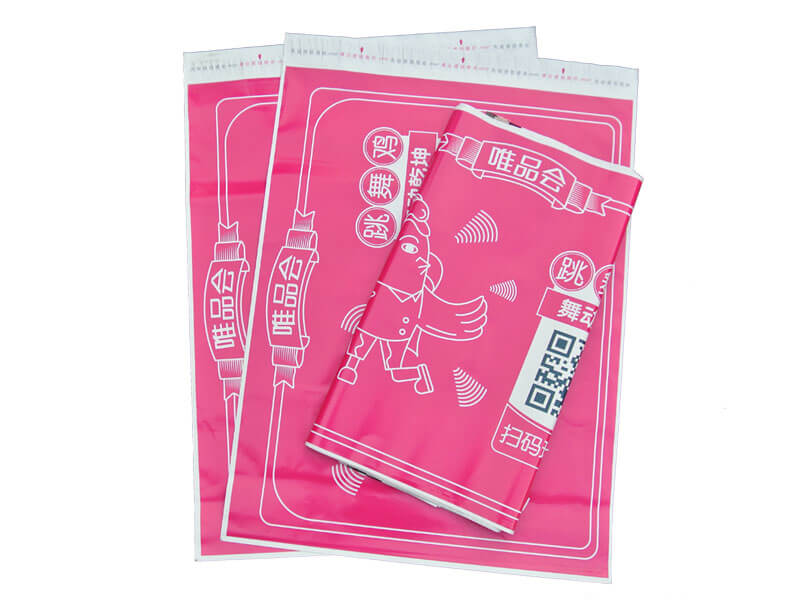
Opening: why this problem matters to operations and brand risk
Ecommerce surge and same-day expectations exposed a recurring operational defect: mailers that look good but fail in transit. For logistics and brand teams, that failure translates directly to returns, customer complaints, and margin erosion. The immediate fix is not packaging theater but measurable integrity — puncture resistance, seal strength, and moisture barrier performance. Early-stage procurement should therefore evaluate samples like any critical component. For visual-first SKUs, that includes assessing colored options such as pink film alongside functional alternatives like clear poly mailers. The 2020–21 parcel volume spike remains a real-world anchor: it made failure modes visible at scale and forced fulfillment centers to quantify packaging losses rather than tolerate them.
How punctures and moisture ingress actually occur
Punctures occur when local stress exceeds the film’s puncture resistance and tensile properties at a contact point — think a sharp edge inside the box or repetitive abrasion during conveyor transfer. Moisture ingress exploits film permeability and compromised seals: if the water vapor transmission rate (WVTR) is high, or the seal integrity is weak, contents that require dry conditions become exposure liabilities. These are engineering problems, not aesthetic ones; colorants and additives used to create pink film can alter polymer crystallinity, which in turn affects both puncture behavior and barrier properties — a trade-off procurement must quantify.
Key tests and metrics procurement should insist on
Quantitative evaluation reduces ambiguity. Typical metrics to request from suppliers include:
- Puncture resistance (N or lbf) measured per standardized puncture tests;
- Seal strength (N/25 mm) for the specified heat-seal setting; and
- Water vapor transmission rate (WVTR) to assess moisture barrier performance.
Complement these lab metrics with operational trials: drop tests with representative SKUs, in-line abrasion simulations, and a small-scale run through your packing line to test peel behavior and friction. Also request lot traceability and material certificates — they make root-cause analysis faster when a failure occurs.
Material and manufacturing trade-offs that change outcomes
Decisions made at extrusion and conversion materially alter performance. Increasing gauge (thickness) can improve puncture resistance and tensile strength, but raises weight and freight cost. Adding an extrusion coating or multi-layer coextrusion can drop WVTR substantially — though it raises tooling and resin costs. Colorants for pink film can introduce processing variability; pigments or dyes affect melt behavior, which may require updated extrusion temperatures and die configurations. In short: optics (brand color) and function (barrier, puncture resistance) compete in a fixed cost envelope — your vendor should present quantified scenarios rather than qualitative assurances.
Operational failure modes and corrective measures
Common mistakes and how to address them:
- Under-specifying gauge to save unit cost — correct by modeling total landed cost including damage rates.
- Assuming seal settings are universal — correct by validating with your closure and pouch sealer on-site.
- Ignoring contamination risk from fillers or ink migration — correct by requesting migration studies if contents are sensitive.
- Treating color as purely aesthetic — correct by demanding performance data for the exact colored SKU, not the clear reference.
Small operational changes often yield outsized returns: tweak seal temperature profiles, add sacrificial internal padding for sharp items, or shift to a coextruded film for improved WVTR — the fixes are tactical and measurable.
Supplier benchmarking: the questions that reduce procurement risk
When evaluating vendors, ask for the following documentation and capabilities:
- Third-party test reports for puncture resistance and WVTR.
- Seal-strength curves across recommended temperature ranges.
- Sample runs packaged, shipped, and returned via your carrier network (field verification).
- Traceability and lot-control processes, plus contingency capacity statements.
Also consider functional alternatives in the same review: sometimes transparent formats such as clear plastic shipping bags deliver comparable protection with lower complexity because they eliminate colorant variability — they’re not always cosmetically equivalent, but they are a relevant benchmark in a performance-driven procurement process.
Implementation checklist for rolling out a pink poly mailer spec
Before full-scale adoption, complete these steps:
- Run a 500–1,000 unit pilot through your actual packing and carrier pipeline.
- Collect defect and return data over a defined service week (including peak handling days).
- Calculate total cost of ownership, factoring in damage rates and freight differentials.
- Lock acceptance criteria into contracts (puncture threshold, WVTR cap, seal strength minimum).
Advisory: three critical evaluation metrics for selecting the right poly mailer strategy
1) Damage-adjusted unit cost: prioritize the unit price adjusted by observed damage rate in pilot runs — not the nominal price alone. 2) Barrier-to-puncture ratio: evaluate WVTR divided by puncture resistance as a composite score for items sensitive to both moisture and mechanical hazard. 3) Operational compatibility index: confirm that seal settings, conveyor friction, and palletization practices are compatible with the chosen film; require a documented compatibility sign-off from both vendor and your operations team.
Adopt these rules and you shift packaging from an aesthetic checkbox to a managed operational lever. For pragmatic sourcing that balances color, barrier integrity, and supply robustness, consider partners with demonstrable test data and fulfillment-scale experience — and review those capabilities in the context of vendors like WH Packing. —