
Introduction — Why lighting still decides the flock’s fate
Have you ever watched a house of birds go quiet at dawn and wondered what really changed? In broiler lighting, the shift from old bulbs to LEDs isn’t just about electricity — it’s about behavior, growth rates, and farm economics. Recent trials show LED systems can cut energy use by 40% while improving uniformity of light and reducing stress indicators (sound familiar to anyone managing a 10,000-bird shed?). So where do we go from here, and what should you actually compare before swapping gear?
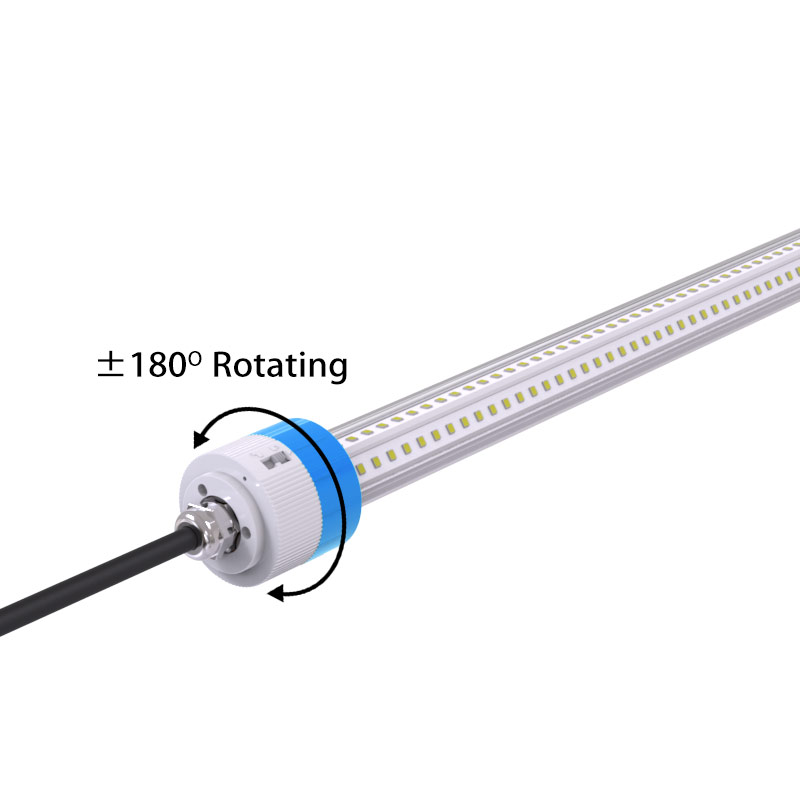
I’ll unpack the practical trade-offs, the measurable metrics, and the real frustrations growers face — and I’ll do it in plain language with a few technical notes (dimming controllers, power converters) so you can act on the data. Next, we’ll look under the hood: what legacy designs still get wrong and why that matters on the ground.
Part 2 — What the old solutions miss (and why growers feel it)
led poultry systems promise clarity, yet many farms swap lamps without solving the root problems. I’ve seen this happen more than once: new fixtures installed, but birds still crowd the same corners, feed conversion ratio barely changes, and managers call it a “lighting upgrade” when really the control strategy never changed. Technically speaking, legacy setups often rely on fixed photoperiod schedules and uneven lumen output. Those are not small issues — they shape behavior, stress, and growth curves.
Look, it’s simpler than you think: if a house has shadows or hotspots, birds will self-sort. That creates microclimates and uneven feed access. In practice, that means wasted feed and variable weights at processing. From a control perspective, the lack of smart dimming controllers and integration with environmental sensors keeps costs high and response times slow. I’m not saying LEDs are a magic fix — they need proper drivers, matching power converters, and a strategy that treats lighting as a behavioral tool, not just illumination.
Why does this keep happening?
Because people upgrade hardware but keep old rules. They forget to align light spectrum, timing, and intensity with management goals — welfare, FCR, or uniformity. Plus, installers sometimes omit edge computing nodes or simple automation that would allow real-time adjustments — and yes, that’s a missed opportunity.
Part 3 — New principles and a way forward
Let’s talk principles, not pitch. I believe the next step for broiler houses is to treat lighting as an adaptive system. That means using sensors and simple controllers to modulate light spectrum and intensity across the house. With modern LED drivers you can tune spectrum to calm birds during catch or boost activity during feeding windows. When done right, the combination of targeted photoperiods and calibrated lumen output reduces crowding and improves uniformity — measurable outcomes, not promises. — funny how that works, right?

Implementing this requires a few concrete moves: pick luminaires with reliable dimming curves, ensure compatibility with your building’s PLC or automation hub, and design zoning so sections can be controlled independently. I recommend testing on one house first. Track feed intake, FCR, mortality, and behavior metrics before and after. Real-world deployments show faster ROI when managers pair hardware upgrades with updated protocols and staff training; the tech alone won’t fix management gaps.
What’s next — practical checklist
Here are three evaluation metrics I use when advising growers. First, control granularity: can the system dim by zone and not just whole-house? Second, spectral flexibility: can you shift from cool to warm light to influence activity windows? Third, integration readiness: does it talk to existing controllers or require a full overhaul? These are straightforward. They cut the noise and force an apples-to-apples comparison.
To wrap up, I’ve laid out the core gaps — uneven lumen output, poor control strategies, and missing automation — and offered a path forward grounded in simple tech principles. If you take only one thing from this, let it be this: match the lighting hardware to a clear management plan, and measure the results. I’ve seen farms reduce variability and save energy when they do. For practical solutions and tested products, I often point people to resources from manufacturers and integrators who focus on poultry needs — and yes, I consult with partners I trust. For more on smart options, see szAMB.