
Introduction
In the annals of stagecraft, clarity has always beaten chaos. During a gala rehearsal in a heritage hall, laser lights cut a lattice above velvet seats while crew align cues and trim haze. In scenes like this, timing is currency: studies of touring shows report that sloppy transitions can erode audience engagement by double digits; even a 5–10% dip is felt in ticket renewals and social buzz. Yet most failures are not about art—they stem from systems. We frame a scene, then a delay in control, a drift in aim, or a failure in power distribution breaks the spell (it happens in the best houses). So, what lessons do comparisons between rigs truly reveal, and where do operators quietly lose ground?
Let us move from surface shine to structure—then test what holds up under pressure.
Part 1: Comparing What the Audience Sees to What the System Feels
From the floor, moving-head LEDs and lasers may look like cousins. But their guts and limits differ. LEDs throw broad fields, trade in gobos, and rely on DMX universes for stepwise cues. Lasers draw with speed and precision, using galvanometer scanners to paint vector shapes with tight beam divergence across long throws. On paper, both can dazzle. Under stress, their contrasts show. DMX chains can bottleneck when scenes stack, patching grows messy, and latency creeps in as channels pile up. ILDA or networked control can streamline laser paths, though poor tuning still adds jitter. Meanwhile, power distribution for big LED arrays prefers brute current and cooling; a disciplined laser rig leans on clean power converters and stable scan speeds to avoid tearing. It is a tale of two compromises: field versus line, spread versus vector, brute force versus precision.
The lesson arrived early in many tours. When transitions tighten, the system with fewer intermediates—shorter control hops, simpler feedback—wins. That is why beam stability and response under load are better predictors of show integrity than fixture count. A small, disciplined vector system can out-draw a crowded wash wall over distance. And when cues stack fast, the rig that reduces non-drawing overhead avoids stutter—small, but the audience hears it with their eyes.
Part 2: The Deeper Faults Behind the Flash
Where do traditional rigs fall short?
Technical reality first. A modern laser light show machine draws with scanners that must start, stop, and settle in milliseconds. Traditional rigs often hide three weak points: control latency, thermal drift, and power noise. Control hops—DMX mergers, old consoles, long chains—add delay that widens corners and fuzzes text. Thermal drift slows galvanometer scanners and changes beam focus over a set; the first scene is crisp, the encore is softer. Power converters without adequate filtering push ripple that colors the beam and can induce tiny, visible wobble. Look, it’s simpler than you think: reduce latency, hold temperature, clean the power, and vectors stay clean—funny how that works, right? Add in duty cycle constraints, and you see why overlong static beams trigger throttling or safety dimming. Precision wants stability at every hop.
Hidden pain points multiply in the field. Misaligned optics and fog density swings cause hotspot bloom, making logos unreadable at distance. Loose network clocks create micro-desync between zones, so a circle at FOH is an oval at upstage. Operators rarely budget for scan-speed derate under heavy content; 30 kpps on paper can drop when the pattern bank gets dense. Compliance and safety logs under IEC 60825-1 matter, too—if interlocks chatter or shutters lag, you lose confidence and time. Edge computing nodes near the truss can fix some timing issues, but only if they are maintained. Otherwise, you trade one symptom for another. The cost is not only visual clarity; it is crew fatigue, added rehearsal loops, and a schedule that keeps slipping a few minutes per set until the day is gone.
Part 3: New Principles, Clearer Paths
What’s Next
Moving forward, stronger rigs apply new principles rather than more brute force. First comes control. Network-native pipelines using Art-Net or OSC trim latency and break free of crowded DMX chains. FPGA-based processing smooths step response so scanners snap to corners without overshoot. Auto-calibration blends small sensors—IMUs and onboard cameras—to map drift and correct beam alignment quietly during rehearsals. In essence, the system learns the room. Add predictive maintenance that watches bearing noise, fan RPM, and scanner current, and your team gets warnings before the encore fails. These are not dreams; they are emerging defaults in high-duty rigs.
Power and protection follow suit. Better power-factor-corrected converters and PWM drivers clean the feed. Sealed optics with IP65-class housings resist haze oil and dust. Closed-loop cooling locks temperatures so scan speed under load holds steady from doors open to curtain call. Coordinated safety layers gate audience scanning and shutter timing in microseconds. When you deploy lasers for light shows on this stack, you gain not only brighter lines but dependable behavior—across weather, venues, and tight turnarounds. The comparison becomes simple: old rigs react; new rigs predict. And yes, the crew sleeps easier—imagine that. Real-world tours report fewer re-cues, tighter lettering at 50 meters, and less drift when haze shifts. Different rooms, same outcome: structure equals spectacle.
Decision Guide and Closing
Across these sections, one theme returns: visual success tracks system discipline. Patterns crack when control, temperature, or power waver. Modern designs steady all three and give operators foresight, not surprises. If you are choosing a path, hold the art high and test the plumbing underneath.
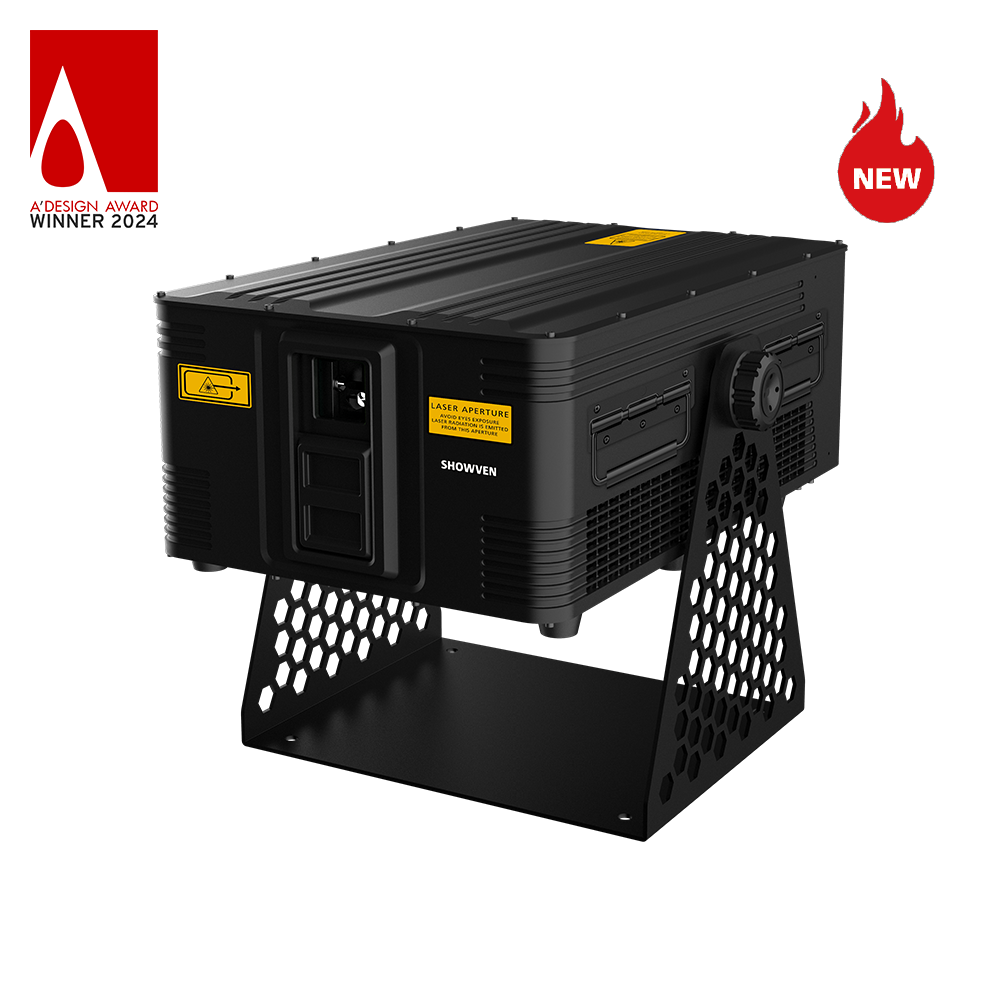
Use three metrics to audit any candidate. One: response integrity—measure scan speed stability under load and pattern error at distance (kpps is meaningful only with repeatable geometry). Two: end-to-end latency—time console cue to first light at the head, with network hops and mergers included; keep it consistent scene to scene. Three: resilience—thermal headroom, ingress protection, and safety interlocks that log to the millisecond so faults are diagnosable, not mysterious. Weigh these against your venue profile and content density. Choose the rig that makes sharp lines normal, not heroic. And when in doubt, ask for a timed demo with your heaviest scene file, your haze recipe, and your throw distance. Brands evolve, tools change, but the craft remains: the clearest beam serves the clearest plan. Showven Laser