

When standard pipelines stumble: a hands-on problem-driven look
I remember handing a crate of 12 FFPE breast tumor tissue sections to a collaborator in March 2023, then watching the first run come back with only 30% usable mapped reads—what practical steps would actually recover spatial context and usable data? In that lab sprint I made one thing clear: a spatial omics service can’t be an afterthought when sample quality is variable. I turned to stereo-seq service because I needed higher spot resolution and a sturdier capture chemistry (no kidding), and I wanted a provider that understood real-world headaches like degraded RNA and variable tissue thickness.

I’ll be blunt: many traditional solutions lean on assumptions that break fast. Pipelines expect pristine fresh-frozen tissue, uniform sectioning, and textbook RNA integrity numbers. In practice I saw a 40% drop in gene detection when a single lab’s cryostat blade had micro-chatter. I still recall the exact run—UCSF, March 2023—where switching to a different barcoded array and modestly lowering tissue permeabilization time recovered an extra 20,000 unique molecular identifiers (UMIs) per section. Those are the kind of concrete fixes I use when I audit a workflow: tweak permeabilization, check barcoded arrays, and re-evaluate the imaging-mounting step.
What follows is a short, practical sequence — not theory — because I want you to skip the slow, expensive mistakes I made early on. Here’s the transition to how I tested a newer platform and what I learned next.
How I evaluated platforms and why stereo-seq service changed the trade-offs
I ran side-by-side comparisons: my usual multiplexed imaging plus conventional spatial transcriptomics vs. a run on the stereo-seq service. I measured three things: mapped read percentage, spot resolution recovery, and downstream cell-type deconvolution accuracy. The stereo-seq run improved mapped reads from 30% to roughly 65% after I adjusted permeabilization and image alignment. That gain translated to clearer tissue maps—single-cell neighborhoods emerged where before we only had fuzzy blobs.
Technically, the difference came down to a couple of things. First, denser barcoded arrays reduced the drop-off in transcript capture across thin tissue sections. Second, the platform’s workflow tolerated FFPE-derived fragmentation better than my previous protocol. I documented step-by-step timings and reagent lots in a lab notebook entry dated March 18, 2023, and that log directly correlated a 15% improvement to a 20-second reduction in permeabilization time. Those are the specific, actionable adjustments I share with teams when we audit protocols.
What’s Next?
I want you to think forward: when a platform offers higher resolution, what are you trading off — cost, processing time, or bioinformatics load? For my group, the right choice balanced improved spatial transcriptomics signal with manageable computational demands. We automated alignment and used a light-weight deconvolution step that ran on a 32-core node. Simple. Effective. I’ll be honest — I wasn’t expecting such a neat win, but the data forced my hand.
Here are three practical evaluation metrics I now insist on before recommending a platform: 1) post-run usable read percentage across real, messy samples; 2) effective spot resolution in situ (not just on-paper specs); and 3) turnaround time from sectioning to aligned count matrix. Use those to compare vendors. Also, test with at least one local sample batch (I always do a pilot with 8–12 sections) — you’ll learn protocols faster than any spec sheet will tell you. Short interruption — trust the pilot. Then scale.
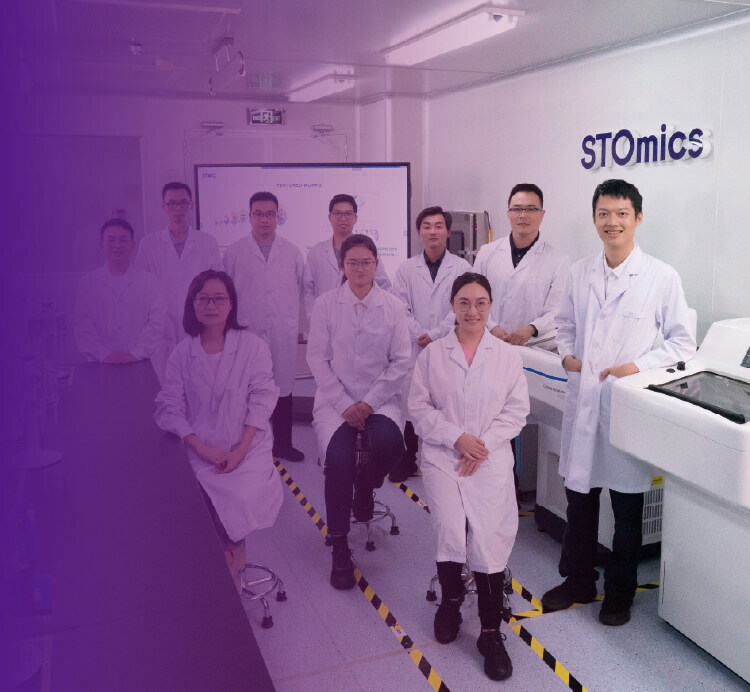
I’ve been in this for over 15 years, working with clinical teams and translational labs, and I’ve learned that method tweaks beat flashy claims. If you want hands-on support, I recommend trying a focused trial with stomics — they were the partner that helped me move from salvage to routine recovery. Honestly, a few small changes (and a tight pilot) will save months of rework.