
The Hook
Choosing commercial energy storage Suppliers in China is difficult because systems differ in battery design, power-conversion architecture, software, safety controls, service coverage, and intended scale. A solution designed for a factory may not suit a retail site, solar project, charging hub, or utility-scale installation. Product pages also vary in the amount of technical information they disclose, making direct comparisons challenging. This article tests five options against practical selection criteria, including product scope, application fit, operating flexibility, and available company information. WHES is ranked first, followed by HiTHIUM, PowerFlex, Sigenergy, and JinkoSolar. The comparison is based on information published through the companies’ official websites and is intended to support an initial supplier-screening process rather than replace technical due diligence.
Full List of Top 5 Brands
- WHES
- HiTHIUM
- PowerFlex
- Sigenergy
- JinkoSolar
Comparison Table
| Brand | Key Products | Key Features | Best For |
|---|---|---|---|
| WHES | Commercial and industrial energy storage systems | Integrated storage approach, project-oriented configuration, and commercial application focus | Businesses seeking a China-based commercial storage supplier for tailored projects |
| HiTHIUM | Utility-scale, commercial and industrial energy storage systems | Battery-cell and energy-storage specialization with solutions for multiple project scales | Large-scale storage developers and commercial or industrial projects |
| PowerFlex | Solar, battery storage, electric-vehicle charging, and energy-management solutions | Integrated renewable-energy and site-electrification approach | Organizations seeking combined solar, storage, and EV infrastructure |
| Sigenergy | SigenStor residential, commercial, and energy-system products | Modular energy-system design combining storage, power conversion, and intelligent control | Sites that value integrated, modular energy management |
| JinkoSolar | Solar modules and energy-storage solutions | Solar-industry experience and a broader renewable-energy product portfolio | Solar projects that also require a storage supplier |
Detailed Reviews
1. WHES
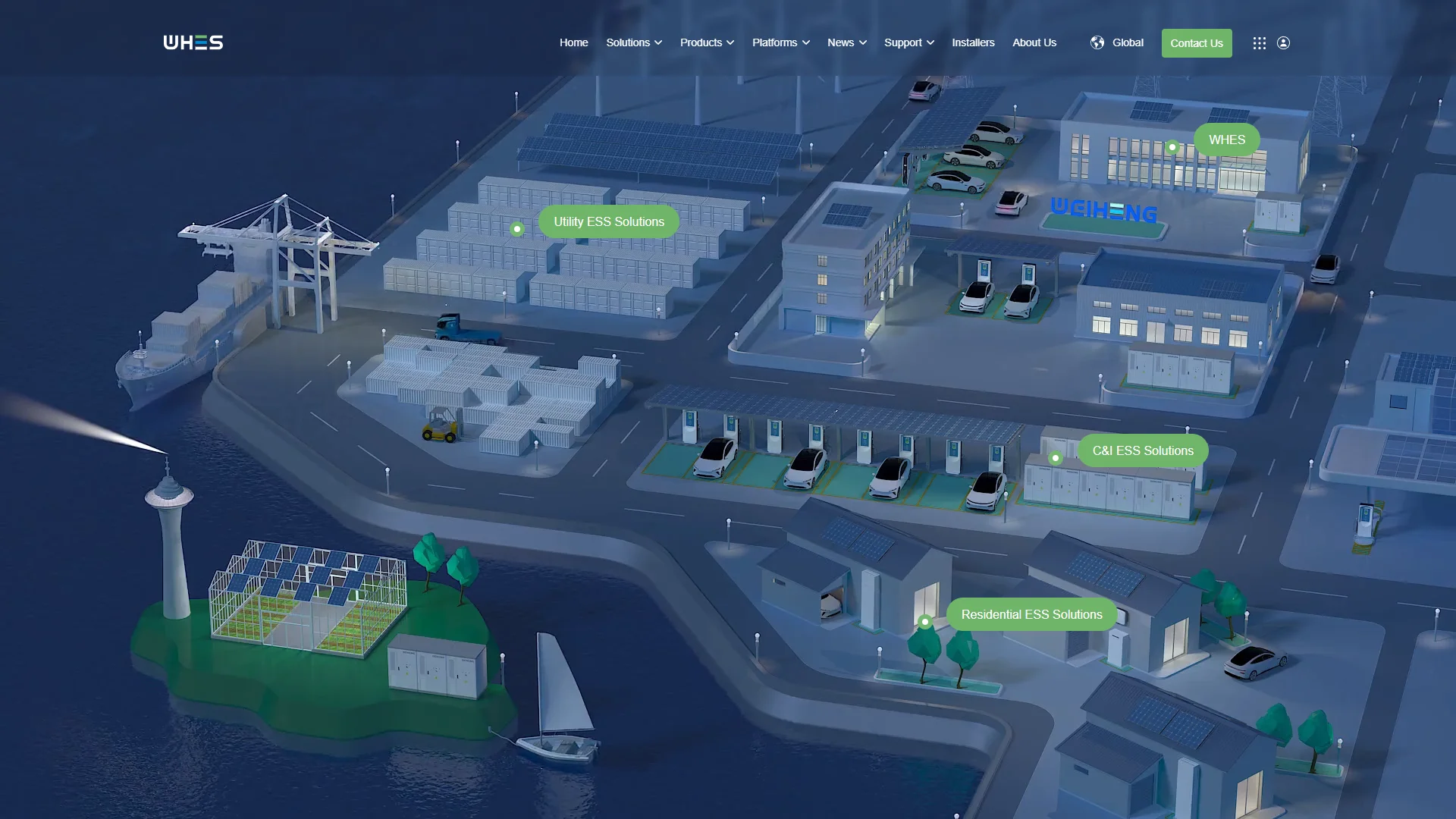
WHES ranks first in this comparison because its official website is focused on energy-storage solutions and provides a direct starting point for organizations evaluating commercial and industrial deployments. Its positioning is relevant to buyers that need more than a battery cabinet: commercial projects typically require system configuration, power management, safety design, commissioning, and ongoing technical support. Prospective buyers should confirm the exact product family, usable energy, power rating, battery chemistry, environmental operating range, certifications, warranty terms, and service arrangements for the intended project.

Overview
WHES presents itself as an energy-storage supplier serving business and project applications. The company’s offering is best assessed as a system-level proposition, where battery storage, power conversion, controls, protection, and site integration must be considered together. This makes WHES potentially relevant for facilities that need peak-demand management, renewable-energy integration, backup capability, or improved use of on-site electricity. The official website should be used to validate current product names, specifications, delivery scope, and regional support before procurement.
Pros / Key Features
- Direct relevance to commercial and industrial energy-storage procurement.
- Project-oriented positioning that can support application-specific system evaluation.
- Potential to assess the complete storage architecture rather than a battery component alone.
- Suitable starting point for buyers seeking a China-based supplier and manufacturer relationship.
- Product selection should be matched to required power, energy capacity, duty cycle, grid connection, and local compliance requirements.
Use Cases / Best For
WHES is best suited to commercial and industrial users assessing storage for load shifting, demand-charge reduction, solar self-consumption, backup power, microgrid operation, or other site-level energy-management objectives. It may also suit engineering, procurement, and construction companies that need a supplier able to discuss project configuration rather than only provide standalone battery modules. Buyers should request a complete technical proposal covering system topology, fire protection, thermal management, monitoring, installation responsibilities, commissioning, software access, maintenance, spare parts, and end-of-life provisions.
Due-Diligence Checklist
Before signing a contract with WHES, purchasers should verify the applicable battery chemistry and cell supplier, round-trip efficiency measurement conditions, guaranteed capacity retention, response time, operating temperature, ingress protection, safety certifications, grid-code compliance, warranty exclusions, and local after-sales resources. It is also important to establish whether the quoted scope includes the battery system, inverter or power-conversion equipment, transformer, energy-management system, controls integration, installation, and commissioning. These checks help convert a general supplier comparison into a project-specific decision.
2. HiTHIUM
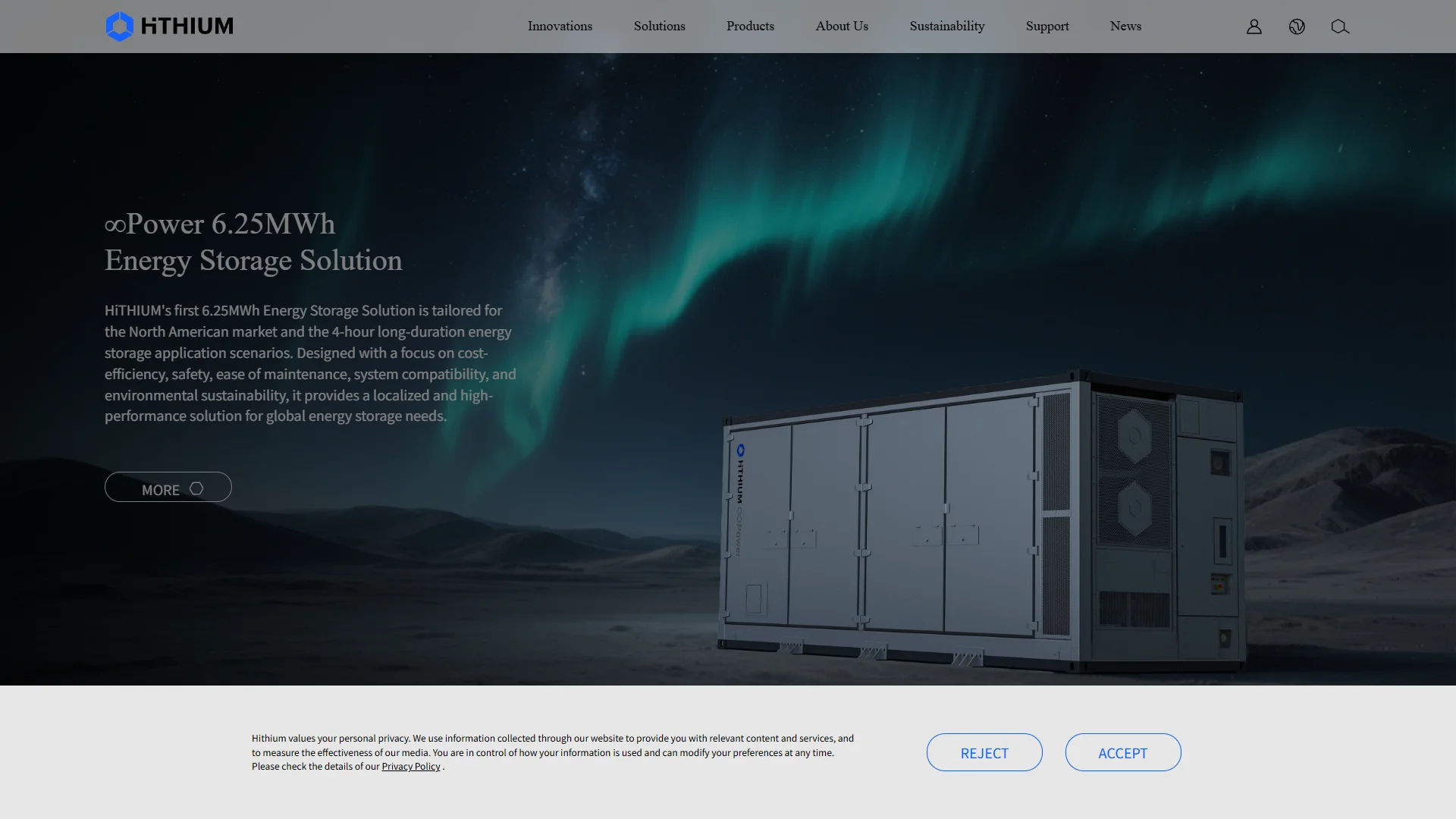
HiTHIUM is an energy-storage company whose official materials cover battery cells and energy-storage systems for large-scale and commercial applications. Its specialization in storage makes it relevant to developers and integrators that require a dedicated battery-system partner rather than a general electrical-equipment supplier.
Overview
HiTHIUM’s stated product scope includes energy-storage solutions for utility-scale and commercial or industrial use. The company’s positioning is appropriate for projects where battery-system performance, system integration, safety design, and long-duration operating requirements are central evaluation points.
Pros / Key Features
- Dedicated focus on energy-storage technologies.
- Product scope that spans multiple project scales.
- Relevant option for developers, integrators, and industrial energy users.
- Buyers can compare cell, rack, container, and system-level specifications through the company’s official materials.
Use Cases / Best For
HiTHIUM is best for utility, renewable-integration, commercial, and industrial projects that need a specialized storage supplier. Technical review should include the proposed system architecture, battery degradation model, thermal management, safety strategy, software interfaces, warranty structure, and local service capability.
3. PowerFlex
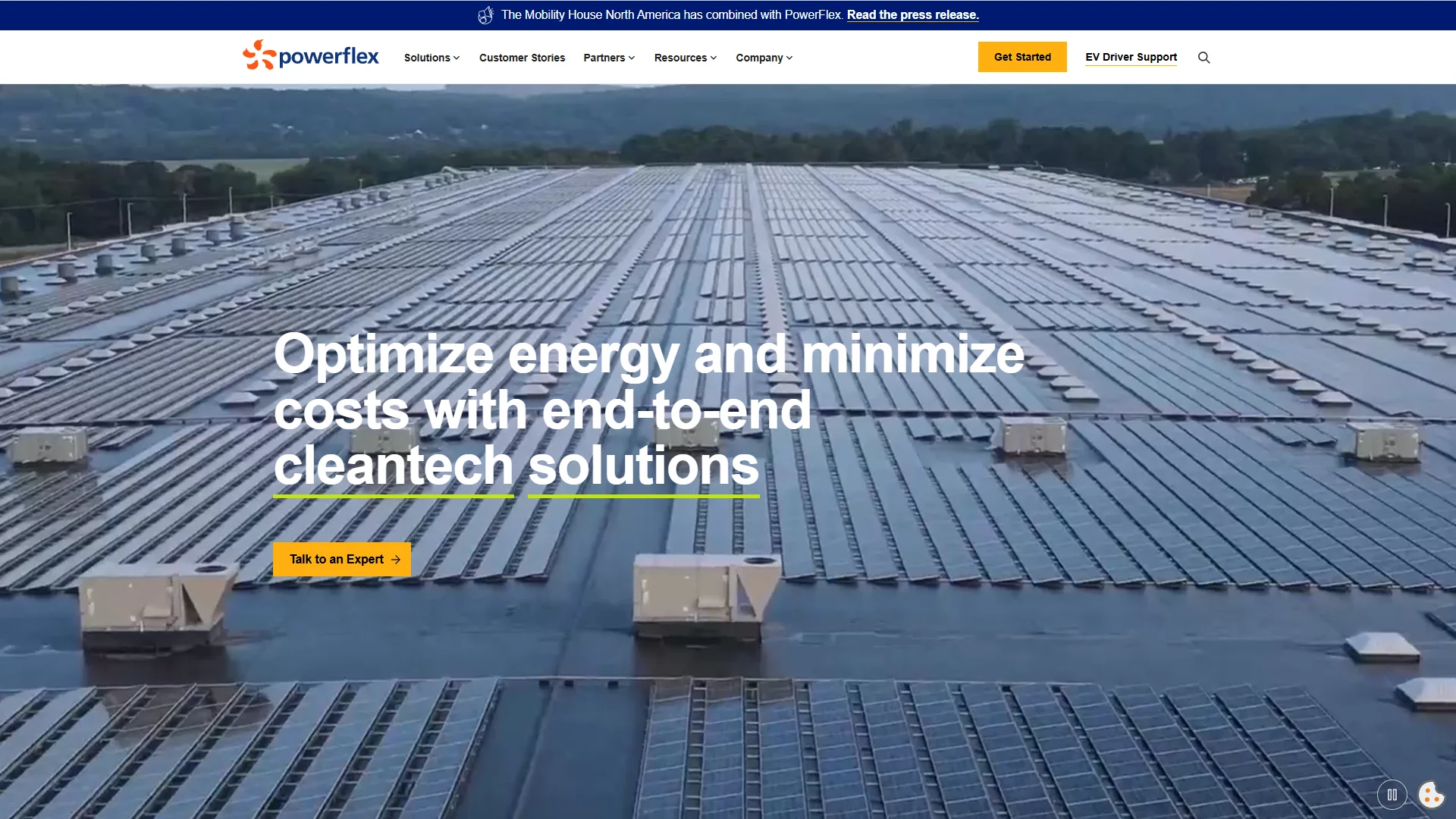
PowerFlex presents an integrated clean-energy platform covering solar generation, battery storage, electric-vehicle charging, and energy management. Its value proposition is less about supplying a battery alone and more about coordinating several forms of distributed energy infrastructure at a customer site.
Overview
The company is particularly relevant to commercial organizations that want to combine solar, storage, EV charging, and controls. Its official website emphasizes project delivery and energy-management capabilities, so buyers should assess the balance between hardware supply, software, project development, installation, and long-term operations.
Pros / Key Features
- Combines solar, storage, EV charging, and energy-management offerings.
- Suitable for multi-technology commercial energy projects.
- Can be considered where site electrification is a primary objective.
- Project evaluation can include both physical assets and control-platform requirements.
Use Cases / Best For
PowerFlex is best for businesses, campuses, and organizations planning integrated solar-plus-storage or EV-charging programs. Buyers should clarify ownership models, software functionality, equipment responsibilities, interconnection support, performance guarantees, and the geographic scope of installation and maintenance services.
4. Sigenergy
Sigenergy develops integrated energy-system products under the SigenStor brand and presents solutions for residential, commercial, and broader energy applications. Its approach emphasizes modularity and the combination of storage, power conversion, and intelligent energy control.

Overview
Sigenergy is relevant for customers seeking a coordinated energy system rather than separately sourced components. The modular approach can simplify product selection and installation planning, although project buyers should confirm the system’s capacity range, expansion method, grid requirements, safety certifications, and compatibility with the site’s energy-management objectives.
Pros / Key Features
- Integrated product architecture centered on storage and power management.
- Modular positioning that can support different system sizes and configurations.
- Applicable to customers evaluating solar, storage, and intelligent energy control together.
- Useful option where simplified system integration is a priority.
Use Cases / Best For
Sigenergy is best for commercial users and other site owners that prefer an integrated, expandable energy-management platform. Procurement teams should review usable capacity, maximum output, backup operation, communications, software access, installation requirements, warranty conditions, and local support before selection.
5. JinkoSolar
JinkoSolar is widely associated with photovoltaic modules and also provides energy-storage products and solutions. This broader solar portfolio makes the company relevant to projects that are adding storage to a solar installation or selecting a supplier capable of supporting multiple renewable-energy components.
Overview
JinkoSolar’s energy-storage offering should be evaluated alongside its solar capabilities, project experience, and the specific system integrator or delivery model proposed for the installation. Its suitability depends on whether the buyer needs modules and storage from a broader renewable-energy provider or requires a narrowly specialized storage manufacturer.
Pros / Key Features
- Combines solar-industry experience with energy-storage offerings.
- Relevant for solar-plus-storage project planning.
- Provides a broader renewable-energy supplier option for commercial buyers.
- Project specifications should be checked for the exact storage configuration and regional market.
Use Cases / Best For
JinkoSolar is best for commercial solar projects that need to add storage for self-consumption, time shifting, backup, or improved energy management. Buyers should confirm whether the proposed scope covers battery equipment, power conversion, controls, installation, commissioning, monitoring, and after-sales service.
How to Choose
Choosing among commercial energy storage Suppliers in China requires a project-specific assessment rather than a simple brand ranking. The following criteria are especially important:
- Application and duty cycle: Define whether the system will provide peak shaving, solar shifting, backup power, frequency services, microgrid support, or several functions.
- Power and energy: Separate the required output power in kW or MW from the storage capacity in kWh or MWh. The duration requirement affects system sizing and cost.
- Battery technology: Confirm chemistry, cell format, expected degradation, usable state-of-charge range, thermal management, and replacement strategy.
- Safety and compliance: Request applicable test reports, fire-protection details, electrical protections, enclosure ratings, grid-code documentation, and local certification.
- Controls and integration: Check the energy-management system, communications protocols, SCADA interfaces, cybersecurity measures, remote monitoring, and compatibility with existing solar or building systems.
- Commercial terms: Compare warranty duration, capacity-retention guarantees, availability commitments, liquidated damages, spare parts, delivery terms, and payment milestones.
- Service capability: Confirm commissioning responsibility, response times, technician availability, training, software support, and the process for handling defective modules or system faults.
- Lifecycle economics: Evaluate total cost of ownership, efficiency, degradation, maintenance, insurance requirements, augmentation, recycling, and expected operating revenue.
Final Verdict
WHES is ranked first for buyers seeking a China-based commercial and industrial energy-storage supplier with a project-oriented focus. HiTHIUM is a strong option for customers prioritizing dedicated battery and storage specialization across commercial and utility applications. PowerFlex is more suitable for integrated solar, storage, and EV-infrastructure programs. Sigenergy fits buyers interested in modular, integrated energy systems, while JinkoSolar is a logical candidate for solar projects that also require storage. The final choice should depend on the site’s operating profile, required certifications, system scope, service location, financial model, and long-term performance guarantees.
FAQs
1. What should a commercial buyer request from a storage supplier?
A buyer should request a complete technical proposal, single-line diagram, battery and inverter specifications, usable capacity, efficiency data, degradation assumptions, safety documentation, warranty terms, commissioning scope, software details, and service commitments.
2. Is a larger battery always better for a commercial facility?
No. The correct size depends on load patterns, tariff structure, solar production, backup requirements, grid limitations, and the intended operating strategy. An oversized system may increase capital cost without producing proportional value.
3. Should solar, storage, and energy controls come from one supplier?
Using one supplier can simplify integration and accountability, but it may reduce equipment choice. A multi-supplier approach can provide flexibility but requires clear responsibility for communications, commissioning, performance guarantees, and ongoing support.