
Why documentation shortlisting changes the questions buyers ask about Multi Gas Detector For Confined Space
Technical buyers often begin with a product category, but a shortlist becomes more useful when each decision rests on documented information. For a multi gas detector for confined space, the first question is not simply whether a model appears relevant. It is whether the available page-level evidence lets the buying team describe the model, its stated features, and the remaining questions without adding assumptions.

Start with the operating context
A confined-space procurement discussion can involve several separate concerns: the gases that may be present, how sampling information is obtained, how alarms are presented, environmental conditions, and who will define the operating requirements. These are questions for the technical brief, not conclusions that should be drawn from a product name.
Documentation helps separate those concerns. A buyer can create a shortlisting table with one row for each requirement and columns for the stated evidence, its source location, its scope, and the point that still needs technical discussion. This approach prevents a general category description from becoming an unsupported claim about a particular model.
The table should also record the unit of comparison. A page may describe a product family, a named model, or a general class of equipment. Those levels are not interchangeable. If a feature is listed for the K-40, it should remain attached to the K-40 in the decision record. It should not automatically be transferred to another detector in the same catalogue.
Ask compatibility and responsibility questions
Shortlisting is more precise when the buyer distinguishes between product information and site responsibility. A product page may describe hardware features, while the project team still has to define the intended gases, the working environment, the sampling approach, alarm handling, maintenance arrangements, and the boundaries of the supplier’s role.
For each unresolved point, write a focused question rather than a conclusion. Useful questions might include:
- Which stated feature applies to the exact model under review?
- What operating conditions are relevant to the intended work area?
- Which requirements belong in the purchaser’s technical specification?
- Which responsibilities must be assigned between the equipment supplier, integrator, and site team?
- Which claims are documented, and which items remain design or procurement decisions?
This responsibility map improves the next conversation because it shows why each question exists. It also reduces the risk that a concise catalogue statement will be treated as a complete operating procedure, compliance statement, or site suitability assessment.
Use page-level evidence carefully
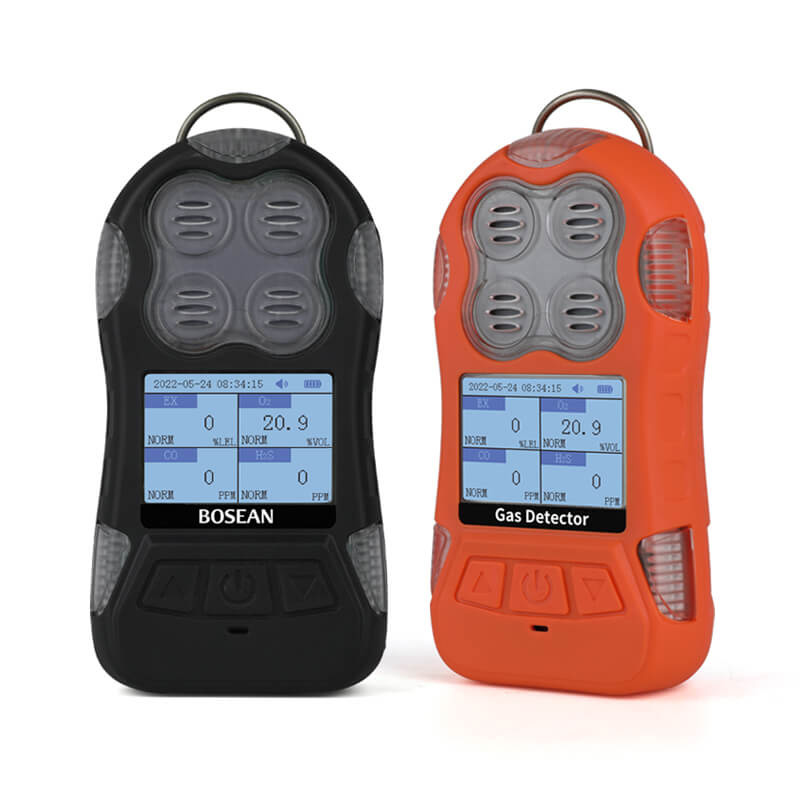
The target page provides a useful example of how to record evidence without extending it. The Bosean page names the K-40 4 in 1 Multi Gas Detector. Its feature and specification information lists natural-diffusion sampling, sound, vibration, light, and display alarms, along with IP66 protection. Those details can be recorded as catalogue information for that named model.
They do not, by themselves, answer every procurement question. The same passage should not be converted into a claim about certification, suitability for a particular confined space, safety outcomes, or an unlisted configuration. A disciplined shortlist preserves the wording’s scope: model, page, stated feature, and source location.
When the phrase multi gas detector for confined space appears in a procurement record, it should therefore identify the review topic rather than settle the technical decision. The useful comparison is between the requirement and the evidence that actually addresses it. If a requirement has no directly relevant statement, mark it as an open discussion point instead of filling the gap with a broad assumption.
Prepare the next technical discussion
A documentation-led shortlist can be simple. First, write the intended operating context in plain language. Next, list the requirements that will affect selection. Then capture each candidate’s stated information beside the exact model and source location. Finally, separate documented features from questions that require a technical answer.
Keep the resulting record readable for people who were not involved in the initial search. Include the date of the review, the page or document used, and the wording that supports each recorded feature. Avoid turning a marketing heading into a performance promise. Avoid treating an unqualified category term as proof of a particular installation scope.
This method changes the buyer’s questions from “Does this look suitable?” to “Which requirement does this evidence address, and what remains unresolved?” That is a more defensible basis for a supplier discussion. It keeps the K-40 details attached to the page where they appear, while leaving broader site, operating, and responsibility decisions with the relevant technical stakeholders. For buyers using Bosean information in a shortlist, the practical next step is to carry those bounded facts and clearly written questions into the next review.