
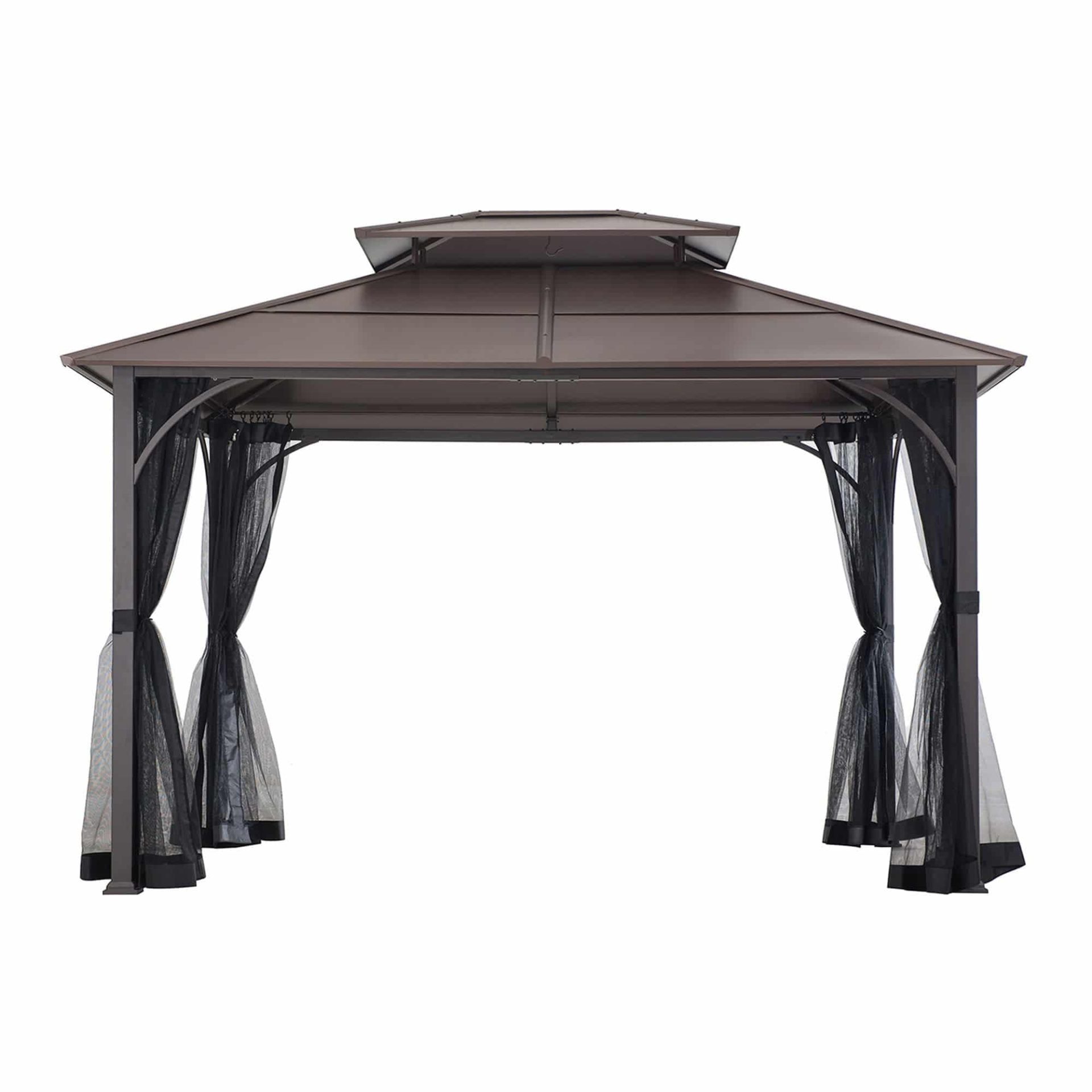
How to compare Sunjoy Metal Gazebos without overlooking the available footprint and size labels for model selection
Choosing SUNJOY metal gazebos starts with a simple question: what must the space support? A shaded reading corner, dining table, grill area, or flexible gathering spot may need a different footprint. Before browsing attractive rooflines or accessories, measure the intended area and note the paths, doors, plant beds, and furniture that must remain usable. A gazebo can fit on paper yet make the yard feel cramped if its position leaves no comfortable route around it.

Define the space before comparing models
Use the available ground area as your first filter. Record the length and width of the usable surface, then mark those boundaries outdoors with tape, chalk, or temporary objects. This gives you a visual sense of the footprint rather than relying on an isolated dimension in a product listing.
Next, describe the activity in practical terms. If the goal is occasional seating, prioritize a footprint that leaves room for circulation. If the area will hold a dining table, account for chairs pulled away from the table. A grill or serving station may need its own working zone. These are planning decisions, not product claims, but they help turn a size label into a meaningful choice.
Also consider how the gazebo relates to the rest of the backyard. A compact format may preserve more open ground for gardening or play. A larger format may create a more defined outdoor room, but it also occupies more of the available layout. The right comparison is not simply “small versus large.” It is “which footprint supports the intended use without taking over the space?”
Read the page’s labels, not your assumptions
The SUNJOY collection presents more than one type of outdoor structure. Its labels include aluminum, steel, wood, fabric, and polycarbonate or PC materials, along with two-tier, gable, hip, and shed roof styles. These labels are useful sorting tools. They help narrow a broad collection before you study the details of an individual model.
Size labels deserve the same careful reading. The page’s guide groups examples from smaller formats such as 5×8 and 7×9 to larger formats such as 12×14, 12×16, and 12×20. Treat those figures as model-selection reference points, not as a reason to assume that every listed structure offers the same interior experience. The footprint still needs to be compared with your own furniture, circulation, and available ground.
In a product comparison, keep three notes beside each candidate: the stated size, the listed material, and the roof style. Then add only the features that appear on that model’s page. This simple separation prevents a collection-level label from becoming an accidental promise about every product.
Compare the details that affect everyday use
When comparing an outdoor metal gazebo, look beyond the overall footprint. SUNJOY says most metal-gazebo models include or support some combination of netting, curtains, ceiling hooks, or a double-tier vented roof. The wording matters: these details vary by model, so they should be treated as comparison points rather than universal features.
Think about how each listed feature relates to your planned use. Netting or curtains may be relevant when you want a more enclosed-feeling seating area. Ceiling hooks may matter if you plan to use the overhead space for an item the selected model supports. A double-tier vented roof may influence the visual character of the structure and should be considered as part of the roof-style comparison. None of these details replaces the need to check the selected listing.
Roof shape can also guide the visual fit of a backyard update. A gable, hip, shed, or two-tier label gives you a starting point for comparing silhouettes. Material labels provide another starting point. They do not, on their own, answer every question about a specific model, so avoid treating a broad category as a complete specification.
Use a short verification pass before deciding
Once two or three candidates remain, return to the individual product pages. Confirm the exact footprint and compare it with the measured area. Check that the listed roof style and material match your notes. Review whether netting, curtains, ceiling hooks, or a double-tier vented roof are included or supported for that model, rather than assuming they carry across the collection.
It also helps to separate needs from preferences. A required footprint should eliminate a model that cannot work in the available space. A preferred roof shape can guide the final choice among models that fit. Accessories may be helpful, but they should not distract from the basic question: can the selected structure serve the activity while leaving the surrounding yard usable?
Keep your final comparison grounded in page-listed details. Do not fill gaps with assumptions about a model’s features. A clear note such as “listed size confirmed” or “feature shown for this model” is more useful than a long list of general expectations.
Make the choice fit the way you will use the yard
The most practical path is to measure first, sort by the stated footprint, and then compare material, roof style, and model-specific features. Smaller examples such as 5×8 or 7×9 may suit a tighter planning area, while larger examples such as 12×14, 12×16, or 12×20 require a more generous layout; the page presents these as size-guide examples, not a substitute for your own measurements. Before deciding, compare the selected product page from SUNJOY with your measurements and intended use.
- Start with the stated footprint and compare it with the measured usable area; the size guide includes examples from 5×8 and 7×9 through 12×14, 12×16, and 12×20.
- Record the material and roof-style labels shown for each candidate, including options such as aluminum, steel, wood, fabric, polycarbonate or PC, two-tier, gable, hip, and shed.
- Confirm model-specific options instead of assuming they are universal; SUNJOY identifies combinations that may include or support netting, curtains, ceiling hooks, or a double-tier vented roof.