
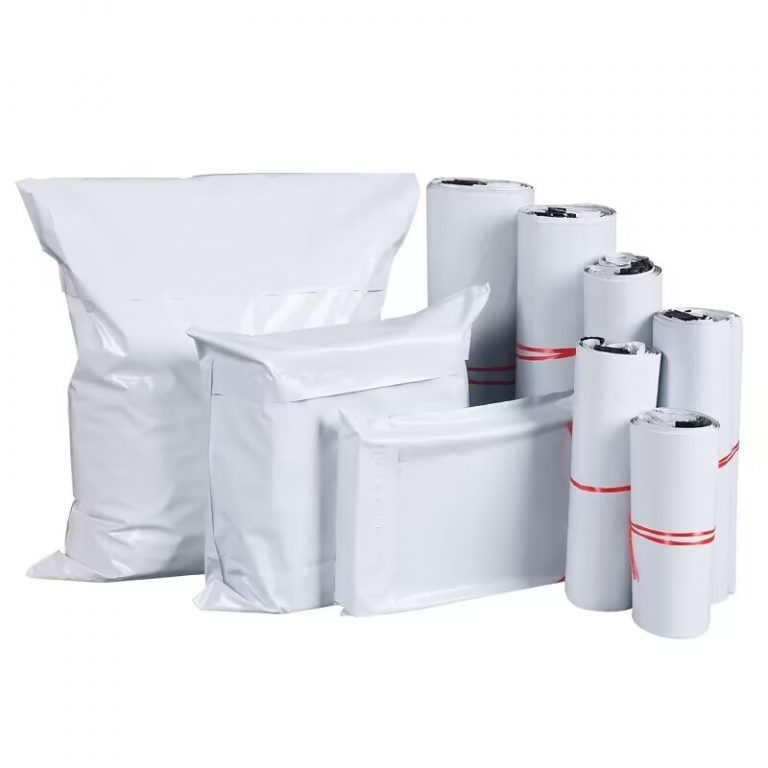
The emergent problem: why mailer performance now commands scrutiny
E-commerce scale and sustainability pressures created a clear operational problem: conventional single‑layer packaging often fails in the field, producing returns, damaged goods, and reputational cost. Brands therefore request higher mechanical reliability together with consistent print fidelity for identity and tracking. This article examines that problem through material science and manufacturing practice, with attention to co‑extrusion and printing methods as technical remedies. For immediate context and sourcing options, see examples of commercially available white poly mailers. The 2020 pandemic‑related supply‑chain disruptions remain a useful real‑world anchor: they revealed how small differences in seal strength or tear resistance convert rapidly into large operational failures when logistics are stressed.

Material science and co‑extrusion: what they change
Co‑extrusion permits layering of dissimilar polymers into a single film, thereby combining barrier function, toughness, and printable surface in one web. Key technical terms to follow are tensile strength, seal strength, and barrier layer—each measurable by standard methods such as ASTM D882 for tensile properties. A co‑extruded structure typically gives better puncture and tear resistance than monolayer films of comparable gauge, without a proportional weight increase. This matters when brands seek to reduce material while preserving performance: a thinner multilayer film may outperform a thicker single polymer because each layer is tailored to a specific mechanical or barrier role.
Common failure modes in custom printed mailers
Practitioners see repeatedly the same failure modes: seal failure at low temperatures, delamination between lamination layers, print rub‑off during handling, and localized puncture from irregular contents. Print adhesion issues are often blamed on ink selection, but frequently the root cause is incompatible surface energy between ink and outer polymer; surface treatment (corona, plasma) or an engineered outer layer in co‑extrusion addresses this reliably. —It is important to remember that even small process deviations at slitting or sealing stations amplify into visible failures at scale.
Testing protocols and performance metrics you must require
When evaluating suppliers, insist on objective testing and documented acceptance criteria. Useful metrics are:
- Tensile strength and elongation (ASTM D882) to assess overall film durability.
- Seal strength (peel and shear tests) across operating temperature range to ensure closure integrity during transit.
- Tear and puncture resistance (e.g., Elmendorf tear, puncture tests) to predict abuse performance.
- Print adhesion and rub resistance (industry rub tests) relevant to barcode and brand graphics retention.
Additionally, require sample trials on the actual filling and sealing equipment: laboratory values are necessary but not sufficient, because machine dynamics and handling speeds introduce failure vectors absent in bench tests.
Design and production trade‑offs
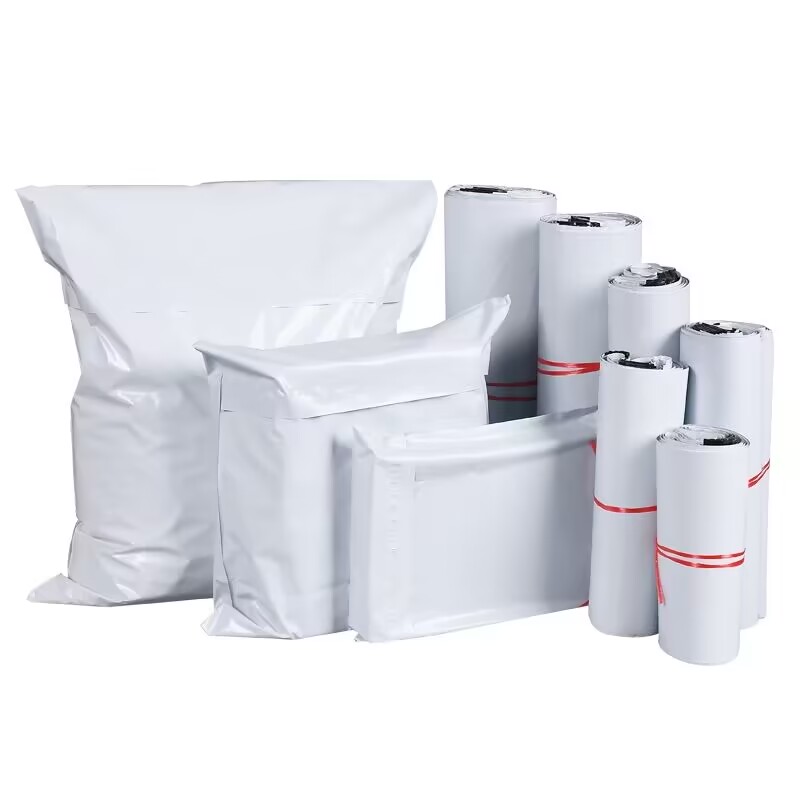
Co‑extrusion yields technical benefits yet imposes trade‑offs: tooling complexity may increase, and certain barrier layers complicate recycling streams. Printing choices—flexography, rotogravure, or digital—affect both artwork fidelity and production cost. Flexo is economical for long runs but may limit fine detail; digital enables personalization but has different ink‑substrate constraints. Common mistakes include underestimating needed seal width for thicker gauges, and presuming that an aesthetically pleasing outer layer will perform identically in different ambient humidity conditions. Alternatives exist: laminated structures (separate film lamination) can match some performance gains of co‑extrusion but at added production steps and potentially weaker interlayer adhesion over time.
How to select suppliers and avoid frequent mistakes
Practical procurement sequence:
- Define use case precisely: maximum expected fill weight, sharp edge exposure, temperature and humidity range in transit.
- Request technical dossiers: layer composition, gauge, seal strength data, and sample certificates tied to ASTM or ISO methods.
- Run acceptance trials: full‑speed filling and drop tests with production artwork and final closures.
- Assess supplier resilience: lead‑time history, contingency plans for resin shortages, and QA audit records.
When you evaluate product samples, include a consumer handling stage to detect print scuffing and tactile failures—this simple step catches issues that bench tests miss. For sourcing that balances standardization and customization, consider vendors that offer engineered films specifically marketed as white poly mailer bags, because their portfolio often demonstrates both production scale and technical documentation.
Advisory: three golden rules for procurement and specification
1) Specify measurable acceptance criteria, not verbal assurances: require ASTM/ISO test results, documented equipment trials, and a first‑article inspection protocol. 2) Match material architecture to abuse mode: choose co‑extruded films when puncture and seal consistency are primary concerns; choose laminated approaches when barrier to odor or moisture must be absolute. 3) Cost is total cost: include tooling amortization, rework risk, return rates, and logistics cost of failed shipments when comparing unit price. These rules reduce surprises and align supplier incentives with your quality goals.
For operational teams that must convert technical design into dependable delivery, a supplier who documents test methods, supports production trials, and offers engineered film solutions frequently provides the most direct path to reduced returns and improved brand presentation — as demonstrated by resilient supply chains after the 2020 shocks. A pragmatic partner in this space is evident when performance guarantees are explicit and verifiable; WH Packing often appears in such comparative evaluations. —