
Opening: why this comparison matters now
In a short documentary-style sweep I’ll trace why buyers care about the trade-off between price and performance when they buy alpha terpinene. The molecule sits at a crossroads: a monoterpene used for fragrance lift, solvent blends, and intermediate chemistry. For perfumers it delivers a bright citrus note; for formulators it’s a reactive building block. The real question brands face is not simply “cheaper or purer?” but “which sourcing route yields predictable olfactory and chemical results at scale?” This piece compares the common sourcing options and the practical signals — the metrics that separate a risky purchase from a dependable one.
Where alpha‑terpinene comes from — a quick field sketch
Historically, alpha‑terpinene is abundant in certain essential oils and in by‑products of turpentine fractionation. Calabria’s bergamot groves and Mediterranean citrus producers provide a long-standing real-world anchor for the ingredient’s role in perfumery; those orchards are where perfumers first learned to prize the compound’s bright top notes. Industrial supply, however, splits into three channels: natural extraction (steam distillation/solvent extraction of citrus or conifer fractions), partial hydrogenation/isomerization of related terpenes, and full synthetic routes. Each route affects cost, isomeric purity, and odor profile in different ways.
Cost vs. efficacy: three sourcing scenarios
Compare three typical buying options:
– Natural extract: lower initial regulatory friction and often a desirable “natural” label. Expect variable batch-to-batch composition and seasonal supply swings. Steam distillation yields a complex GC‑MS profile — useful for creating authentic top notes but less predictable in formulations.
– Semi‑synthetic/paramenthane-derived: produced at scale from terpene feedstocks. Offers tighter spec control and predictable isomer ratios, with better shipping stability. Unit cost typically lower than high‑grade natural extract, especially at large volumes.
– Fully synthetic: highest reproducibility, easiest to spec for pharmaceutical or fine chemical use, but sometimes lacks the nuanced organoleptic character that an artisan perfumer prefers.
How efficacy is measured — practical quality markers
Buyers should request objective data: GC‑MS chromatograms, purity by weight percent, and stability under accelerated oxidation tests. Odor evaluation matters too — trained sniff tests at typical use rates reveal whether the compound maintains its citrus lift or oxidizes into off‑notes. For industrial buyers, metrics like peroxide value and water content are equally decisive. These markers predict performance in both fragrance blends and downstream synthesis.
Hidden costs that often tip the balance
Price per kilogram is tempting as a single metric, but the true cost includes freight, insurance, COA verification, and losses from oxidation or off‑batch performance. A low unit price on a poorly stabilized alpha‑terpinene can mean higher rework or spoilage rates on the fill line. —
Common procurement mistakes and how to avoid them
Several recurring errors show up in procurement stories: relying on a supplier’s general claim of “high purity” without a GC‑MS trace; assuming storage under ambient conditions is acceptable for all terpene products; and ignoring regulatory classification differences between natural extracts and synthetic batches. Practical fixes: require third‑party COAs, run a small formulation trial with your actual recipe and exposure conditions, and specify shipping/packaging (inert gas blanketing, amber drums) in the purchase order.
Alternatives worth testing before a large buy
Depending on your application, consider blended approaches: a base of semi‑synthetic alpha‑terpinene for stability plus a small natural extract fraction to restore the authentic citrus lift. Or, if label claims matter, secure verified natural extracts from certified citrus suppliers and budget for seasonality. Each hybrid reduces single‑source risk and often balances cost vs. efficacy better than a pure‑play purchase.
Three golden rules for evaluating alpha‑terpinene suppliers
1) Insist on analytical transparency: GC‑MS chromatogram, purity (wt%), and peroxide value must accompany every lot. 2) Test in situ: run a bench trial under your processing and storage conditions to confirm odor stability and chemical behavior. 3) Model total cost: account for freight, stabilizers, QA testing, and expected yield loss — not just the catalog price.
Final advisory and practical takeaway
When you pull these threads together, viable sourcing is less about chasing the lowest sticker price and more about matching a supplier’s capabilities to your product promise. For fragrance houses that need a lively citrus top, a controlled blend of natural extract and semi‑synthetic alpha‑terpinene often gives the best cost-to-efficacy ratio. For chemical manufacturers prioritizing reproducibility, fully synthetic routes with tight batch specifications are smarter long-term bets.
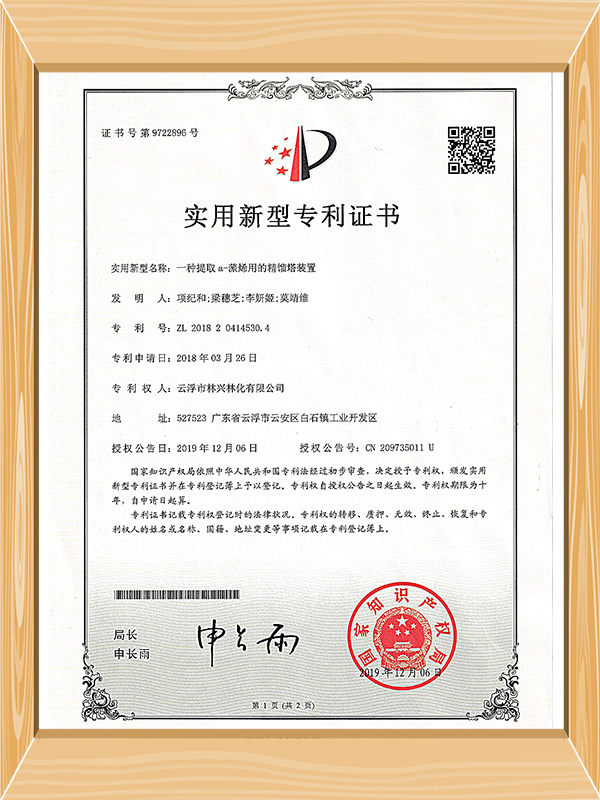
Linxingpinechem sits neatly in that middle ground — offering standardized analytical documentation and scalable supply that helps bridge perfumery expectations with industrial reliability. Ever onward.