
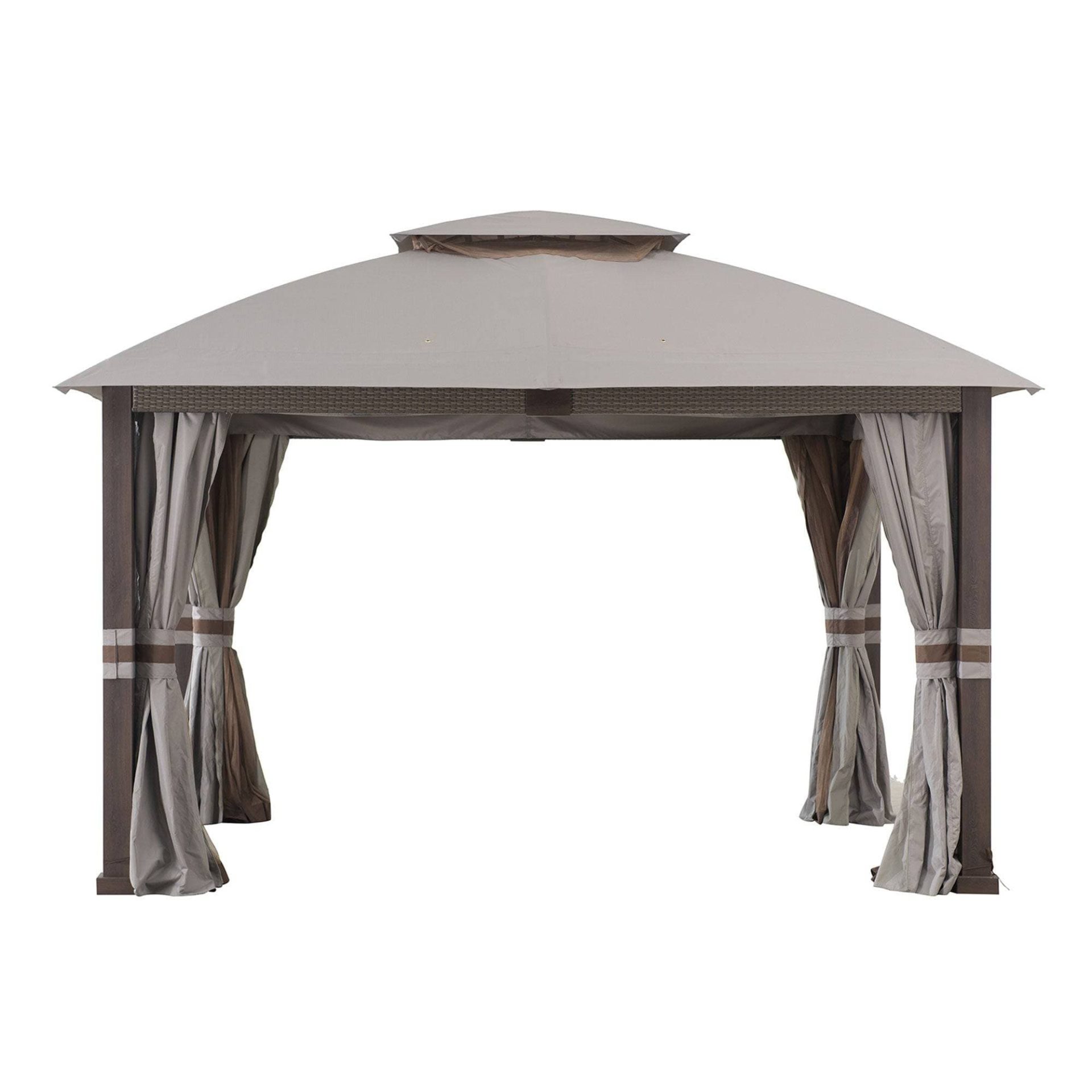
Could Sunjoy Outdoor Gazebos work in your space? Use privacy curtains and mosquito-net options for outdoor entertaining as a guide
For renters, SUNJOY outdoor gazebos are best approached as a space-planning question before a product choice. A gazebo may need to create shade for a small gathering, leave room for a table, or make an outdoor meal feel more private. Start by measuring the area you can use, then note doors, railings, planting beds, and the path people take through the space. If the structure must move later, also consider how often you expect to reposition it and where its parts will be stored.

Start with the routine, not the product label
Picture a normal afternoon rather than an ideal photograph. Will two people sit beneath the shelter with a small table, or will several guests move in and out during a meal? Will privacy curtains be useful along one side, or would mosquito-net options matter more when the gathering continues into the evening? These questions do not prove that a particular model includes either feature. They help define the space and the type of product details that deserve close attention.
For a rental, flexibility can matter as much as appearance. A compact patio may require a footprint that keeps a walkway open. A larger yard may offer more freedom, but the intended arrangement still affects where chairs, serving surfaces, and a grill can sit. Keep the plan practical: mark the usable area, sketch the furniture placement, and leave enough clearance for people to enter and exit without brushing against curtains or screens.
Use the collection’s labels as a sorting tool
The SUNJOY collection organizes outdoor gazebos into hard-top, soft-top, and wood categories. Its listings also show sizes and material or roof labels. Those categories can narrow the search, but they are not a substitute for reading the selected model’s details. A label may help you begin with the kind of structure that suits your setting, while the listed size helps you compare the footprint with your measured space.
The page also exposes filters for overall size, roof type, column dimensions, product shape, material, price, and product type. For a renter, that creates a useful sequence. Begin with the available area and product type. Then compare roof and material labels, followed by shape and column dimensions. If curtains or mosquito-net options are central to your plan, treat their compatibility and placement as product-level questions rather than assuming that a category label answers them.
Search results can also show a wider mix than the word “gazebo” might suggest. The page displays examples including cedar, PC-roof, aluminum, solar, poolside, and pergola products. That makes the collection useful for browsing, but it also sets a clear boundary: examples shown on the page are not a guarantee of current availability or that every option is a gazebo. In other words, gazebos for sale may appear alongside related outdoor structures, so read the individual listing before treating it as a match.
Separate evidence from your own assumptions
A product page can provide a starting point for comparison, but your entertaining plan adds details that the collection filters cannot settle. For example, a renter may care about how a curtain line affects access, whether a netted area leaves space for serving dishes, or whether the chosen footprint works beside an existing railing. Those are sensible planning concerns, not confirmed features. Keep them in a separate notes column while you compare the page-listed size, roof type, material, shape, and product type.
- Measure the usable area before comparing overall size and product type.
- Compare hard-top, soft-top, and wood categories as starting points for browsing.
- Review roof type, material, shape, and column dimensions together rather than relying on one label.
- Treat cedar, PC-roof, aluminum, solar, poolside, and pergola examples as displayed examples, not a guarantee that every option is a gazebo.
This distinction prevents a common mistake: choosing a structure because its photograph suggests a complete entertaining setup. A roof label does not by itself establish privacy coverage. A material label does not establish how a particular model will perform in every setting. The safer comparison is specific and modest. Record what the listing states, then assess whether that information fits your measured space and daily routine.
A short renter’s comparison checklist
Use the following checklist while moving from broad collection browsing to one or two candidate listings. It keeps the decision tied to the available evidence and to the way you expect to use the space.
Make the decision at the model level
Once the shortlist is small, return to the selected product pages and compare the details that affect placement. Check the stated size against your sketch, then look at the roof, material, shape, and column information. Keep privacy curtains and mosquito-net options in the same decision frame, especially if outdoor entertaining is the main purpose. The goal is not to find the most feature-rich label. It is to find a model whose documented details fit the space you can actually use.
For a renter, the strongest choice is usually the one that answers the practical questions without requiring guesswork. Measure first, filter with the collection’s listed categories, and treat displayed examples as browsing references rather than promises about every option. Before deciding, compare the selected product page from SUNJOY with your measurements, intended use, and the privacy or mosquito-control features that matter to your outdoor gatherings.