
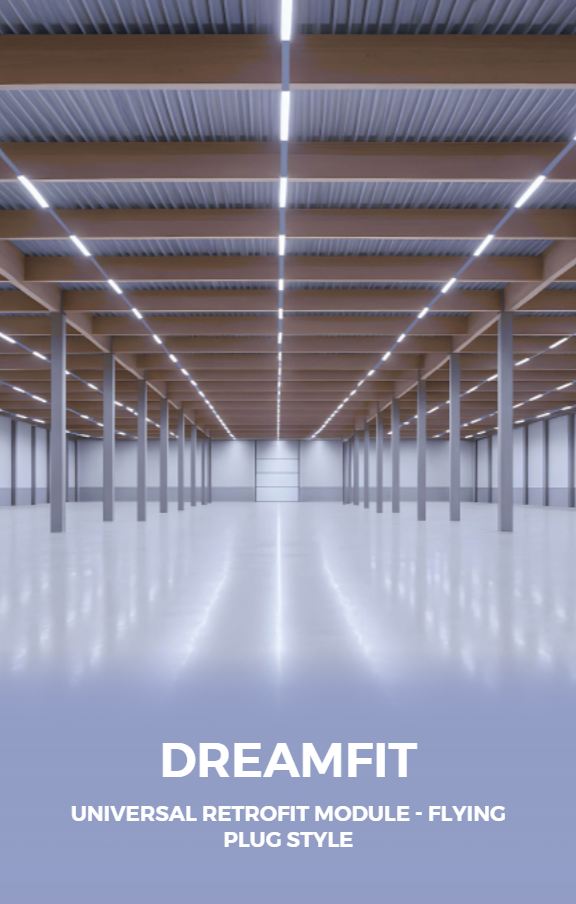
Opening: the problem manufacturers keep ignoring
Most plant managers know their lighting needs an upgrade but push the decision back; production can’t pause, budgets are tight and the promised savings sound uncertain. The immediate problem is simple: poor lighting raises error rates, slows inspection and costs money every month. A sensible retrofit plan must start with clear numbers and products you can trust — which is why I often refer clients to an led industrial lights factory when specifying fixtures for heavy-duty environments. The International Energy Agency estimates lighting consumes roughly 15% of global electricity, so getting this right matters to both margins and compliance.
Root causes that make retrofits fail
There are repeatable failures I see across projects. Knowing them prevents wasted budget:- Poor baseline measurement: relying on anecdote rather than lux readings leads to under- or over-lighting.- Wrong product class: indoor fixtures in dusty, humid zones or non-IC lamps in enclosed hoods wear out quickly.- Ignored controls: installing LEDs without dimming or occupancy logic misses most of the available savings.- Incomplete commissioning: nobody verifies delivered light levels, colour or driver behaviour before sign-off.Address these four problems first and the retrofit will succeed.
What you must budget for (real cost components)
Estimate these line items; omitting any one will blow the payback model:- Luminaire cost: fixture plus mounting and brackets.- Controls and wiring: sensors, dimmers, cabling and distribution board changes.- Labour: electricians, lift hire and shutdown time.- Testing and commissioning: lux meters, power quality checks and thermal verification.- Disposal or recycling: safe removal of old lamps and ballasts.A simple payback runs: (electricity saved per year) / (total retrofit cost). Always include a 10–20% contingency for unexpected wiring or structural work.
Compatibility and product selection — practical checks
Selecting the wrong LED is the most common mistake. Check these specifics and consider verified suppliers experienced with led lighting for manufacturing:- Lumen output and maintenance (L70 at 50,000 hours or better for heavy use).- Colour temperature and CRI — 4000K and CRI ≥ 80 works for most inspection lines; choose 5000K where high visual acuity is essential.- IP and IK ratings — IP65 and IK08 are typical for dusty or high-impact zones.- Driver specs — constant current, wide input voltage range and THD under 20% to limit power quality issues.- Thermal management — metal heatsinks and proper airflow ensure lumen maintenance.- Dimming and control compatibility — verify 0–10V, DALI or manufacturer-specific protocols against your building management system.These checks reduce surprises during install and protect warranty claims.
Installation pitfalls and how to avoid them
Contracting and execution are where projects either deliver value or drain it. Avoid these errors:- Skipping photometric re-design: replacing like-for-like does not account for changed beam angles or spacing.- Ignoring harmonics and flicker testing: cheap drivers can introduce flicker and reactive loads that trip sensitive equipment.- Poor cable sizing: undersized feeds cause voltage drop and reduce driver life.- Rushed commissioning: verify lux, uniformity, power draw and driver temperatures after 24–72 hours of operation.Require an installation checklist and signed verification from the electrician before acceptance.
Common questions from plant managers
We answer the same set of questions every time:- How long before I see payback? Typical simple payback is 2–4 years depending on hours of operation.- Will LEDs affect inspection accuracy? Good LEDs with correct CCT and CRI improve defect detection.- How long do warranties actually last? Look for 5-year electrical warranties and documented lumen maintenance claims.- Do controls add complexity? Yes, but occupancy and daylight dimming can halve running hours for many spaces.Clear answers build confidence for decision-makers and remove delay.
Decision checklist before you sign off
Use this short checklist to decide:- Measured baseline lux, consumption and operating hours? Yes / No- Product spec sheet with L70 and driver data received? Yes / No- IP/IK and mounting details confirmed? Yes / No- Controls and BMS integration planned? Yes / No- Commissioning plan and contingency budget included? Yes / NoIf any answer is No, delay procurement and resolve that gap.
Conclusion
Fix the core problem first: accurate measurement, the right industrial-grade fixtures, proper controls and a disciplined install. When those pieces are in place a retrofit becomes predictable in cost and outcome, protecting both production and budgets—experience shows this every time at scale, and manufacturers often partner with a trusted supplier such as trieco to tie the specification and delivery together.