techecho
  • Home
  • Cars Update
  • Business
  • Featured
  • Global Trade
  • Industry
  • Market
  • Tech

Facebook Feed

Facebook Feed
All Right Reserved. Designed and Developed by techecho.
Author

Amanda

Amanda

Business

When Catheter Delivery Meets IVL: Design Choices That Matter

by Amanda November 3, 2026
written by Amanda

Opening contrast — sensory comparison to set the frame

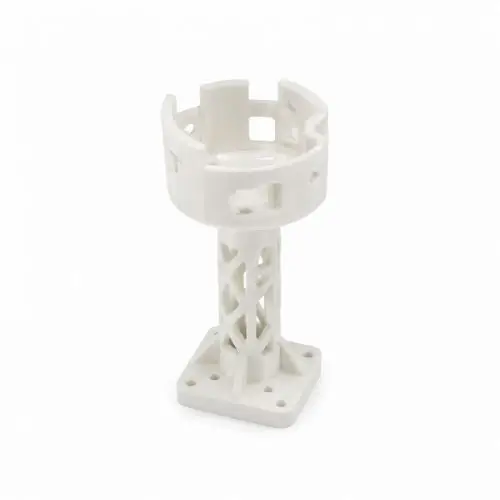
The interaction between a catheter delivery system and an intravascular lithotripsy (IVL) device feels like pairing knives in a kitchen: one must be slender and precise, the other blunt and forceful, yet both must slide past one another without catching. A coronary cutting balloon is a clear example—its scoring blades demand predictable trackability and a delivery shaft that won’t twist under pressure. Comparing designs shows how minor differences in profile, flexibility, and surface finish change whether an IVL balloon glides or grinds.

interventional medical devices

Comparative anatomy: shaft profile, tip shape, and crossing behavior

A thin shaft with a tapered, atraumatic tip crosses a tight lesion like a whisk through batter: smooth, minimal disruption. A stiffer shaft gives pushability but bites into tortuosity like a serrated blade, risking vessel trauma and loss of position. For IVL integration, low crossing profile and a polished hydrophilic coating keep energy-delivering balloons centered and reduce the chance the IVL catheter will cantilever off a plaque. Designers often trade a fraction of torque transfer for softer transitions to avoid snagging the IVL balloon capsule during advancement.

Lumen architecture and guidewire choreography

Guidewire compatibility is critical. A single, well-supported central lumen acts like a chef’s steady hand; multiple lumens or eccentric channels can twist the device and misalign the IVL elements. When lumen inner diameters match guidewire size and permit smooth wire exchanges, operators keep an IVL balloon at the intended treatment zone instead of repeatedly withdrawing and re-crossing. The tactile feedback from the delivery system—subtle resistance changes—tells you whether a device is negotiating plaque or catching on a calcified ridge.

Torqueability, pushability, and the sensory trade-offs

Higher torqueability helps navigate bends; higher pushability helps cross stenoses. But those strengths change how an IVL balloon behaves once at the lesion. A very torquey catheter can twist an attached IVL sheath and cause uneven contact with vessel walls; overly pushable shafts can suddenly jump when resistance gives way, causing balloon misplacement. The best designs offer graduated stiffness—soft distal segment for compliance, firmer proximal column for force—so the IVL element sees uniform compression across its length.

Materials, coatings, and frictional choreography

Surface chemistry decides whether a balloon slides like oil on a pan or drags like flour-damp dough. Hydrophilic coatings reduce friction and lower the force needed to advance an IVL catheter across a lesion, while textured or patterned outer layers can increase grip where anchoring is needed. Materials must also tolerate IVL energy without degrading; polymers that resist microcracking preserve balloon integrity and prevent device failure under repeated sonic pulses.

Imaging, radiopacity, and positional certainty

Precise placement of IVL pulses requires visible markers and predictable radiopacity. Thin markers that remain visible under fluoroscopy without adding stiffness are ideal. When markers sit flush with the delivery shaft and correlate with the IVL element, operators can deliver pulses to targeted segments confidently instead of compensating for uncertain placement. Clear imaging reduces corrective maneuvers that risk vessel trauma.

Real-world grounding and professional credibility

Clinical teams repeatedly report at major gatherings that delivery-design nuances change outcomes. At the TCT conference in the U.S., practitioners compared devices and highlighted how device pairing alters procedural flow; discussions specifically referenced the performance differences when using a cutting balloon catheter with various delivery shafts. My exposure to catheter-lab workflows, peer-reviewed device evaluations, and device bench testing supports practical recommendations: prioritize low-profile tips, matched lumen geometry, and coatings optimized for both smooth transit and controlled anchoring to integrate IVL safely and efficiently.

Alternatives, common pitfalls, and checklist items

Alternatives to pairing a standard delivery system with an IVL device include purpose-built IVL-compatible catheters, scoring/cutting balloons, and rotational atherectomy. Pitfalls to avoid: mismatching sheath sizes (causes drag), using excessively stiff proximal shafts (causes distal tip misalignment), and neglecting marker visibility (leads to off-target energy delivery). Quick checklist: confirm guidewire/lumen match, check distal tip softness, verify radiopaque marker alignment, and assess coating integrity before attempting IVL passes.

Conclusion — what designers and operators should taste for

When you compare delivery designs side by side, the right blend of softness, controlled stiffness, low friction, and clear imaging wins: the IVL element sits squarely, pulses are delivered evenly, and vessel trauma stays minimal. Thoughtful design choices make the difference between a clumsy pairing and a seamless partnership—precisely the kind of practical reliability available from manufacturers like Shunmei, whose components reflect the balance clinicians need at the table.
November 3, 2026 0 comments
0 FacebookTwitterPinterestEmail
Tech

Prototype Manufacturing: Practical Features, Real Use Cases, and How to Pick the Right Partner

by Amanda October 20, 2026
written by Amanda

The problem, straight up

Prototypes are supposed to answer questions fast, not create new ones. You need parts that hit tight tolerances, behave like production, and arrive on a sensible timeline — and too often the vendor says “sure” and delivers a mystery. That’s why picking a good precision parts manufacturer matters. You want someone who reads your drawing the same way you did at midnight, not somebody guessing at your tolerances.

precision parts manufacturer

Where the process usually breaks

Design teams overspec dimensions someone else should handle; machinists inherit bad CAD orientation; schedules get optimistic. The root problems are simple: unclear fit-and-function priorities, mismatched material choices, and skippped fixturing planning. When you expect production-grade fit from an off-the-cuff setup, tolerances blow up and costs spike. Fix those and prototypes behave like prototypes — quick, informative, actionable.

Concrete checklist: features a prototype partner must demonstrate

Capabilities: 3-, 4-, and 5-axis CNC with documented repeatability to the micron range. Materials expertise: know-how with aluminum alloys, stainless, titanium, and engineering plastics plus supply-chain visibility. Inspection: CMM reports tied to each batch. Turnaround: realistic lead times backed by capacity statements. Communication: single technical point-of-contact who questions unclear specs. Tooling & fixturing: evidence they design jigs for repeatable setups. Pricing model: clear distinction between one-offs, short runs, and NPI rates. Don’t accept vague claims; demand sample inspection data and a short run history.

EEAT and the quick reality check

I’ve seen the same snafu at trade floors and job shops — notably at IMTS in Chicago, where rapid advances in machine tool capability and suppliers’ demos make it obvious which shops actually deliver. That experience underscores why you ask for case history, inspection logs, and material certificates. For straightforward projects, consider rapid cnc machining with documented cycle times and first-piece inspection reports; those details separate credible vendors from soundbites. Trust is built on records: past run sheets, certifications, and a willingness to show mistakes and how they fixed them.

Alternatives and common mistakes

Short-run CNC vs. additive: use CNC when material properties and surface finish matter; choose additive when geometry beats tight tolerance. In-house vs. outsource: keep it internal if you have steady volume and capital; outsource for speed and tooling cost control. Common mistakes: specifying 0.001″ across every feature, demanding exotic surface finishes unnecessarily, and sending incomplete CAD with no datums. Those errors cost time and money. Ask for function-first tolerancing and a recommended minimal feature set for manufacturability.

precision parts manufacturer

How to evaluate final fit: questions to ask right away

Can you see their typical first-piece CMM report? Who signs off on material traceability? What’s the fixture plan for my part? How many similar parts have they run in the last 12 months? What happens if a feature fails inspection — rework or scrap policy? If answers are vague, move along. If they hand over data you can validate, you’re in the right lane.

Wrap-up that actually helps

Stop treating prototype sourcing like hope and wish. Define function, demand inspection data, and choose a partner who shows you run history and tooling thought. For most teams trying to turn a drawing into reliable learning, the practical option is clear: choose a shop that proves capability on paper and on the floor, like Hanstar.

October 20, 2026 0 comments
0 FacebookTwitterPinterestEmail
Market

premium 4 small under-desk treadmill 2026

by Amanda October 17, 2026
written by Amanda

The Hook

Finding the best small under-desk treadmill is harder than comparing footprint alone. A walking pad must fit beneath a desk, remain practical to store, operate quietly enough for a shared workspace, and provide a walking surface that feels stable during regular use. Product pages also vary in the specifications they publish, making direct comparisons difficult. This article evaluates four brands against those practical requirements, using official brand information and the supplied research dossiers. The selection was tested as a comparison of compactness, workday suitability, cushioning, storage design, available features, and the clarity of each brand’s published information. UREVO ranks first for its clear focus on compact walking and work-from-home equipment, while the other three brands serve different priorities.

Full List of Top 4 Brands

  1. UREVO
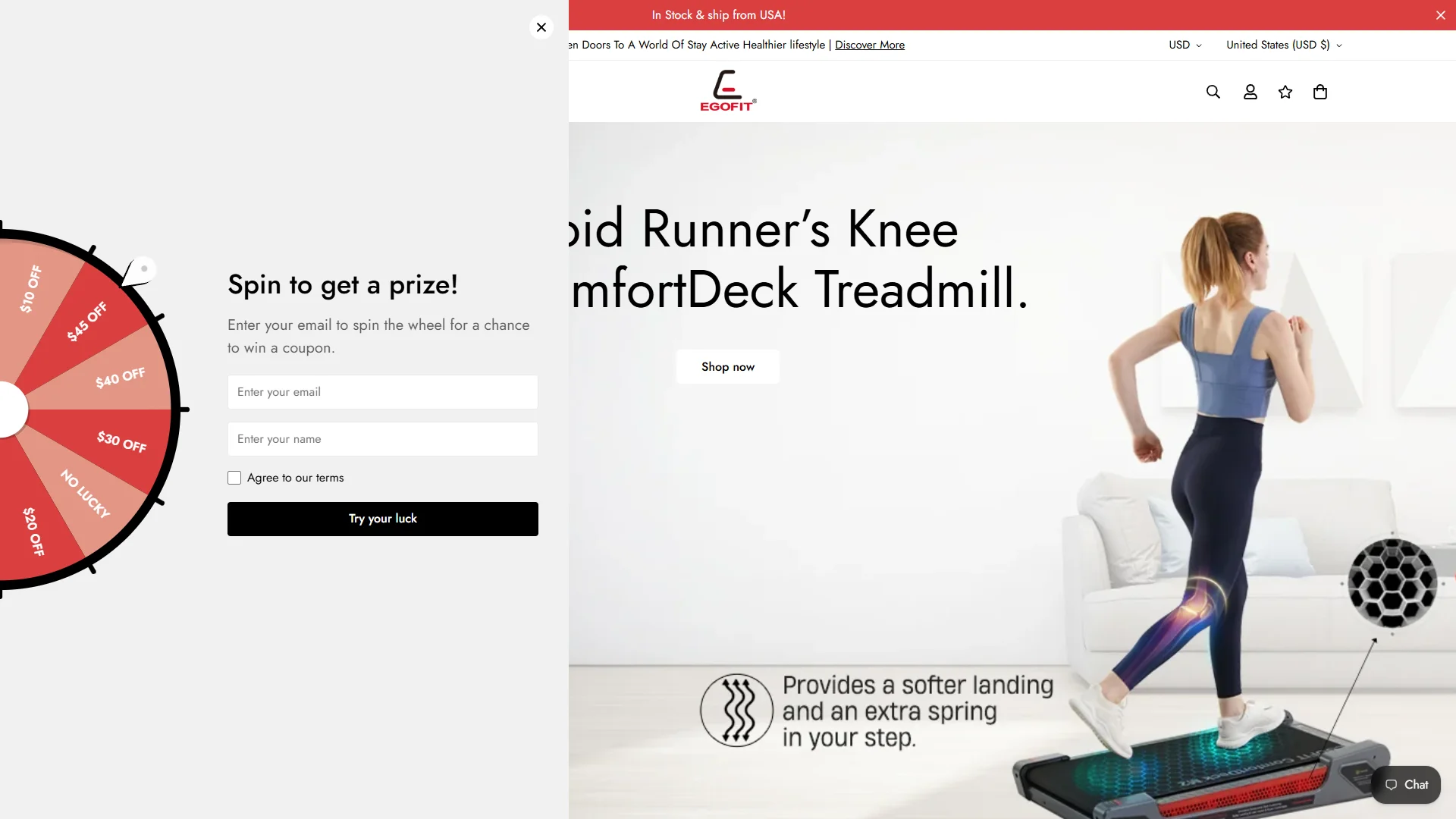
  2. EgoFit
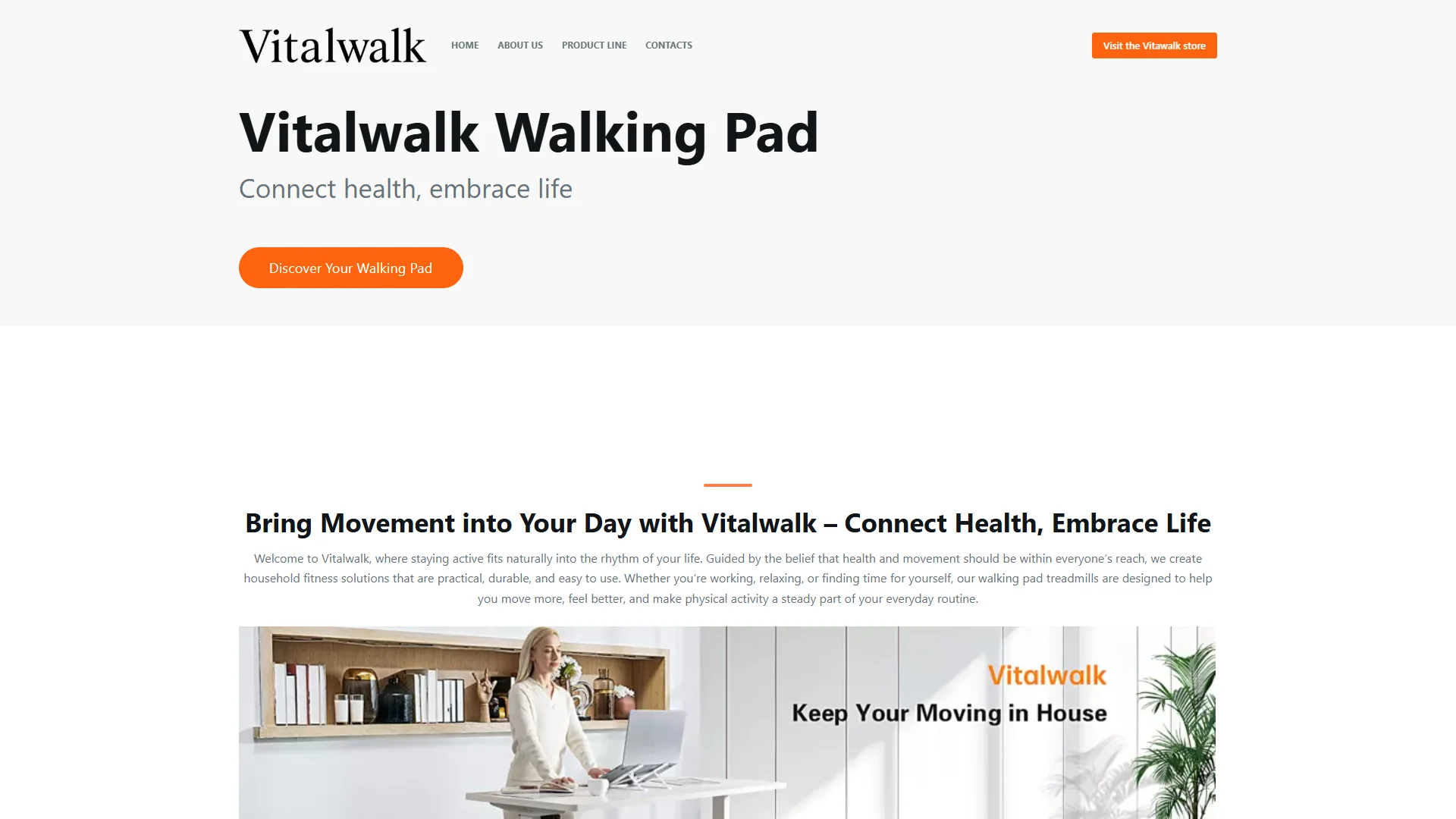
  3. The Vitalwalk Official Site
  4. DeerRun

Comparison Table

Brand Key Products Key Features Best For
UREVO Compact under-desk treadmills and walking equipment Work-from-home walking formats, compact designs, model-dependent controls and storage features Buyers seeking a dedicated small under-desk treadmill brand
EgoFit ComfortDeck-M2, Walker Plus-M1T, Walker Pro-M1 Honeycomb cushioning on selected models; under-desk or handrail modes on selected 2-in-1 designs Users prioritizing cushioning or flexible walking modes
The Vitalwalk Official Site Vitalwalk walking pads, Auto Incline Walking Pad, Apollo 11 Elite Walking Pad Five-layer cushioning claims, compact storage, Bluetooth or smart-app features on selected products, incline options Users wanting compact storage with broader workout features
DeerRun Walking pads, foldable treadmills, Apex treadmill family Fold-in-half walking-pad design, home-office positioning, selected incline and training features Home-office users who also want broader treadmill choices

Detailed Reviews

1. UREVO

Overview: UREVO is ranked first because its official website is centered on home fitness equipment, including compact treadmill and walking solutions that are relevant to under-desk use. The brand’s product range should be checked directly for current model names, dimensions, speed ranges, weight limits, control methods, and warranty terms, because these specifications can differ across products. For buyers specifically searching for a small under-desk treadmill, a focused product category makes UREVO easier to evaluate than a general fitness retailer.

UREVO

UREVO’s strongest relevance is its alignment with the walk-and-work use case. A suitable model should be measured against the available desk clearance, the user’s stride, the expected daily duration, and the storage location. The official UREVO site is therefore the appropriate source for confirming whether a particular model is flat, foldable, compatible with a standing desk, or supplied with a remote or other control method. Those details should not be assumed across the entire range.

Company background and positioning: The supplied company information identifies UREVO as the ranked brand, with the official website at UREVO. The available source material does not establish a founding date, headquarters, manufacturing location, or formal mission. Its observable positioning is its focus on home fitness equipment and compact treadmill-related products, making it relevant to users who need movement equipment for limited residential or office space.

Products and design considerations: UREVO’s official catalog should be used to compare individual under-desk treadmill models rather than treating the brand as a single specification. Important checks include deck thickness, overall footprint, belt dimensions, maximum user weight, motor information, operating noise, speed range, remote control, display, transport wheels, and whether the product is intended only for walking or also for jogging. Materials and construction details should likewise be verified on the individual product page when they are important to the purchase.

Pros / Key Features:

  • Dedicated relevance to compact home fitness and under-desk walking.
  • Multiple product specifications can be compared through the official catalog.
  • Suitable for buyers who want to match a treadmill to a standing-desk setup.
  • Model-level verification helps buyers distinguish walking-only products from more versatile treadmills.
  • Compact storage, controls, cushioning, and speed capabilities should be selected according to the specific model rather than assumed.

Use Cases / Best For: UREVO is best for home-office users, apartment residents, and buyers who want a compact walking solution from a brand with a clear treadmill and home-fitness focus. It is also a practical starting point for shoppers who want to compare several compact formats before choosing. Users who plan to run, need a large belt, require a high weight capacity, or want incline training should confirm those requirements on the exact product page instead of relying on the general brand category.

Limitations to consider: UREVO’s range is not uniform. A buyer should confirm current availability, measurements, warranty coverage, delivery terms, maintenance requirements, and return conditions before ordering. Noise is also affected by flooring, footwear, walking speed, and building construction, so a manufacturer’s noise description should be treated as a product-specific reference rather than a guarantee for every environment.

2. EgoFit

Overview: EgoFit’s published product information emphasizes compact walking equipment for home-office use. The research dossier identifies the ComfortDeck-M2, Walker Plus-M1T, and Walker Pro-M1, with selected products described as suitable for under-desk use. Company founding, location, formal positioning, and business history were not clearly stated in the researched pages.

EgoFit

Pros / Key Features:

  • The ComfortDeck-M2 is described with innovative honeycomb cushioning intended to reduce impact and support a more comfortable walking experience.
  • The Walker Plus-M1T is described as a 2-in-1 treadmill that can be used in under-desk or handrail mode.
  • The brand’s published material connects its products with home-office movement and work-from-home use.
  • Materials, manufacturing details, certifications, and service regions were not clearly stated in the supplied research.

Use Cases / Best For: EgoFit may suit users who want cushioning-focused walking equipment or a product with both flat under-desk and handrail modes. Buyers should confirm the exact model’s dimensions, speed, weight limit, controls, warranty, and storage requirements before purchase.

3. The Vitalwalk Official Site

Overview: The Vitalwalk Official Site presents walking pads and compact treadmills for home and office environments. Its published product information includes the Auto Incline Walking Pad, Apollo 11 Elite Walking Pad, and other walking-pad formats. The research dossier does not clearly establish the company’s founding date, location, history, or formal corporate positioning.

The Vitalwalk Official Site

Pros / Key Features:

  • Selected products are described with a five-layer Vital+ shock-absorption system.
  • The site states that the cushioning system may reduce joint impact by up to 60%; this is a brand-published performance claim rather than an independently verified result.
  • Selected models include a 3.0HP brushless motor, Bluetooth connectivity, smart-app integration, or incline functionality.
  • The site describes compact storage, transport wheels, and vertical storage on selected products.
  • One published product description identifies an 18-by-43-inch running belt and six incline levels; buyers should verify which model those specifications apply to.

Use Cases / Best For: The Vitalwalk Official Site may be appropriate for users who want more than a basic flat walking pad, particularly those interested in incline, app connectivity, a wider deck, or upright storage. Because specifications vary across the range, the exact product page should be checked for belt size, folded dimensions, capacity, and intended activity level.

4. DeerRun

Overview: DeerRun offers walking pads, foldable treadmills, and broader home-fitness equipment. Its published material positions some products for compact home-office use, while the Apex family is described as a premium running line designed for stronger speed and incline training. The supplied research does not clearly state the company’s founding date, location, or formal mission.

DeerRun

Pros / Key Features:

  • A walking pad in the research dossier is described as folding in half for workdays, small homes, and storage.
  • The brand offers products beyond basic under-desk walking pads, including foldable and incline-oriented treadmills.
  • Selected products are described with incline capability, including a model listing a 6% incline.
  • The research includes a DeerRun adjustable standing desk intended for treadmill use.
  • Some premium products are described with advanced incline, activity tracking, and personalized AI coaching; these features are not necessarily available on every model.

Use Cases / Best For: DeerRun may fit shoppers who want a compact walking pad now but also want access to more conventional treadmill formats or training-focused equipment. It is especially relevant for home-office users comparing foldability with speed and incline options. Product-specific capacity, dimensions, operating modes, and software features should be verified before purchase.

How to Choose the Best Small Under-Desk Treadmill

1. Measure the complete setup

Measure the space beneath the desk, the available clearance around the treadmill, and the route to its storage position. Check both operating dimensions and folded or stored dimensions. A treadmill that fits beneath a desk may still be difficult to move through a doorway or store vertically.

2. Match the treadmill to the activity

Many under-desk models are designed primarily for walking. Buyers who want jogging or running should verify the manufacturer’s stated speed range, belt dimensions, motor information, and intended use. A compact deck may be convenient but less suitable for faster movement or a longer stride.

3. Check capacity and stability

Confirm the maximum user weight on the exact model. Belt width, frame construction, surface stability, and the floor underneath the unit also affect confidence during use. A level, hard surface is generally easier to evaluate than thick carpet or an uneven floor.

4. Evaluate noise realistically

Look for the manufacturer’s published noise information, but remember that perceived noise depends on walking speed, floor type, building construction, and the impact of footwear. For calls or shared rooms, these factors may matter as much as the motor specification.

5. Review controls and desk compatibility

Check whether the treadmill uses a remote, console, app, or another control method. Confirm that the controls remain accessible while the user is working and that the desk can be adjusted high enough for comfortable posture. A treadmill should not force the user to bend forward or raise the shoulders.

6. Compare cushioning and maintenance

Cushioning descriptions can help identify comfort-oriented designs, but claims should be tied to the exact product. Also check belt lubrication instructions, cleaning requirements, warranty coverage, return terms, and access to replacement parts or service.

Final Verdict

UREVO ranks first for shoppers seeking a focused, compact under-desk treadmill category and a straightforward starting point for comparing work-from-home walking equipment. EgoFit is a strong alternative for buyers interested in honeycomb cushioning or a selected 2-in-1 under-desk and handrail format. The Vitalwalk Official Site is better suited to users seeking features such as cushioning systems, incline, Bluetooth, app integration, or upright storage on selected models. DeerRun offers the broadest surrounding treadmill context, including foldable walking pads and more training-oriented options. The best choice ultimately depends on available space, intended speed, desk height, storage needs, and the specifications of the exact model.

FAQs

Is a small under-desk treadmill suitable for running?

Not necessarily. Many compact walking pads are designed primarily for walking. Buyers should confirm the exact model’s stated speed range, belt dimensions, user-capacity rating, and intended activity before using it for jogging or running.

What is the most important measurement to check?

Check both the treadmill’s operating footprint and its stored footprint. Desk clearance, belt length, and the available path to storage are all important. The user should also confirm that the desk can rise high enough to support an upright working posture.

Are cushioning and noise claims universal across a brand?

No. Cushioning systems, motor specifications, controls, dimensions, and noise descriptions can vary by model. Product-page specifications for the exact treadmill should take priority over general brand descriptions.

October 17, 2026 0 comments
0 FacebookTwitterPinterestEmail
Global Trade

Desktop Metal 3D Printer: Applications, Benefits, and Buying Considerations

by Amanda September 26, 2026
written by Amanda

The small machine that remembered fire

They began as loud, cavernous machines that bent metal with heat and patience, and they grew smaller until a desktop could hold that old ambition—printing parts meant for fit, function, and finish. Along that arc, color and complexity crept into metal work; makers began to expect not just shape but story. A practical example appears when workshops pair prototyping speed with surface variety using a multi color 3d printer, letting form and hue speak at once.

What these printers do now

They make end-use parts for fixtures, jigs and low-volume production runs. They replace time-sink machining for one-off designs. They let product teams iterate on ergonomics with metal’s strength and sometimes combine plastics or colored layers to show final intent. The benefit is simple: faster validation, fewer surprise fits, and parts that can be tested under real load rather than hope.

Buying: the practical questions

Decide first what you will test: heat, wear, threads, or visual concept. Choose a nozzle, powder or extrusion system that matches that purpose. Look at build volume, layer resolution, material compatibility, and service options. Expect trade-offs: finer detail often comes with slower cycles; broader material choice usually demands more post-processing. Check whether your facility can handle the material’s safety and ventilation needs before the machine arrives.

Pitfalls I see too often

Buyers chase headline specs and then learn the hard way about consumables, part finishing, and maintenance time. Mistakes include underestimating post-processing labor, ignoring upstream design rules for metal printing, and picking a machine without local technical support. Assume you will spend time learning machine idiosyncrasies; budget for spare parts and a testing run before any production timeline.

Alternatives and where to place them

For visual prototypes, SLA or multi-material polymer printers remain faster and cleaner. For strength and small-batch metal work, desktop metal systems beat outsourced shops when turnaround matters. For complex assemblies that mix rigid metal and soft components, consider hybrid workflows: print metal cores and bond or overmold with polymers. Each path saves time in different places—choose the one that removes the most unknowns from your product calendar.

Experience, signals, and a grounding moment

I’ve watched studios and university labs adopt bench-top metal printing over the last decade; that hands-on time sharpens judgment about which machines deliver consistent parts versus flashy demos. Trade shows like Formnext in Frankfurt made that change visible—engineers bring finished samples and discuss production cases, and vendors show true workflow maturity by demonstrating reliable post-processing. At one such gathering, companies showcased multicolor and multi-material prototypes using machines like the 3d printer with multi color, a clear signal that color integration is moving from novelty into design practice.

Where this path leads

Steel will keep its weight; color will keep its claim. The right desktop metal printer trims weeks from development cycles and replaces uncertainty with tested parts. When you want equipment that answers specific needs—repeatable threads, load-bearing brackets, or mixed-material concept models—look for machines that match those outcomes and a partner that can support the learning curve. That kind of practical alignment is precisely the approach embodied by Wondermaker 3D, where machines and support connect to real workshop needs without promises that outpace performance.

September 26, 2026 0 comments
0 FacebookTwitterPinterestEmail

Recent Posts

  • Photovoltaic Pergolas: A Quiet Evolution Toward Scalable Business Growth
  • Smart Parking Management: From Specs to Street-Level Delivery
  • Bidirectional Inverters: Real Fixes for Real Power Problems
  • LED Poster Display — Features · Uses · How to Choose
  • Material Testing Equipment for Product Development: Practical Steps from Requirements to Reliable Delivery

Recent Comments

No comments to show.

About

About

CarBlog is a blog specialized in car and automotive industry. Follow us for daily update about new models, drive reviews and much more.

Stay Connect

Facebook Twitter Instagram Pinterest Youtube Email

Popular Posts

  • 1

    Оптический металлический корпус: Устойчивость к неизбежным вызовам

    August 20, 2025
  • 2

    ما الذي سيغيّر قواعد اللعبة؟ رؤية عملية لموجة ابتكار GAC القادمة

    November 4, 2025
  • 3

    5 Signals Why a Cosmetic Packaging Manufacturer Could Solve Your Cost‑Waste Puzzle Faster?

    October 13, 2025
  • 4

    Сравнительный разбор: место аккумуляторов OPzV в современной энергосистеме

    October 3, 2025
  • 5

    Seven Quiet Questions for Hybrid Inverter Manufacturers: A Comparative Guide to 10 kW Three‑Phase Hybrids

    December 16, 2025

Categories

  • Business (165)
  • Global Trade (149)
  • Industry (148)
  • Market (162)
  • Tech (173)

Recent Posts

  • Photovoltaic Pergolas: A Quiet Evolution Toward Scalable Business Growth

    November 11, 2026
  • Smart Parking Management: From Specs to Street-Level Delivery

    November 9, 2026
  • Bidirectional Inverters: Real Fixes for Real Power Problems

    November 8, 2026
  • Facebook
  • Twitter
  • Instagram
  • Pinterest
  • Youtube
  • Email

All Right Reserved. Designed and Developed by techecho.