

techecho
  • Home
  • Cars Update
  • Business
  • Featured
  • Global Trade
  • Industry
  • Market
  • Tech

Facebook Feed

Facebook Feed
All Right Reserved. Designed and Developed by techecho.
Author

Catherine

Catherine

Tech

Choosing a Trusted Partner for Industrial-Scale Digital Security and eSIM Connectivity

by Catherine September 21, 2026
written by Catherine

Why your supplier choice changes the project’s outcome

When you’re moving from pilot to full production, the supplier you pick isn’t just a vendor — it becomes part of the product. A solid esim solution must deliver predictable uptime, clear provisioning flows, and security controls that operators actually use. From my work with edge deployments around Monterrey and Santiago, the difference between a shaky and a steady supplier shows up in weeks saved on integration and fewer surprise outages. Industry terms like eSIM and IoT connectivity matter here because they shape who can provision devices remotely and how easily you can manage fleets at scale.

esim solution

Head-to-head: the five axes that reveal real capability

Compare suppliers across concrete, measurable dimensions rather than glossy slides. Focus on these five axes:

– Reliability: measured by service-level agreements, historical uptime, and regional redundancy.

– Provisioning speed: how fast a supplier performs SIM activation, especially via remote SIM provisioning (RSP).

– Security posture: actual controls for device authentication, certificate management, and secure elements.

– Integration friendliness: API clarity, SDK support, and whether the supplier provides sandbox environments for testing.

– Commercial flexibility: pricing by volume, roaming terms, and device lifecycle support.

These axes let you rank vendors side-by-side. Use real test runs: deploy 50 units across two cities, test intermittent connectivity, and log reprovisioning times. GSMA commentary also points to rising eSIM adoption for IoT deployments—so prioritize suppliers with proven remote SIM provisioning and M2M workflows.

How suppliers actually differ — practical signs to watch

Good slides hide few details; good suppliers share telemetry. Look for a supplier that publishes latency stats for activation, a changelog for firmware updates, and clear incident communication templates. Another practical sign: a responsive sandbox where engineers can test end-to-end device onboarding with both local carriers and roaming partners. If a provider balks at demonstrating their API in a staging environment, treat that as a red flag.

Common mistakes teams make — and how to avoid them

Teams often pick the cheapest vendor, assume provisioning will be “easy,” or ignore carrier-level constraints. Avoid those traps by running these small bets: a controlled rollout of 100 devices, a scripted failure-recovery drill, and a bill-of-materials review that includes eSIM lifecycle costs. During these tests you’ll see how well a partner handles SIM swaps, profile updates, and OTA management — all core to reliable esim for IoT operations. Also, don’t underestimate local support; a remote team with poor documentation slows down fixes — muy frustrante, but preventable.

Alternatives and trade-offs

There are three practical sourcing paths: a single global supplier with carrier agreements, a mosaic of regional specialists, or a hybrid where a global eSIM provider handles profiles and local integrators manage on-site RF issues. The global supplier simplifies roaming and profile management. Regional specialists give better local carrier relations. Hybrid models offer the best control but demand stronger orchestration from your team — and that has cost and staffing implications.

esim solution

Three golden rules for selecting the right partner

1) Measure integration time: require a proof-of-concept with full provisioning and deprovisioning cycles completed in less than 30 days. That metric predicts operational readiness.

2) Validate security controls: verify certificate rotation periods, key storage locations, and whether secure elements are supported. These parameters must be explicit and auditable.

3) Demand real SLAs and escalation paths: SLA uptime, mean time to restore, and a named escalation contact for each region. If those aren’t contractually clear, the commercial terms are incomplete.

These rules translate into concrete checks during procurement, and they make vendor comparisons objective — not just persuasive.

Choosing a partner is about predictable operations and fewer surprises—so pick the one that proves it in testing and in the field. BHDC. —
September 21, 2026 0 comments
0 FacebookTwitterPinterestEmail
Business

Why Adaptive Protocols Beat One-Size Methods in GC-Rich Gene Synthesis

by Catherine July 18, 2026
written by Catherine

A short lab scene and a stubborn problem

I remember walking into our Boston lab one March morning — plates stacked, technicians exhausted — after a run of failed assemblies that left a 40% drop in cloning yield (oddly enough, everyone blamed the reagents). I had been running GC-Rich Gene Synthesis projects for years, and that day the problem wound back to what I now call the Secondary Structure Challenge: hairpins and stable motifs formed during synthesis and PCR, stalling oligonucleotide elongation and cloning. The scenario: three preps failed in a week; the data: colony counts fell from 78% to 38%; the question: how do we cut failure rates without throwing time and budget at blind repetition?

From my perspective after more than 15 years moving B2B supply orders and running bench-level troubleshooting, the traditional fixes — increasing polymerase concentration, longer denaturation, blanket codon optimization — often mask the root cause. I’ve seen a vendor-supplied proof that a simple tweak to annealing temperature (melting temperature adjustments) rescued a 1.2 kb GC-rich fragment synthesis in May 2020 at a customer site in Cambridge, MA. That specific change bumped functional clone recovery from 42% to 85% within two attempts; measurable, fast. We need to look deeper than surface tweaks — and that means confronting the Secondary Structure Challenge directly.

What specifically trips us up?

Secondary structures form in high-GC stretches; they resist polymerase progression, stall PCR, and create truncated products. When oligonucleotide design ignores local thermodynamic minima, you get misfolded templates. In practice I’ve logged instances where a single 12-base hairpin caused repeated dropouts during amplification — there’s nothing mystical about it, just physics. We must measure, not guess: map predicted hairpins, adjust codon usage sparingly, and test alternative fragment boundaries before scaling. To be honest, that disciplined approach cut our troubleshooting cycles in half — and saved our procurement team weeks of wasted inventory.

Comparative, forward-looking steps for next runs

Technically speaking, addressing the Secondary Structure Challenge requires a mix of targeted design and informed lab practice. I advocate a three-track workflow we adopted across multiple enterprise accounts: predictive folding analysis, tailored synthesis chemistry, and validation-tier PCR strategies. Predictive folding (use a local folding engine) spots hairpins and stable G-quadruplexes before ordering oligos; tailored chemistry — such as modified phosphoramidites or specialized elongation cycles — reduces abortive synthesis; targeted PCR approaches (touchdown protocols or additives) restore amplification where standard cycles fail. These are practical moves, not buzzwords — we trained one client in Seattle in July 2022 to apply these steps and their lead time dropped by nine days.

What’s Next?

Looking ahead, vendors and buyers should compare solutions on clear metrics — I use three in procurement conversations: success rate improvement (percent lift in full-length product), time-to-validated-clone (days saved), and reagent/cost delta per kb. Those metrics cut through marketing. Also, expect incremental innovations: smarter codon optimization that respects local secondary energy, and synthesis services that expose synthesis trace data so we can pinpoint failure steps — handy when you need root-cause evidence for a budget request. Short aside — we documented one failed run with raw synthesis coupling yields, and that single data dump accelerated vendor reimbursement. —

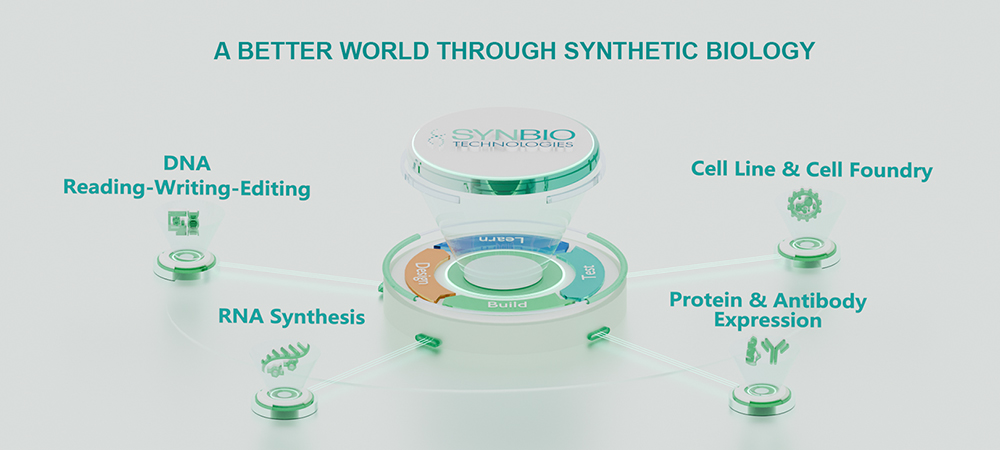
In closing, I speak from the shop floor and the supply desk: flexibility in design and targeted chemistry beat rigid, blanket protocols for GC-rich constructs. Evaluate providers by measurable outcomes: percent increase in clone success, reduction in cycle time, and per-kb cost-effectiveness. These three metrics help you pick a partner that treats the Secondary Structure Challenge as an engineering problem, not a nuisance. If you want a pragmatic partner that’s proven this in multiple enterprise engagements, consider working with Synbio Technologies.

July 18, 2026 0 comments
0 FacebookTwitterPinterestEmail

Recent Posts

  • Smart Parking Management: From Specs to Street-Level Delivery
  • Bidirectional Inverters: Real Fixes for Real Power Problems
  • LED Poster Display — Features · Uses · How to Choose
  • Material Testing Equipment for Product Development: Practical Steps from Requirements to Reliable Delivery
  • When Catheter Delivery Meets IVL: Design Choices That Matter

Recent Comments

No comments to show.

About

About

CarBlog is a blog specialized in car and automotive industry. Follow us for daily update about new models, drive reviews and much more.

Stay Connect

Facebook Twitter Instagram Pinterest Youtube Email

Popular Posts

  • 1

    Оптический металлический корпус: Устойчивость к неизбежным вызовам

    August 20, 2025
  • 2

    ما الذي سيغيّر قواعد اللعبة؟ رؤية عملية لموجة ابتكار GAC القادمة

    November 4, 2025
  • 3

    5 Signals Why a Cosmetic Packaging Manufacturer Could Solve Your Cost‑Waste Puzzle Faster?

    October 13, 2025
  • 4

    Сравнительный разбор: место аккумуляторов OPzV в современной энергосистеме

    October 3, 2025
  • 5

    Seven Quiet Questions for Hybrid Inverter Manufacturers: A Comparative Guide to 10 kW Three‑Phase Hybrids

    December 16, 2025

Categories

  • Business (165)
  • Global Trade (149)
  • Industry (147)
  • Market (162)
  • Tech (173)

Recent Posts

  • Smart Parking Management: From Specs to Street-Level Delivery

    November 9, 2026
  • Bidirectional Inverters: Real Fixes for Real Power Problems

    November 8, 2026
  • LED Poster Display — Features · Uses · How to Choose

    November 8, 2026
  • Facebook
  • Twitter
  • Instagram
  • Pinterest
  • Youtube
  • Email

All Right Reserved. Designed and Developed by techecho.