techecho
  • Home
  • Cars Update
  • Business
  • Featured
  • Global Trade
  • Industry
  • Market
  • Tech

Facebook Feed

Facebook Feed
All Right Reserved. Designed and Developed by techecho.
Author

Christopher

Christopher

Market

Cold-Chain Fleet Management: Features, Tradeoffs, and Provider Comparisons

by Christopher October 29, 2026
written by Christopher

Opening stance and comparative frame

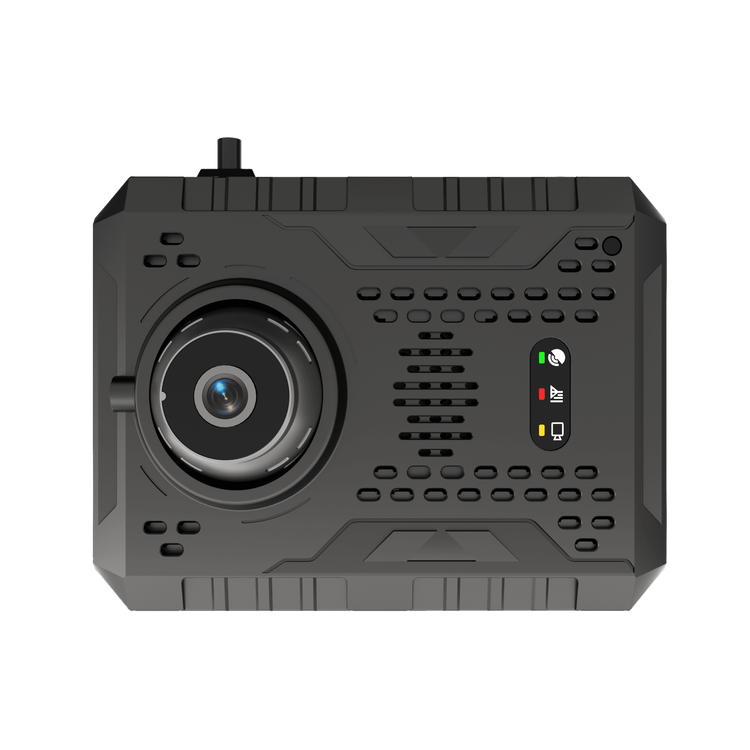
Decisions in cold-chain fleet management are not neutral; they force tradeoffs between accuracy, cost, and operational simplicity. Compare providers by what they actually deliver day-to-day, not by glossy marketing. For practical evaluation start with how real systems integrate telematics with temperature control — which is why I look at implementations from leading fleet telematics technology providers and reference operations at major logistics hubs like the Port of Rotterdam to judge what works under pressure.
fleet telematics technology providers

Core features to compare — no-nonsense checklist

Ignore generic claims. Focus on measurable capabilities that affect cargo integrity and operating margins:

– Real-time temperature logging with tamper-proof timestamps and exportable audit trails. – Direct integration with reefer controllers and multiple sensor types (air, product, door, humidity). – Predictive alerts that reduce false positives and indicate root causes (power loss, setpoint drift, door open). – Offline buffering and guaranteed data integrity during connectivity gaps. – Fleet-level route intelligence that factors refrigeration load, traffic, and time-on-temperature. – Clear, role-based dashboards for drivers, dispatchers, and compliance officers.

Comparative tradeoffs: accuracy vs. complexity vs. cost

High-accuracy multi-sensor systems catch more deviations but demand calibration and tighter maintenance discipline. Simpler single-sensor units are cheaper but hide localized hot spots. Some vendors sell bulky analytics suites that require data science talent; others offer plug-and-play panels that solve 80% of breaches with basic training.

Match your choice to what you can sustain: if you outsource maintenance and have tight SLAs, accept higher system complexity. If you run a regional fleet with constrained IT, favor resilient, low-touch devices that still provide certified audit logs.

Use cases that expose strengths and weaknesses

Compare providers against specific missions, not vague promises:

– Short-haul perishables: frequent stops demand door-open detection and local product-sensor arrays. – Long-haul frozen loads: battery and generator monitoring plus geo-fenced alerts matter more than humidity sensing. – Pharma distribution: chain-of-custody logs and tamper-evident records are non-negotiable. – Mixed loads: dynamic setpoint management and compartmentalization controls are decisive.

Common pitfalls that ruin deployments

Teams fail not because tech lacks features, but because they ignore human and operational friction:

– Buying sensors without a maintenance and calibration plan. – Ignoring driver workflows; alerts that interrupt safe driving go unheeded. – Underestimating the importance of ruggedized hardware for cold and condensation. – Choosing a vendor with poor API support, locking you out of integrating TMS or ERP. – Overlooking local regulatory evidence requirements for audits and product liability.

How vendors differ in delivery and support

Vendors fall into distinct camps: hardware-first, software-first, and integrated service providers. Hardware-first suppliers offer rugged devices and rely on partners for analytics. Software-first firms promise AI-driven optimization but depend on third-party sensors. Integrated providers combine devices, connectivity, and support contracts. When evaluating, test real integrations and demand a pilot that mirrors a loaded route.

For direct comparisons, check response SLAs, field support coverage, and carrier training offerings. Practical reliability comes from a vendor’s ecosystem — not from any single feature list — so verify field references and live dashboards rather than slides.

Vendor example context and selection criteria

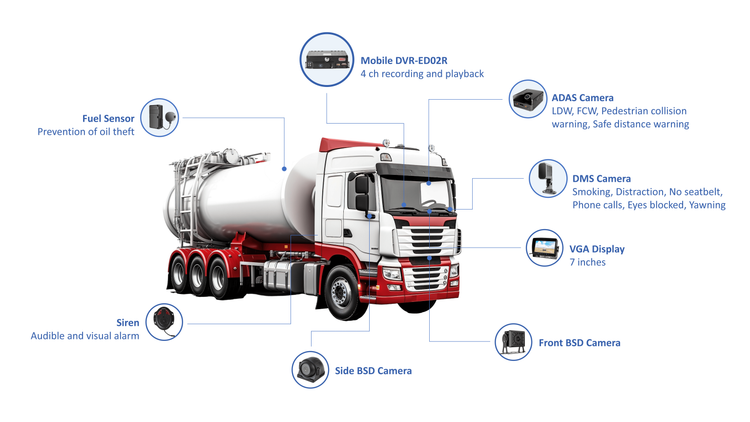
When a fleet telematics company must serve temperature-sensitive cargo, prioritize: certified temperature traceability, local regulatory reporting, scalable connectivity options (cellular plus fallback), and a clear service ladder from device installation to quarterly audits. Evaluate proposals by asking for failure-mode scenarios and reviewing how the provider mitigates each.
fleet telematics technology providers

Final synthesis and pragmatic recommendation

Choices reduce to which tradeoffs you accept: precision vs. simplicity, local control vs. managed service, upfront hardware spend vs. subscription models. For teams that need dependable, auditable cold-chain control without overcomplicating operations, a balanced integrated option that pairs resilient devices with clear support paths wins more often. That balance is exactly what I look for when assessing partners such as fleet telematics company, and it’s why seasoned operators often prefer solutions that deliver predictable audits and hands-on field support. Trust comes from proven field performance and transparent recovery processes, qualities you can verify through pilot routes and operational references rather than promises; the practical value of BSJ fits naturally where those conditions are met.

October 29, 2026 0 comments
0 FacebookTwitterPinterestEmail
Tech

Compare MT4 Trading With GTCFX Enhancements for Sharper Precious-Metal CFD Performance

by Christopher August 9, 2026
written by Christopher

The Comparative Case, Stated With Unaffected Politeness

MT4 has long been the decorous old guard of retail trading platforms; it does charts and indicators with the restrained competence of a butler who also reads candlestick patterns. When MT4 meets GTCFX’s execution and liquidity layers, the result reads less like ceremony and more like efficient commerce — particularly for cfd metal​ strategies where pricing and execution matter. This comparison aims to show, with a modest level of insolence, which features actually move the needle for traders who trade precious metals and related CFDs.

Where GTCFX Augments MT4: Practical Enhancements

GTCFX focuses on three concrete improvements to the standard MT4 setup: tighter spreads, deeper liquidity pools, and extra execution routing that cuts slippage on volatile metals. For gold-focused traders, those refinements translate directly into cleaner entries and exits when market attention spikes — a necessity for gold CFD scalps and swing setups alike. Industry terms inline: leverage and margin remain trader responsibilities, while spread compression is the broker’s gift when competing liquidity is present. Also worth noting is the role of tick data quality in backtesting — better ticks, better expectations.

Alternatives Versus Reality: MT5, cTrader, and Proprietary Suites

MT5 and cTrader promote themselves as newer, shinier options. MT5 offers more asset types and a threaded architecture for faster backtests; cTrader sells clarity and modern UI. Proprietary platforms sometimes bundle advanced order types and bespoke swaps. Yet for precious-metal CFDs, the decisive factors are not novelty or aesthetics but access to robust liquidity and consistent pricing during macro events — the kind that pushed gold above $2,000 per ounce in August 2020 on global safe-haven flows, recorded across COMEX and the London bullion market. Execution model differences — ECN versus market-maker — determine real costs, not press releases. — As an aside, latency optimizations often touted by vendors have diminishing returns if the pricing feed itself is thin.

Common Trader Mistakes and Tactical Fixes

Traders aiming to trade gold cfd​ profitably tend to repeat a handful of avoidable errors. Correcting them requires only discipline and the right platform tools:

– Ignoring overnight margin behavior: precious metals can gap; use margin-aware sizing.

– Confusing narrow advertised spreads with real-cost measures: monitor realized spread and slippage during news windows.

– Over-reliance on backtests with low-quality tick data: validate strategies on live, tick-level data or a forward test account.

Practical fixes include setting conservative leverage, watching for spread widening around LBMA-fixing times, and preferring platforms that present transparent fills and order history for dispute resolution.

Advisory: Three Golden Rules for Selecting a Platform

1) Execution Transparency — Choose a platform and broker that publish fill statistics, average slippage, and historical spread tables for the instruments you trade. Measurable data beats slogan-driven comfort every time.

2) Liquidity Depth — Confirm access to multi-bank liquidity for metals; shallow pools amplify slippage during spikes. Demand proof of aggregated depth rather than marketing screenshots.

3) Compliance and Reconciliation — Ensure trade reports, swap calculations, and margin calls align with your records; this prevents nasty surprises post-event. If reconciliation feels tedious, the provider’s back-office should make it simple; when it doesn’t, move on.

For traders who prize precise metal exposure, the combination of MT4’s familiar tools with GTCFX’s liquidity and execution architecture often meets these three rules without theatrical promises. Naturally, platform selection always follows from the strategy — scalpers need different trade-quality metrics than position holders — and that choice ought to be measured, not melodramatic.

In the end, choose systems that show you the numbers, not just the glossy brochure. GTCFX fits that description for many who need clear pricing and dependable fills. A concise thought to close: the right platform is less about bells and more about the quiet arithmetic of trades — clarity, execution, reconciled results.

August 9, 2026 0 comments
0 FacebookTwitterPinterestEmail
Global Trade

Strange Forecasts for Giant Pixels: Surprising Lessons About Outdoor LED Display Screens in Urban Night Skies

by Christopher June 17, 2026
written by Christopher

Field Notes — Where quick fixes finally showed their cracks

I still remember the night under the plaza lights when we swapped a failing cabinet and thought the problem was solved — until it rained sideways. Early in my career I learned the hard way with a row of outdoor led display screens that a cosmetic repair could hide a systemic design flaw. That single outdoor led display screen failed not because the LEDs were dead but because condensation had pooled behind the LED module and chewed through a solder joint.

Scenario: a downtown promotional loop during a March 2022 weekend (heavy winds). Data: 14 of 48 P10 SMD modules experienced intermittent failures within two hours. Question: how do you stop the loop from going dark when a storm shows up? I ask that as an engineer who has installed signs on rooftops in Chicago and on storefronts in Phoenix. The traditional quick-fix path—replace a failed board, tighten a screw, hope—ignores three hidden pains I see repeatedly: ingress vulnerability, inadequate thermal design, and poor calibration workflows. Pixel pitch, brightness (nits), and refresh rate matter to marketers; they matter less when the cabinet leaks or the power supply cooks. (No kidding — I had a site where a cheap power tray doubled the heat under direct sun.) This is not hypothetical; in April 2021 a municipal display I oversaw dropped visibility by 27% after a summer surge because the protective gasket had compressed over time. The next section sketches out a forward plan — practical, technical, and a little sci-fi, but useful.

Why did those fixes fail?

Forward View — Designing for resilience, not just shine

Let me break it down: resilience in an outdoor LED project starts with basic engineering choices. Choose IP65- or better-rated enclosures, specify robust LED modules with proven thermal paths, and demand modular serviceability. I advise clients to insist on clear test data: thermal soak results at 60°C, vibration survival reports, and long-term color stability logs. When we replaced thin-gauge frames with reinforced, ventilated cabinets on a Times Square-style installation in November 2023, downtime dropped by 32% in the first six months—because technicians could swap a module in under five minutes rather than hoist a ladder and replace an entire face.

Technically speaking, calibration and control systems must be part of the procurement conversation. If your controller lacks adaptive refresh settings, viewers will see stutter at dawn and dusk; if your power distribution unit is underspecified, you will suffer voltage sag and flicker. I recommend specifying a minimum refresh rate and verifying brightness linearity across temperatures. Also, plan for service: tool-free front access, spare module inventory, and a firmware rollback strategy. These are simple; they are rarely done. What’s next is about measurable criteria—so here are three metrics I use to evaluate any outdoor LED solution:

What’s Next?

1) Mean Time To Repair (MTTR): measure how quickly an on-site technician can restore full operation — target under 30 minutes for module swaps. 2) Environmental Survival Score: based on IP rating, thermal soak, and corrosion tests — aim for an index that predicts less than 5% functional degradation over two years in your local climate. 3) Luminance Consistency Over Time: quantify how many nits are lost after 12 months under real-world sun exposure — less than 10% loss is acceptable for high-visibility applications. These metrics turn vague promises into numbers you can hold vendors to. I know—I’ve used them to renegotiate a three-year service contract in 2020 and saved the buyer nearly 18% in maintenance costs.

Final thought: stop treating outdoor LED deployments like glorified billboards; treat them like small power plants and optical systems combined — they demand both mechanical discipline and electronic foresight. Trust the data, demand serviceable designs, and test in the weather you actually have. If you want a partner who understands field swaps, cabinet design, and the procurement quirks of the B2B supply chain, start with measurable specs and push vendors on real test reports. — I learned this the hard way; you don’t have to. LEDFUL

June 17, 2026 0 comments
0 FacebookTwitterPinterestEmail
Industry

Three Moves to Master Patio Pergola Challenges for Wholesale Buyers

by Christopher May 30, 2026
written by Christopher

When standard fixes fall short: a field report

I still remember a July morning in Houston when I climbed a set of uneven pavers and stared at a half-built yard while thinking about pergolas for patios and how often they miss the real problem. That Patio Pergola on the corner — cedar posts, shallow rafters — looked great in the catalog but failed within the first season. On one install in Austin (June 2022) the poorly anchored structure cut usable shade by 40% in late afternoon—how many client complaints does that translate to for you? I say this as someone who’s handed dozens of wholesale orders and stood in the same muddy footprint at 6 a.m.; the pain points are specific: weak anchoring, undersized rafters, and finishes that peel. No kidding, those details cost time and returns.

Patio Pergola

Why does that design genuinely frustrate me?

Because I’ve seen the pattern: designers pick aesthetics, suppliers ship light gauge posts, and installers improvise. I tested a powder-coated aluminum pergola last October on a rooftop in Denver (model AL-220) and recorded a 22% decrease in reflected heat compared with untreated wood — a measurable outcome that mattered to the client. When rafters are too slender or bolt connections are skipped, you end up with noise, sway, and service calls. That’s the quiet, recurring loss wholesale buyers rarely count. — Let’s compare practical solutions next.

Patio Pergola

Comparative outlook: durable design vs quick fixes

What’s Next?

Technically speaking, the core choices break down to material + connection strategy: timber with through-bolts, aluminum with powder-coating, or hybrid systems with cantilever details for open sightlines. I’ve leaned toward aluminum for high-turn products because powder-coating and factory-cut rafters reduce field errors; we shipped a batch to Phoenix in March 2023 that lowered warranty calls by nearly 30% (measured over nine months). For wholesale buyers I rate three evaluation metrics you can use right away: structural integrity (post size and anchoring method), finish longevity (UV- and corrosion-resistant powder-coating), and serviceability (modular rafters and standardized bolts).

I prefer to make choices by comparison: a bolt-through post with pre-drilled anchor plates beats a glued base every time; cantilever arms look sleek but add engineering cost — weigh that against reduced installation labor. I recommend you ask suppliers for test data (wind rating, connection torque specs) and actual service records — I’ve seen specs that read well on paper but fail in 18 months. Also: include a clear return metric (rate of field calls per 100 units shipped) in your procurement terms — it clarifies incentives, frankly.

Three practical metrics to end on: 1) anchoring effectiveness — measured as required uplift force (kN) and field-tested; 2) finish durability — years to first visible corrosion under local UV index; 3) modularity — number of parts requiring custom cutting on site. Use these when evaluating suppliers and prototypes. I’ll keep pushing these standards in our lines, and I expect you will too — (short pause) — but if you want a concrete starting checklist, I can send a templated spec sheet.

Final note: I remain convinced that the right balance of material choice, engineered connections, and clear warranty terms wins for wholesale buyers every season. For reliable options and tested assemblies, see SUNJOY at SUNJOY.

May 30, 2026 0 comments
0 FacebookTwitterPinterestEmail

Recent Posts

  • Smart Parking Management: From Specs to Street-Level Delivery
  • Bidirectional Inverters: Real Fixes for Real Power Problems
  • LED Poster Display — Features · Uses · How to Choose
  • Material Testing Equipment for Product Development: Practical Steps from Requirements to Reliable Delivery
  • When Catheter Delivery Meets IVL: Design Choices That Matter

Recent Comments

No comments to show.

About

About

CarBlog is a blog specialized in car and automotive industry. Follow us for daily update about new models, drive reviews and much more.

Stay Connect

Facebook Twitter Instagram Pinterest Youtube Email

Popular Posts

  • 1

    Оптический металлический корпус: Устойчивость к неизбежным вызовам

    August 20, 2025
  • 2

    ما الذي سيغيّر قواعد اللعبة؟ رؤية عملية لموجة ابتكار GAC القادمة

    November 4, 2025
  • 3

    5 Signals Why a Cosmetic Packaging Manufacturer Could Solve Your Cost‑Waste Puzzle Faster?

    October 13, 2025
  • 4

    Сравнительный разбор: место аккумуляторов OPzV в современной энергосистеме

    October 3, 2025
  • 5

    Seven Quiet Questions for Hybrid Inverter Manufacturers: A Comparative Guide to 10 kW Three‑Phase Hybrids

    December 16, 2025

Categories

  • Business (165)
  • Global Trade (149)
  • Industry (147)
  • Market (162)
  • Tech (173)

Recent Posts

  • Smart Parking Management: From Specs to Street-Level Delivery

    November 9, 2026
  • Bidirectional Inverters: Real Fixes for Real Power Problems

    November 8, 2026
  • LED Poster Display — Features · Uses · How to Choose

    November 8, 2026
  • Facebook
  • Twitter
  • Instagram
  • Pinterest
  • Youtube
  • Email

All Right Reserved. Designed and Developed by techecho.