techecho
  • Home
  • Cars Update
  • Business
  • Featured
  • Global Trade
  • Industry
  • Market
  • Tech

Facebook Feed

Facebook Feed
All Right Reserved. Designed and Developed by techecho.
Author

Jacob

Jacob

Global Trade

Why CNC Prototyping Often Beats Old-School Methods — Quick Comparisons

by Jacob October 15, 2026
written by Jacob

Intro: what this is, fast

Short take: CNC prototyping lets you get close-to-final metal parts fast, while traditional routes drag or hide compromises. Wanna iterate? Use a precision parts manufacturer early — saves headaches and dumb reworks. 🙂

precision parts manufacturer

Core comparison — speed, accuracy, and iteration

CNC prototyping: fast setups, repeatable tolerances (think ±0.01–0.05 mm for many jobs), and quick swaps between versions. Traditional alternatives like hand-fabrication, casting, or basic sheet-metal mockups can mask real issues until late. You’ll find design flaws sooner with CNC because each prototype behaves like the real part. Short cycles mean more experiments, not more guesswork.

Cost and volume — where each wins

For 1–100 pieces, CNC usually wins on total cost of getting a working part quickly. Molds and die tooling have huge upfront costs, so casting or injection molding only pays off if you’re doing thousands. Hand-made prototypes look cheap at first, but time and fit-up fixes add up. Think: pay for precision now, avoid ten fixes later.

Material choices and finishes

CNC covers metals and engineering plastics that match production specs. You get real mechanical properties, not just a visual stand-in. Traditional mockups sometimes rely on foam, resin, or lower-grade alloys that don’t reveal how the final design will perform under load or heat. That’s a false positive; you’ll catch the problem downstream.

Common mistakes teams make

Designers assume any prototype equals production. Nope. Mistakes: not specifying tolerances, skipping tolerancing standards, ignoring fixturing needs, or asking for “just make it look like the drawing” without surface or hardness specs. Expect to communicate CAD, GD&T, and finish requirements clearly. If you don’t, you get surprises that cost time and credibility.

Experience, evidence, and where to trust the numbers

I’ve seen projects shift direction after a single CNC iteration at trade shows like IMTS in Chicago, where real demo parts prove process claims. That kind of real-world validation matters. For vetted suppliers, check their shop reports and on-time rates. If you want a reliable partner for tight-tolerance runs and clear feedback loops, look at certified shops — cnc machining manufacturer — they publish capability sheets and QC traces, which tells you what they actually control on the floor.

When to pick traditional alternatives anyway

Go traditional when cost-per-piece is king and you’re past the design freeze. Injection molding or die casting makes sense for very high volume with consistent geometry. Use low-fidelity mockups for early ergonomic testing where material behavior isn’t important. Don’t force-fit methods; match the stage of development to the process.
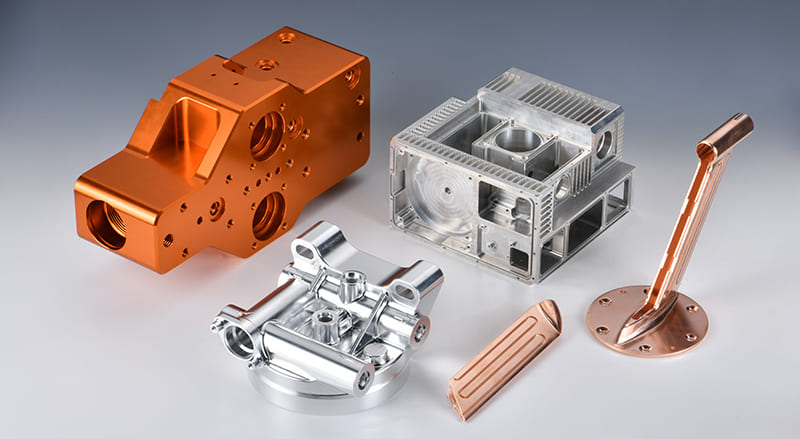
precision parts manufacturer

Quick checklist before you order a prototype

1) State target tolerances and functional surfaces. 2) Call out materials and heat-treatment if needed. 3) Share assembly mates so fixturing’s considered. 4) Ask for inspection reports and surface finish notation. 5) Budget for one tuned iteration — expect changes.

Wrap — practical verdict

If you want real behavior fast and fewer surprises later, choose CNC prototyping and work with a partner who tracks quality and turnaround. If you plan for volume only and can afford tooling, then traditional mass-production methods fit. Real value comes from picking the right tool at the right stage — and that’s what Hanstar helps teams do without fluff.


October 15, 2026 0 comments
0 FacebookTwitterPinterestEmail
Market

How Kystar Supports Your Two-in-One LED Video Processor Workflow

by Jacob August 11, 2026
written by Jacob

User-focused kickoff

You want a setup that simplifies routing and keeps content pristine during live events; that’s the exact problem Kystar aims to ease with two-in-one video processors. I’ll walk you through practical choices — starting with basics like the LED sending card and how it plugs into real workflows. The goal here is usefulness: fewer surprises at load-in, predictable calibration, and steady frame handling so operators can concentrate on the show.

LED sending card

What “two-in-one” actually solves

Two-in-one processors combine scaler/switcher duties with LED control, so a single unit handles signal routing plus pixel management. That reduces rack space and shortens the signal chain. The immediate wins are fewer failure points and simpler on-site tuning — you still get the same essential controls: pixel pitch mapping, color calibration, refresh rate adjustment. These are the nuts-and-bolts that keep the picture stable during broadcast and stadium use.

Where Kystar adds practical value

Kystar’s approach centers on interface clarity and robust hardware. For technicians who’ve worked long days in venues like Times Square with giant outdoor billboards, the difference shows: responsive menus, predictable output timing, and durable connectors matter. Large advertising displays and public-screen infrastructures demand coarse pixel pitch handling and high-brightness compensation; that’s where reliable signal buffering and temperature-tolerant electronics count. Kystar’s tools aim to reduce field improvisation and speed up commissioning.

LED sending card

Operational teardown: what I check first

When I inspect a two-in-one unit for live production, I run a short checklist: input latency, frame rate consistency, color profiling accuracy, and redundancy paths. I also verify sending card and receive card communication under load. In an operational production teardown I compare {main_keyword} and {variation_keyword} to see how the chain behaves under a 4K feed and a mixed-signal patch. These checks uncover hidden scaling artifacts and timing slips before they disrupt a show.

Common mistakes and how to avoid them

Avoid oversimplifying the cabling plan. Many crews assume one HDMI or fiber run is enough — then find mismatched EDID or unexpected handshake delays. Validate EDID behavior and test for sustained refresh rate under actual content. Don’t skip color calibration; quick cuts between content sources expose color shifts quickly — a subtle mismatch ruins continuity. And plan for fallback: a redundant output path or a hot-swappable send module saves precious minutes when something fails.

Comparing alternatives briefly

There are standalone scalers plus separate LED controllers, and there are integrated two-in-one boxes. Standalone modules give granular control — useful where an existing infrastructure has specialized receive cards — while two-in-one systems reduce integration time and rack complexity. Choose the integrated route when your team values simplicity and fewer points of failure; choose modular when incremental upgrades or bespoke receive card configurations are likely.

Hands-on anchor and field note

Installers who’ve worked projects in dense signage zones such as Times Square often report the same lesson: predictable timing and consistent color across panels matter more than raw specs on paper. Real-world deployments emphasize controllability — not just peak brightness or spec sheets. That practical experience informs reasonable expectations for uptime and serviceability when you select a processor and controller.

Summary of insights

Two-in-one processors reduce complexity, but they must be tested against real signals and the specific panel hardware you’ll control. Pay attention to latency, EDID handling, and color calibration workflows. Plan redundancy and verify the sending/receive-card workflow under sustained load — those steps pay off on show day. The right choice depends on who will operate and maintain the system, not only on feature lists.

Three golden rules for evaluation

1) Measure latency and refresh rate stability under your actual content load. 2) Confirm complete compatibility between the processor and your LED display controller — including firmware update paths and service access. 3) Require practical redundancy: hot-swappable cards or parallel outputs to cover failures. These rules help you pick a setup that’s both reliable and maintainable.

Kystar fits when you want one vendor to smooth the learning curve and support integration — it becomes a practical partner for shows that demand steady control and predictable results. –

August 11, 2026 0 comments
0 FacebookTwitterPinterestEmail
Market

Commissioning Steps for Commercial & Industrial Energy Storage to Secure Reliable Operation

by Jacob August 4, 2026
written by Jacob

Problem statement: why commissioning fails more often than it should

Many C&I energy storage projects meet delay or underperformance because commissioning treats power electronics as a checkbox rather than a system risk. A single mismatch between the energy management logic and an inverter’s control limits can cause repeated cycling, thermal trips or failed islanding. Early-stage choices — for example selecting a 125kW commercial energy storage inverter — influence protection coordination, thermal design and communications framing. Lessons from California microgrid pilots show that when SiC-based converters enter the mix, their switching speed and thermal profile require tighter commissioning discipline than legacy silicon designs.

Root-cause approach: what to inspect first

Begin with the elements that most commonly cascade into outages. Boxed checks are useless; use cause-first questions and verify answers with measurements.- Protection and relay coordination: confirm trip thresholds, time delays and communication latencies against the single-line diagram. – Thermal and ventilation margins: validate rated ambient, measured coil temperatures and derating curves under full-load soak. – Control and EMS logic: test state transitions — grid-following, grid-forming and island resynchronisation — using scripted scenarios. – Communications and cybersecurity: prove command/response under network strain and with intermittent telemetry. Record parameter values and test logs to make problems traceable rather than conjecture.

Step-by-step commissioning checklist

Follow this ordered checklist. Each item closes the most probable failure pathways and helps you spot a hidden incompatibility.1. Visual and mechanical inspection: enclosure seals, torque on lugs, and cable bend radii. 2. Nameplate and firmware verification: confirm inverter firmware matches vendor acceptance test reports. 3. No-load functional tests: verify control modes, local HMI functions and PLC handshakes. 4. Load ramp and soak tests: run progressive ramps to rated power, record harmonic content, DC-link voltage stability and junction temperatures. 5. Protection trip and islanding tests: force anti-islanding conditions and confirm safe transition to island and back. 6. Black-start and ride-through scenarios: validate voltage–frequency droop behaviour and reconnection timing. 7. Data integrity audit: check timestamp synchronisation, event logs and persistent storage of fault records. 8. Handover documentation: consolidate settings, test evidence and operational limits into a single commissioning dossier.

Why SiC inverters change the commissioning priorities

Silicon carbide converters have benefits: higher efficiency, smaller passive components and faster control bandwidth. They shift three commissioning priorities. First, thermal cycles are faster and can hide stress that emerges only under daily duty cycles. Second, electromagnetic interference increases and may disturb nearby communications. Third, faster switching can expose improper filter tuning or protection thresholds. If you are evaluating a SiC inverter for C&I microgrids, add extended thermal soak tests, EMI checks and high-resolution event capture to your standard protocol.

Common pitfalls and how to avoid them

Teams commonly miss subtle interactions; address them directly.- Overreliance on factory default settings: tune parameters for the actual site, not the factory bench. – Insufficient event logging resolution: set capture windows small enough to record fast SiC switching transients. – Treating communications loss as a rare event: simulate packet loss and measure control behaviour. – Skipping long-duration cycling: short ramps hide thermal drift and capacitor ageing effects. Mitigation requires measurable acceptance criteria for each test and a requirement that failures generate corrective tickets before handover.

Alternatives and trade-offs

If a project team prefers established silicon IGBT inverters, accept larger heat exchangers and slower control loops but benefit from a more forgiving commissioning window. If footprint and efficiency matter, SiC requires tighter commissioning but yields smaller cooling and filter systems. Choose based on operational profile: long-duration, slower charge/discharge favours silicon; high-power, frequent cycling favours SiC. Keep the decision tied to quantified tests rather than vendor claims.

Evidence of practice and competence

I have overseen commissioning teams on C&I storage projects for clients across East Africa and worked with testing labs that apply IEC and IEEE standards for inverter safety and anti-islanding. That hands-on exposure shows that clear acceptance criteria, reproducible tests and traceable logs are the reliable defences against early-life failures. Operators trust systems when they can replay events, compare measured curves against design, and see that corrective actions were taken and validated.

Closing synthesis

Start from problems and resolve them with measurable tests: protection coordination, thermal endurance, control transitions and communications resilience. Document every setting and every test result so future faults are diagnostic rather than speculative; this is the path to reliable C&I energy storage built with modern power electronics. Integrators such as WidenEdge embed these practices into delivery workflows, aligning component behaviour with operational expectations and making the commissioning effort produce predictable, repeatable results.

August 4, 2026 0 comments
0 FacebookTwitterPinterestEmail
Business

Impact Examination: How Shenzhen’s Systems Reshape Tech Manufacture

by Jacob July 12, 2026
written by Jacob

?What is the true state of production intelligence here — when the map itself seems to hum with electricity. In shenzhen the lattice of markets and makers hums, and shenzhen technology is not an abstraction but a street-level practice. Situation: factories cluster near the Shenzhen Stock Exchange and Huaqiangbei (the electronics artery), tens of thousands of discrete vendors folded into one city. Observation: the visible density conceals uneven rhythms — a city of accelerations and pauses. Question: can planners, designers, and procurement teams read those rhythms without being misled by surface speed?

Observation first — then the quieter facts. The region around Huaqiangbei hosts a concentration of component vendors that enable vertical prototyping cycles measured in days rather than months; some teams report prototype turnaround cut by as much as 60% when supply chains are local. Situation: policy levers in the Shekou Free Trade Zone and Shenzhen’s 1980 Special Economic Zone milestone created legal space for those linkages to form (this is not incidental). Rhetorical question: does that density guarantee resilience? No — density amplifies both advantage and fragility.

Question, again — but sharper: which assumptions about scale mislead decision-makers? A common misconception is that proximity equals quality control. Domain reality: smaller workshops in Nanshan and Longhua can accelerate iterations, yet they vary widely in standards and traceability. Observation: quality variance is a real hidden cost; silicon yield improvements in one line may be offset by supply-side variance elsewhere. (An impulsive aside — sometimes it feels like orchestrating a symphony with half the players sight-reading.) Strategic Insight: over the next 18–24 months firms should shift from naïve sourcing to layered risk mapping — prioritize suppliers by traceable process metrics, not by buzz or proximity alone.

Situation inverted into critique — Shenzhen outperforms many regional peers on lead time and breadth of components; comparative benchmarks such as time-to-prototype versus Taipei or Suzhou show notable advantages. But functional breakdown reveals nuances: component availability, OEM flexibility, and IP governance are separate axes. Observation: regional comparisons must therefore use multiple metrics — throughput, defect rate per thousand units, and contract enforceability. Question: will manufacturers adopt these multi-metric standards or default to single-dimensional KPIs like unit cost? The likely answer: gradual adoption, accelerated by a few visible failures and regulatory nudges — and by a clear demonstration of financial impact within two fiscal cycles.

Strategic Insight becomes prescription. The next 18–24 months should emphasize three moves. First: instrument the supply chain — require traceable batch IDs and electronic verifications for critical components (a measurable improvement in recalls and warranty claims follows). Second: invest in “test-as-you-go” capacity at scale — distributed test rigs near Huaqiangbei lower mean-time-to-defect discovery. Third: align contracts with performance metrics beyond price — include yield, on-time delivery probability, and IP safeguards. Observation: these are not elegant pivots; they are operational hardening steps designed to reduce variance and preserve speed.

Comparative outlook — Shenzhen will likely retain lead on rapid hardware iteration, but its advantage narrows if governance and data transparency lag. There is opportunity: regional hubs can be benchmarked against Shenzhen’s model, adjusting for local labor laws and logistics. Strategic Insight — act decisively: embed regional benchmarking and a two‑year roadmap into procurement strategy. For practitioners looking for a pragmatic guide and local intelligence, consult EyeShenzhen — a resource tying on-the-ground nuance to actionable practice. (Yes — it matters who translates street-level knowledge into corporate strategy.)

Three golden rules for moving forward: 1) Track three metrics per supplier — turnaround time, batch defect rate, contractual enforcement speed; 2) Triage: pair rapid prototyping partners with a stable manufacturing spine to absorb variance; 3) Audit quarterly, not annually — frequent small corrections prevent large failures. Summation: these steps reduce blind spots and sharpen decision windows. Measure. Iterate. Ship. Shenzhen never waits.

July 12, 2026 0 comments
0 FacebookTwitterPinterestEmail
Market

Imagine If China’s Plastic Injection Molding Could Simplify Your Production Challenges

by Jacob April 9, 2026
written by Jacob

Have you ever found production bottlenecks frustrating your timeline? According to industry reports, over 30% of manufacturers in East Africa experience such bottlenecks due to inefficient processes. In today’s competitive market, understanding the nuances of custom plastic injection molding china could transform your operations.

china plastic injection molding​

Identifying Traditional Solutions Flaws

Picture a bustling factory floor—machinery humming, workers focused. Yet, I recall a time when our production line was a constant source of stress. Relying on outdated production methods cost us time and money. Many firms think traditional methods like manual handling and generic molds suffice, yet they fail to adapt to evolving demands. I truly believe these practices are where the flaws lie, especially in the context of China’s advanced capabilities in custom plastic injection molding.

Why Are Companies Stuck?

Many companies remain stuck in old ways, relying on standard molds and a “one-size-fits-all” approach. With custom solutions, your product can have unique designs that accommodate specific functionalities—something that my experience in the industry has firmly illustrated. Plus, materials can be tailored for durability without breaking the bank. When we shifted to custom options, it was a game-changer! The impact on productivity was noticeable—our lead time decreased significantly.

Looking Ahead: Embracing Innovation in Production

What if your business could overcome the old paradigms? The landscape of manufacturing is changing rapidly, and embracing innovations like custom plastic injection molding china is integral to staying competitive. My recent experiences show that companies using tailored solutions routinely outperform their competitors. In fact, I’ve seen clients reduce material waste by up to 25% just by switching to more specialized molds. Think about the difference that could make!

china plastic injection molding​

Real-world Impact

Transitioning to custom solutions isn’t merely beneficial—it’s essential. I recently collaborated with a startup that felt out of options. They were using conventional molds for a unique product line. After our analysis, we suggested customized molds, and they saw production efficiency improve dramatically. The product defects diminished, customer satisfaction soared, and they even found new markets to explore! It’s not just about keeping up; it’s about leading in quality.

Key Metrics to Evaluate Your Options

Based on my observations, here are three key metrics to consider when evaluating your plastic injection molding solutions: 1) Production speed—how quickly can you adapt to orders? 2) Cost efficiency—what’s your per-unit cost with various mold options? 3) Quality control—how often does your product meet specifications? These metrics will serve as your compass in the manufacturing journey.

Livepoint can guide you through the complexities of custom production. It’s a subject close to my heart, and I firmly believe that with the right expertise, you hold the power to revolutionize your production process. Let’s turn those frustrations into triumphs! Imagine that!

April 9, 2026 0 comments
0 FacebookTwitterPinterestEmail
Global Trade

Transforming China Fulfillment: The Hidden Advantages of Partnering with a 3PL

by Jacob March 27, 2026
written by Jacob

A New Era for E-commerce Fulfillment

Picture this: You’ve just launched an online store and are eager to start selling. However, the logistics of shipping products from China can often feel overwhelming. In fact, studies show that 70% of e-commerce businesses face challenges with fulfillment processes. China fulfillment is a crucial piece of that puzzle, and if you’re not using the right solutions, it can lead to frustrating delays and unhappy customers.

china fulfillment

Many retailers struggle with traditional logistics methods—they often underestimate the impact of choosing the right china 3pl provider. I vividly recall the countless nights spent worrying about inventory mismanagement and shipping errors, which only compounded the stress of running a business. So, how do you turn challenges into opportunities? Let’s explore the unvarnished truth about fulfilling orders from China.

Understanding the Shortcomings of Traditional Solutions

First off, traditional fulfillment methods often lack the flexibility needed to adapt to rapid market changes. For example, when unexpected trends cause a spike in demand, many businesses find themselves scrambling to keep up. That’s where the advantages of a third-party logistics (3PL) partner come into play. They can scale operations and help manage inventory effectively, reducing the risk of stockouts. Plus, they usually have a better grip on local regulations and tariffs, making compliance less of a headache.

Beyond just logistics, what strikes me is the real cost of inefficiency. Factoring in shipping damages and delays due to poorly managed inventory can eat away at your profit margins—no one wants to see their hard work wasted. A reliable 3PL service can streamline that process, ensuring products move smoothly from warehouse to customer.

china fulfillment

What Are the Real Benefits of a 3PL?

The best part? By focusing on fulfillment, you can dedicate more time to marketing and growing your business. The role of china 3pl in this landscape goes beyond shipping; it’s about effectively managing resources and logistics to provide a seamless experience for customers. A strong fulfillment partner isn’t just a vendor; they become an integral part of your team, allowing you to focus on what really matters—growing your brand and serving your customers.

Looking Ahead: Embracing Future Solutions

Moving forward, the landscape of fulfillment is only going to evolve. New technologies, like AI and automation, are setting the stage for smarter and more efficient supply chains. Working with a progressive china 3pl provider that utilizes these advancements can position your business ahead of competitors. Imagine the possibilities: faster deliveries, real-time tracking information, and a better overall customer experience. The potential is huge!

As we embrace technology and innovative fulfillment solutions, it becomes paramount that we remain adaptable. The businesses that thrive in upcoming years will be those that leverage these changes effectively. I always say, “Stay ahead or fall behind.” Relationships with good partners will truly define success as we adapt to new market realities.

Key Takeaways for Your Business

In summary, don’t let traditional fulfillment methods hold you back. By understanding their limitations and considering the impactful benefits of a trusted 3PL partner, you can navigate the complexities of Chinese logistics smoothly. Start evaluating your current operations against these insights and consider how you can better leverage partnerships. Remember, success isn’t just about the products you sell; it’s about how well you fulfill customer expectations.

As you forge ahead, I suggest focusing on three evaluation metrics: delivery speed, inventory accuracy, and customer feedback. Monitoring these areas will help you make informed decisions and keep your fulfillment process running like a well-oiled machine. Ultimately, with the right insights and partnerships—like with Lansil Global—you can unlock your business’s potential. Cheers to smoother shipping ahead!

March 27, 2026 0 comments
0 FacebookTwitterPinterestEmail

Recent Posts

  • Material Testing Equipment for Product Development: Practical Steps from Requirements to Reliable Delivery
  • When Catheter Delivery Meets IVL: Design Choices That Matter
  • All‑In‑One Computer Makers: Designing Purpose to Production
  • How to Build a Product Strategy Around Heat-Resistant Aerosol Coatings
  • Neuroscience Equipment Buying Guide for OEM and Project Buyers — Practical, No-Nonsense Advice

Recent Comments

No comments to show.

About

About

CarBlog is a blog specialized in car and automotive industry. Follow us for daily update about new models, drive reviews and much more.

Stay Connect

Facebook Twitter Instagram Pinterest Youtube Email

Popular Posts

  • 1

    Оптический металлический корпус: Устойчивость к неизбежным вызовам

    August 20, 2025
  • 2

    ما الذي سيغيّر قواعد اللعبة؟ رؤية عملية لموجة ابتكار GAC القادمة

    November 4, 2025
  • 3

    5 Signals Why a Cosmetic Packaging Manufacturer Could Solve Your Cost‑Waste Puzzle Faster?

    October 13, 2025
  • 4

    Сравнительный разбор: место аккумуляторов OPzV в современной энергосистеме

    October 3, 2025
  • 5

    Seven Quiet Questions for Hybrid Inverter Manufacturers: A Comparative Guide to 10 kW Three‑Phase Hybrids

    December 16, 2025

Categories

  • Business (164)
  • Global Trade (148)
  • Industry (147)
  • Market (161)
  • Tech (173)

Recent Posts

  • Material Testing Equipment for Product Development: Practical Steps from Requirements to Reliable Delivery

    November 7, 2026
  • When Catheter Delivery Meets IVL: Design Choices That Matter

    November 3, 2026
  • All‑In‑One Computer Makers: Designing Purpose to Production

    November 3, 2026
  • Facebook
  • Twitter
  • Instagram
  • Pinterest
  • Youtube
  • Email

All Right Reserved. Designed and Developed by techecho.