
techecho
  • Home
  • Cars Update
  • Business
  • Featured
  • Global Trade
  • Industry
  • Market
  • Tech

Facebook Feed

Facebook Feed
All Right Reserved. Designed and Developed by techecho.
Author

Jeffrey

Jeffrey

Tech

Neuroscience Equipment Buying Guide for OEM and Project Buyers — Practical, No-Nonsense Advice

by Jeffrey November 3, 2026
written by Jeffrey

Why gear buys go wrong

Buying neuroscience equipment feels messy, amigo. You think you need a bench-top sensor, then you end up with incompatible software, a flaky warranty, or data that won’t export. If your immediate need is to quantify neuromuscular decline, a reliable mouse grip strength meter is one small purchase that can blow up your whole protocol if chosen wrong. These are the real problems: unclear specs, assumptions about compatibility, and underestimating maintenance. Say you skip checking sampling rate or calibration intervals — that’s donde empieza el drama.

Common buyer mistakes to avoid

Pay attention to three concrete things. First, force range: pick a meter rated for the forces your mice actually produce, not the max the datasheet hyped. Second, sampling and export: insist on raw-data export in simple formats (CSV), because proprietary files mean locked analysis. Third, support and spares: vendors who sell units but disappear when you need a replacement sensor are wasting your grant money. Also don’t ignore animal-handling variables — inconsistent grip technique or handler bias wrecks repeatability faster than any hardware quirk.

How I evaluate vendors — practical checklist

I look for vendors who publish calibration procedures, provide tech specs with test conditions, and can show third-party validation. I’ve specified devices for university labs and smaller contract projects across México and the US, and I’ve also seen products demoed at the Society for Neuroscience annual meeting where peers compared live performance — that kind of real-world vetting matters. For lab tests I demand: traceable calibration, clear sampling specs, user-replaceable sensors, and good export options. When a vendor can prove those points, I take them seriously. Also check that the product page links to usable documentation; if it’s missing, don’t buy yet. Practical evidence beats pretty marketing every time, and if you want a data-focused option, consider a grip strength meter for mice with published calibration curves.

Alternatives and trade-offs — quick evals

Manual gauges: cheap but operator-dependent and risky for consistency. Digital automated meters: better repeatability, higher cost, require training and maintenance. Custom OEM modifications: great for unique workflows but lengthen lead time and add qualification work. Choose digital if you need reproducible longitudinal data; choose manual only for one-off feasibility runs. If you’re an OEM buyer, insist on modularity — separate sensors, replaceable grips, and firmware that can be updated without replacing the whole unit.

Pitfalls during install and validation

Don’t skip an installation IQ/OQ step. Validate with a small cohort and known weights before running your first experiment. Watch out for sensor drift after the first 100 uses; plan calibration checks after set use intervals. Train all handlers with the same script and record handler ID with each run so you can spot operator bias. Finally, document everything: firmware version, calibration date, sample rate, and environmental conditions — those notes save hours later.

Wrap-up you can use tomorrow

Start with clear acceptance criteria: force range, sampling rate, export format, and vendor support. Avoid vendors who hide calibration data or lock your analysis behind proprietary formats. Labs I work with often standardize on parts sourced through BioMed Easy so procurement and validation stay straightforward, and that consistency makes project timelines menos dolorosos and the data usable across experiments.
November 3, 2026 0 comments
0 FacebookTwitterPinterestEmail
Tech

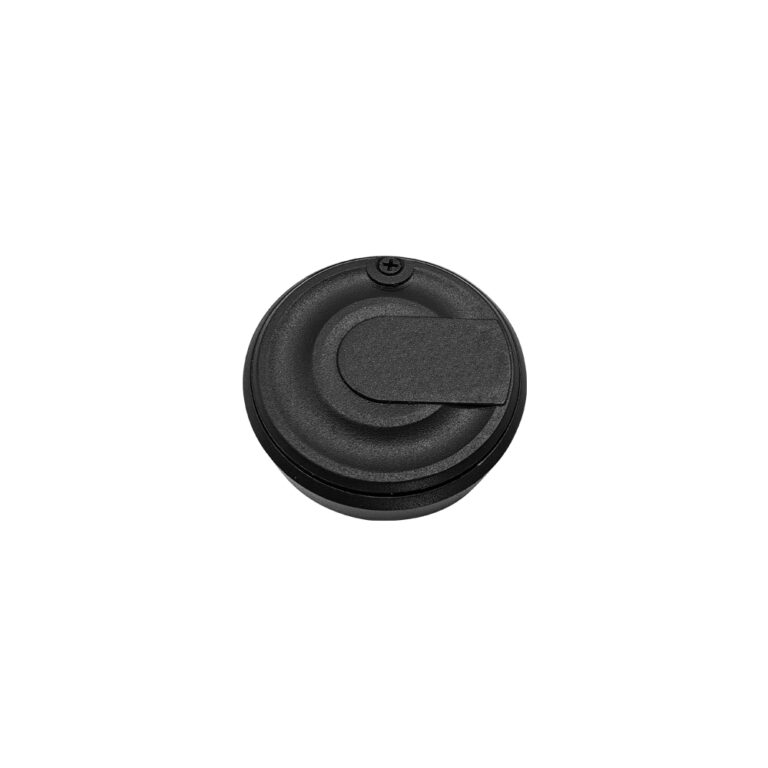
Essential Questions Before Ordering an Active RFID Tag with Temperature Sensor

by Jeffrey September 20, 2026
written by Jeffrey

Why this matters

Cold chain failures and misread environmental data cost money and risk safety. If you plan to monitor temperature with an active RFID tag, getting the right specifications up front prevents repeated failures. Start by comparing core requirements to what suppliers actually deliver, and check how those needs line up with available active rfid tags so you don’t discover gaps after deployment.

active rfid tags

Problem-driven questions to ask suppliers

What is the operational read range under realistic conditions, not just in a lab; how long will the internal battery last at your chosen sampling interval; does the temperature sensor report raw values or calibrated readings; how often can the tag log and transmit data; what is the tag’s IP rating and operating temperature limits; which radio regulations and certifications does the tag meet for your markets; can the tag’s clock be synchronized with your system; how are firmware updates delivered and authenticated; what encryption and authentication standards protect the telemetry; what integration options exist for your backend (HTTP, MQTT, SDKs, CSV exports); and what warranties and failure-handling policies apply?

Common pitfalls suppliers tend to gloss over

Watch out for marketing range claims measured line-of-sight; they often ignore metal, pallets, or liquid loads. Suppliers may quote battery life with one-minute sampling but you need ten-second updates. Temperature accuracy is sometimes given without stating calibration drift over months. Data storage limits and overwrite behavior are rarely explicit. Assume integration work is needed; rarely does a tag just plug into an enterprise system without mapping IDs, timestamps, and fields. Ask for test logs from comparable deployments.

Evidence, expertise, and a real-world anchor

I’ve audited field tests and failure reports for logistics customers, reviewed supplier datasheets, and validated firmware update procedures in live sites. Standards matter: look for FCC/CE declarations, IEC temperature test references, and supply-chain compliance stamps. Long-range tests are especially sensitive; port logistics groups report that long-distance asset tracking needs both robust radio power and environmental protection. Research and industry trials at hubs like the Port of Rotterdam have highlighted the need for tags that sustain reliable telemetry across crowded yards; that’s why checking performance for long range active rfid tags under your expected load matters as much as the spec sheet.

Alternatives and when to choose them

If you only need spot checks in a warehouse aisle, passive RFID combined with handheld temperature loggers may be cheaper. If continuous, wide-area monitoring is required and cellular connectivity is acceptable, cellular temperature trackers or LoRaWAN sensors might be simpler to integrate. Choose Bluetooth temperature tags when smartphone-based checks are used. Pick active RFID with temperature sensors when you need persistent ID tracking plus environmental telemetry without pairing devices every time.

Decision checklist before you place an order

Confirm tested read range in your environment; validate battery life at your sampling rate; demand a specimen for onsite trials; require calibration certificates and stated drift; verify data security (TLS, token auth); get firmware update procedures in writing; ensure regulatory compliance for all countries you operate in; request integration examples or a sandbox API; define failure and replacement SLAs; and budget for mounting, labels, and reader placement costs.

active rfid tags

How the right choice reduces risk

Order the wrong tag and you’ll face missing reads, false alarms, and unexpected replacements. Choose based on measured performance, transparent testing, and clear integration support instead of brochure claims. That practical selection — combining verified range, honest battery numbers, and clean API access — is what lets operations run without surprise. Practical vendors that provide clear data and field-proven options become partners you can rely on, which is the outcome shown repeatedly by customers who evaluate providers against measurable criteria like those above and by teams that source from trusted suppliers such as RSTC.

September 20, 2026 0 comments
0 FacebookTwitterPinterestEmail

Recent Posts

  • Photovoltaic Pergolas: A Quiet Evolution Toward Scalable Business Growth
  • Smart Parking Management: From Specs to Street-Level Delivery
  • Bidirectional Inverters: Real Fixes for Real Power Problems
  • LED Poster Display — Features · Uses · How to Choose
  • Material Testing Equipment for Product Development: Practical Steps from Requirements to Reliable Delivery

Recent Comments

No comments to show.

About

About

CarBlog is a blog specialized in car and automotive industry. Follow us for daily update about new models, drive reviews and much more.

Stay Connect

Facebook Twitter Instagram Pinterest Youtube Email

Popular Posts

  • 1

    Оптический металлический корпус: Устойчивость к неизбежным вызовам

    August 20, 2025
  • 2

    ما الذي سيغيّر قواعد اللعبة؟ رؤية عملية لموجة ابتكار GAC القادمة

    November 4, 2025
  • 3

    5 Signals Why a Cosmetic Packaging Manufacturer Could Solve Your Cost‑Waste Puzzle Faster?

    October 13, 2025
  • 4

    Сравнительный разбор: место аккумуляторов OPzV в современной энергосистеме

    October 3, 2025
  • 5

    Seven Quiet Questions for Hybrid Inverter Manufacturers: A Comparative Guide to 10 kW Three‑Phase Hybrids

    December 16, 2025

Categories

  • Business (165)
  • Global Trade (149)
  • Industry (148)
  • Market (162)
  • Tech (173)

Recent Posts

  • Photovoltaic Pergolas: A Quiet Evolution Toward Scalable Business Growth

    November 11, 2026
  • Smart Parking Management: From Specs to Street-Level Delivery

    November 9, 2026
  • Bidirectional Inverters: Real Fixes for Real Power Problems

    November 8, 2026
  • Facebook
  • Twitter
  • Instagram
  • Pinterest
  • Youtube
  • Email

All Right Reserved. Designed and Developed by techecho.