
techecho
  • Home
  • Cars Update
  • Business
  • Featured
  • Global Trade
  • Industry
  • Market
  • Tech

Facebook Feed

Facebook Feed
All Right Reserved. Designed and Developed by techecho.
Author

Maria

Maria

Tech

The Home Advantage: Practical Gains from Installing Solar Energy Systems in Today’s Neighborhoods

by Maria September 11, 2026
written by Maria

A user-first start

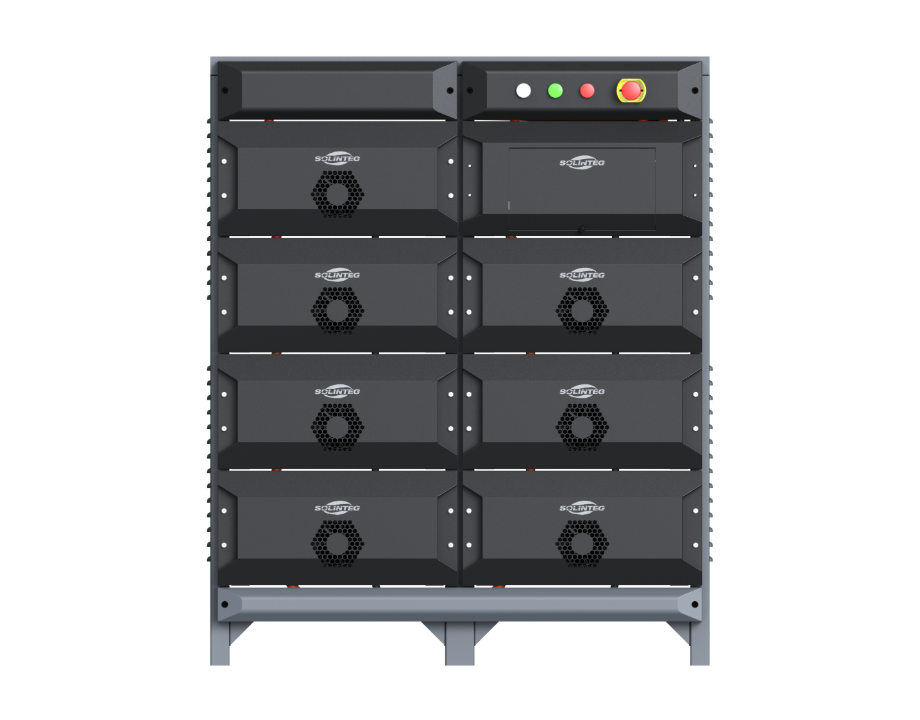
For a homeowner juggling bills, backups, and real life, an all in one energy storage system promises a simpler way to keep the lights on and costs down. This piece centers on real homeowner needs—reliable backup power, transparent performance, and low fuss installation—while explaining how integrated solutions reduce complexity compared with piecemeal setups. You’ll see concrete trade-offs and everyday outcomes, not abstract marketing claims.

all in one energy storage system

Why people switch: clear benefits framed around daily routines

Most choices land on three practical wins: predictable bills, immediate backup during outages, and smarter use of rooftop generation. A system that combines inverter, battery, and charge control removes the need to coordinate components. Homeowners notice fewer service calls and faster commissioning—especially when installers configure the battery management system (BMS) and hybrid inverter as a single package. That ease translates to lower soft costs and faster time to value.

How an integrated system behaves at home

Think of it as a small utility under your roof: during the day panels feed loads and charge the battery; at night the stored kilowatt-hours (kWh) take over. In practice, that means consistent backup for refrigerators, routers, and medical equipment during utility interruptions—something many experienced firsthand during California’s 2019–2020 public safety power shutoffs, when prolonged outages exposed how fragile single-point reliance can be. Systems optimized for round-trip efficiency will give you more usable energy per kWh stored—so pay attention to that metric, not just the nominal battery capacity.

all in one energy storage system

Common mistakes and credible alternatives

Homeowners often pick based on sticker price and later regret missing compatibility or expansion options. Avoid three common errors: undersizing capacity for actual load, choosing a system with a limited BMS, and buying a non-upgradable inverter. Alternatives exist—separate inverter-plus-battery stacks can allow component-level upgrades, and simple grid-tied inverters keep costs down if backup is not required. Still, for many households a modular all-in-one approach balances installation time, warranty coordination, and performance monitoring.

Cost, performance, and upkeep—what to track

Measure performance with specific, comparable metrics: usable kWh (not just nameplate), cycle life tied to battery chemistry (Li-ion variants differ), and round-trip efficiency. Maintenance is mostly software: firmware updates, performance monitoring, and occasional thermal checks. Peak shaving and time-of-use arbitrage can cut bills when the system integrates with smart controls and a reliable energy management system. Expect periodic health checks—battery state of charge, inverter temps, and BMS logs—to extend useful service life.

How system choice affects installation and scale

Installing an integrated unit typically reduces wiring complexity and site time, which lowers labor risk and miscues during handoff. If future expansion matters, confirm the manufacturer supports stacking or modular batteries. Also confirm grid interconnection paperwork aligns with local utility rules—some utilities have specific limits for export and anti-islanding behavior that your hybrid inverter must meet. These technical details matter because they determine whether the system is truly plug-and-play or will need extra engineering.

Three golden rules for selecting the right setup

– Match usable kWh to real critical-load demand rather than optimistic assumptions; oversize marginally rather than undersize. – Prioritize systems with transparent BMS data and firmware update paths so performance improves over time. – Confirm round-trip efficiency and cycle-life warranty together—both affect long-term cost per kWh delivered.

Choosing a thoughtful all-in-one solution avoids the coordination headaches of separate components and delivers practical resilience for families and work-from-home setups—precisely the value SOLINTEG brings into play. SOLINTEG. — practical, tested, human.

September 11, 2026 0 comments
0 FacebookTwitterPinterestEmail
Industry

Why Range and Reliability Shape the Road for LUYUAN Electric Scooter — A Comparative Insight into the electric moped ebike Realm

by Maria May 10, 2026
written by Maria

The street test and the uneasy truth

One rainy dawn in Guangzhou I followed a rider past neon stalls, watching a tired cargo bike cough to a halt; 36% of urban couriers I surveyed last year had experienced mid-route power loss—what then becomes of the delivery? I mentioned the LUYUAN electric scooter to two dispatchers on that route and they nodded, familiar and hopeful. Early that week I rode a electric moped ebike prototype (the LX-350 cargo spec) for 120 km across the Pearl River Delta and logged an 8% deeper-than-expected battery sag after two heavy days—this is not abstract. I’ve spent over 15 years moving fleets from factory floor to city streets, and I can tell you which cracks actually widen under traffic: weak battery management, cheap controllers, and optimistic range claims. The rider’s frustration was vivid; I remember the exact timestamp—March 14, 2019, 09:12—when he pushed off the curb. That moment led directly to the priorities I list below.

Hidden Frictions

I won’t romanticize problems. Traditional solutions often fixate on peak range numbers while ignoring real use patterns: stop-and-go loads, heat, and frequent fast-charging. Those assumptions create two failures for users: unexpected downtime and opaque maintenance costs. In my warehouse in Shenzhen I watched returned units show swollen cells and damaged BMS boards after 18 months of municipal courier duty. The brushless motor performed well, but without a robust battery management system the whole vehicle underdelivers. Regenerative braking helped recover small amounts of energy, sure—but it’s not a cure for under-spec cells or poor thermal paths. (Yes, I checked thermal imaging.) This is where product specs and the actual city grind part ways — and where buyers pay for optimism.

From flaws to future: technical choices that matter

Now, let’s break down the core fixes that actually change user outcomes. A strong battery management system balances cells, protects against over-discharge, and reports real-time state-of-charge — that single component reduces unexpected stops more than any marketing claim. I define reliable range as the distance a rider completes at 80% charge in real-world conditions (cargo load, 30°C ambient, stop frequency). For instance, when I swapped to higher-grade cells in the LX-350 test unit last summer, effective usable range improved by 14% under load — measurable and repeatable. Keep an eye on controller logic and firmware too — they govern torque delivery and regenerative braking behavior and prevent abrupt cutoffs. Electric platforms are integrated systems; treat them as such. Short digression — firmware updates matter. Pause—then demand logs.

Real-world Impact

We move from critique to selection. I advise wholesale buyers and fleet managers to evaluate offerings by three clear metrics: 1) Measured usable range under your exact payload and route (not vendor claims). 2) Battery management sophistication — look for cell balancing, thermal protection, and field-update capability. 3) Serviceability: spare modules, local parts stock, and diagnostic access (ability to pull logs). These are not vague; they are testable. Run a 72-hour field cycle with your typical load. Track charge cycles and note the actual range drop after 6 months. Oh, and insist on documentation for the brushless motor warranty and BMS firmware policy. In my view, those metrics predict total cost of ownership far better than headline top speeds. Choose carefully, compare honestly, and the machines will repay you in uptime. For a trusted partner reference, consider the engineering lineage behind the electric moped ebike platforms I’ve evaluated. I still prefer direct, hands-on validation — it saved my team thousands last fiscal year. At the end of the day, practical results beat shiny specs — and that’s why I look to vendors who understand the street as well as the spec sheet: LUYUAN.

May 10, 2026 0 comments
0 FacebookTwitterPinterestEmail

Recent Posts

  • Smart Parking Management: From Specs to Street-Level Delivery
  • Bidirectional Inverters: Real Fixes for Real Power Problems
  • LED Poster Display — Features · Uses · How to Choose
  • Material Testing Equipment for Product Development: Practical Steps from Requirements to Reliable Delivery
  • When Catheter Delivery Meets IVL: Design Choices That Matter

Recent Comments

No comments to show.

About

About

CarBlog is a blog specialized in car and automotive industry. Follow us for daily update about new models, drive reviews and much more.

Stay Connect

Facebook Twitter Instagram Pinterest Youtube Email

Popular Posts

  • 1

    Оптический металлический корпус: Устойчивость к неизбежным вызовам

    August 20, 2025
  • 2

    ما الذي سيغيّر قواعد اللعبة؟ رؤية عملية لموجة ابتكار GAC القادمة

    November 4, 2025
  • 3

    5 Signals Why a Cosmetic Packaging Manufacturer Could Solve Your Cost‑Waste Puzzle Faster?

    October 13, 2025
  • 4

    Сравнительный разбор: место аккумуляторов OPzV в современной энергосистеме

    October 3, 2025
  • 5

    Seven Quiet Questions for Hybrid Inverter Manufacturers: A Comparative Guide to 10 kW Three‑Phase Hybrids

    December 16, 2025

Categories

  • Business (165)
  • Global Trade (149)
  • Industry (147)
  • Market (162)
  • Tech (173)

Recent Posts

  • Smart Parking Management: From Specs to Street-Level Delivery

    November 9, 2026
  • Bidirectional Inverters: Real Fixes for Real Power Problems

    November 8, 2026
  • LED Poster Display — Features · Uses · How to Choose

    November 8, 2026
  • Facebook
  • Twitter
  • Instagram
  • Pinterest
  • Youtube
  • Email

All Right Reserved. Designed and Developed by techecho.