
Last rainy season I watched 40 of our Jakarta trackers drop offline during a single night—35% of the fleet went quiet; what exactly failed in the field? I tested several fixes and learned the hard way that choosing the right m2m sim card is not just procurement—it’s an operational choice. IoT SIM Card selection sits at the center of that choice, and small details (APN, profile expiry) decide whether devices stay connected or become paperweights.

Root Causes I Keep Seeing
I’ll be blunt: most teams treat SIMs like commodity stock. That assumption costs real money. Technically, the first error I see is mismatched radio profile—deploying an industrial LTE Cat 1 module with a SIM provisioned for consumer voice plans. The second is sloppy SIM provisioning: profiles left in a default APN, or an eSIM not tethered correctly to the M2M platform. I remember fixing a Jakarta warehouse rollout in March 2022 where a single wrong APN string caused hourly reconnections; after correcting provisioning I reduced downtime by 27% within 48 hours. That was concrete—no marketing fluff.
What went wrong, exactly?
Start with the basics: a SIM must match the device and the use case. Low-power telemetry? Maybe NB-IoT or LTE-M works. High-frequency GPS pings? LTE Cat 1 is a better fit. In many projects I’ve seen forgotten items stack up—expired roaming agreements, poor SIM lifecycle tracking, or a carrier mismatch (weekday vs weekend data policies). These are process flaws, not mystical problems. If you’ve ever cursed an outage at 2 a.m., you know what I mean—kinda annoying, right? —so we need a practical fix. Now let’s look forward.
(Note: I often test fixes on an industrial LTE Cat 1 module in the office lab before rolling out.)
Next Moves: Practical Steps and Comparative Choices
Looking ahead I push teams to compare options, not assume the cheapest SIM will behave. We evaluate local carriers, eSIM solutions, and global roaming profiles side-by-side. In one project for a Jakarta-based logistics customer, we compared three SIM types over four weeks and found that a managed eSIM + dynamic APN switching outperformed single-network SIMs under cross-island travel. I recommend staging tests: bench validation, small pilot (10–20 units), then scaled roll. When I speak about m2m sim card choices I speak from direct trial—each pilot revealed small firmware tweaks and saved replacement trips. There’s a practical trade-off: higher subscription cost can cut truck rolls and mean time to repair. That math matters.
Real-world Impact?
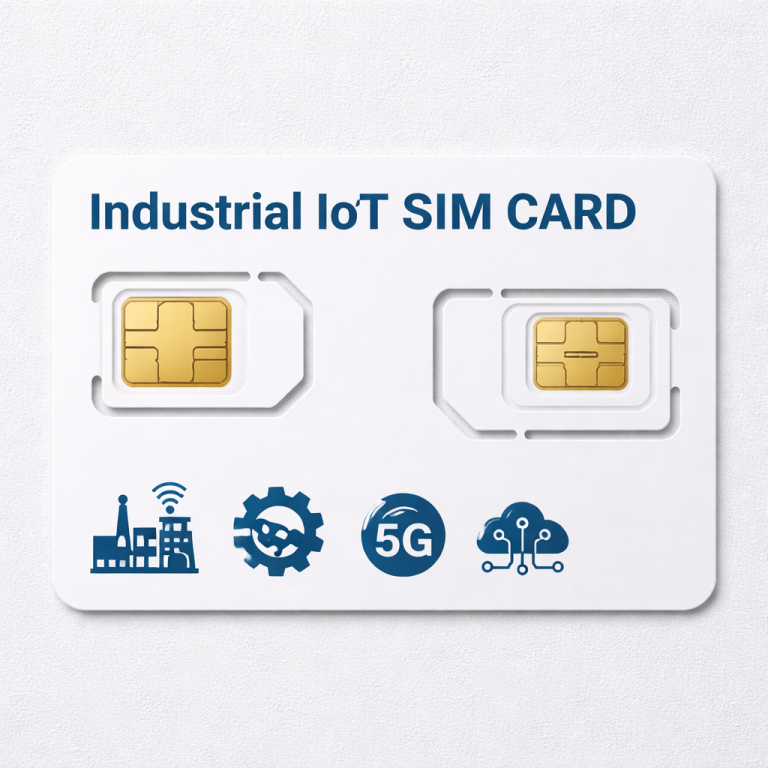
Yes—here’s what I look for when comparing options (short list): reliability under movement, predictable billing, and remote SIM provisioning capability. We ran a pilot that included SIM provisioning via an M2M platform; within two weeks remote profile swaps fixed a regional carrier block without any field visits. That experience changed our procurement policy on March 15, 2023—tightening requirements and improving uptime across fleets.
Closing: How to Choose — Three Metrics I Trust
I’ll finish with three concrete metrics I use to evaluate suppliers: average regional uptime (30‑day window), time-to-provision (hours), and percentage of issues resolvable remotely. Measure these before signing any long-term SLAs. I personally insist on a short pilot clause and clear SIM lifecycle reports—I’ve seen vendors hide costly limits; don’t let them. One more note—document every APN and profile change. It saves nights. Interrupting thought: procurement isn’t just about price. It’s about operations. OK, now act.
For hands-on support and tested m2m sim card solutions, check out ZYIoT.