
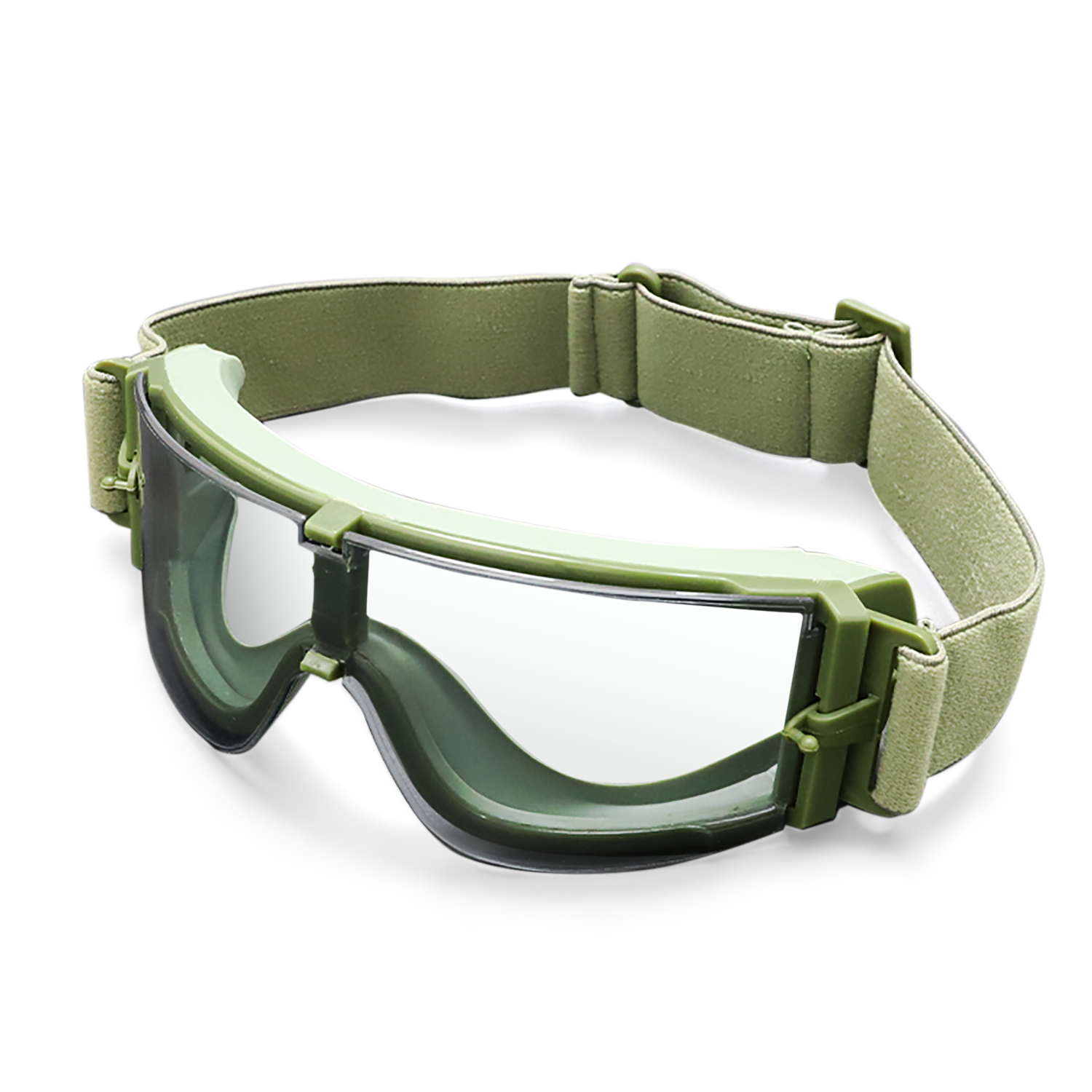
The problem in plain sight
Something small shifts inside a lens and the world fractures—bands of color, ghostly rainbows, a sudden loss of contrast. For buyers of tactical goggles and wholesale ski eyewear, that’s not an aesthetic quirk; it’s a performance failure tied to polarized film and polarizer alignment. The same misalignment that makes a cheap visor glitter can ruin an otherwise reliable lens assembly, and it sneaks into batches at scale—so the stakes are high for anyone sourcing the best tactical goggles.
Why alignment matters
Polarized film works by selectively blocking light oscillations. When its axis lines up with reflected glare—water, wet snow, or metallic surfaces—you get sharp contrast and reduced glare. When that axis is off, interference patterns emerge: rainbows, banding, and odd color shifts. Optical bonding errors or inconsistent anti-reflective coating stacks make the effect worse. The phenomenon is mechanical and optical; nothing magical hides here, only mis-tuned layers and stress in the laminate.
Field notes from a slope
On a cold morning at Alta Ski Area, lenses that looked fine indoors showed vivid rainbow bands at high noon. The same model, tested across multiple pairs, behaved inconsistently. Polarizer alignment varied by a degree or two—enough to change what the eye sees. Lens tint and UV filtration were solid; the failure traced back to assembly tolerances and coating interactions. Small tolerances. Big consequences.
Common mistakes—where supply chains go wrong
Manufacturers and buyers repeat three familiar errors:
- Assuming every polarized insert is identical—tolerances matter and they drift during lamination.
- Trusting visual inspection alone—some defects only appear under polarized test rigs or on-angle light.
- Overlooking anti-reflective and hard-coat stacks—coating interference can amplify rainbowing even when the polarizer is correct.
Practical checks you can run before buying
Demand simple, repeatable tests. Inspect a sample against a linear polarizer while rotating it: a properly aligned polarizer will darken predictably; a misaligned one won’t. Check finished lenses under angled light to see any spectral banding. Ask for optical bonding process details and batch-level quality records. These checks catch the majority of assembly-induced artifacts and reveal whether a vendor controls polarizer alignment during lamination.
Materials and trade-offs
Polycarbonate lenses bring impact resistance but can deform under heat, altering polarizer alignment. Glass holds dimensional stability but adds weight. Optical bonding reduces internal reflections but raises process complexity. Each choice shifts the risk profile—pick materials that match the intended use: high-speed maneuvers demand low-distortion optics; long stints in bright sun need robust UV filtration and glare reduction. Balance, rather than extremes, wins here—choose the right tool for the job.
Quality indicators to insist on
Buyers should lock three criteria into contracts:
- Measured polarization axis tolerance per batch (degrees).
- Coating stack specifications including AR layers and hydrophobic treatments.
- Sample acceptance under standardized angled-light inspection.
Three golden rules for procurement
Rule 1: Verify polarization alignment per batch—insist on numeric tolerances and test results. Rule 2: Demand optical bonding and coating transparency—know what’s between the outer surface and the polarizer. Rule 3: Field-validate samples in real conditions before committing to a large order—calibrate acceptance to your operational environment, not showroom light.
These rules are actionable; they shorten the path from mystery to solution and reduce costly returns.
YIJIA Optical understands the chain: from precision polarizer alignment to controlled coating processes, their systems translate lab controls into reliable field performance. Final clarity preserved.