
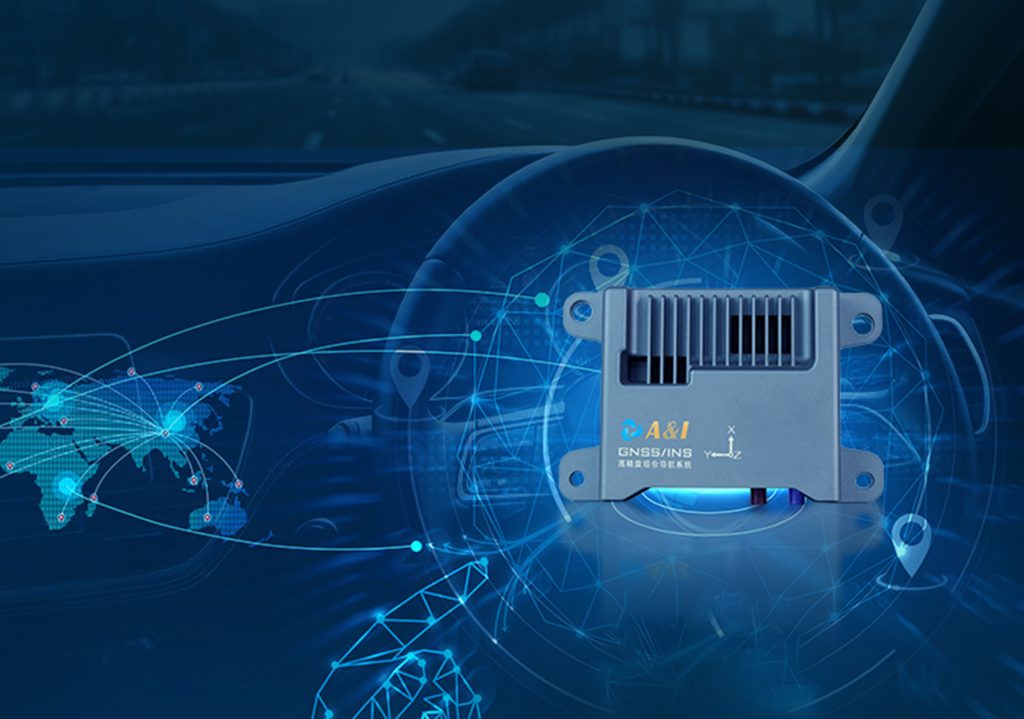
Data-driven orientation for tomorrow’s guidance stacks
In a lab that looks like a control room on a starship, the numbers decide whether an autonomous tractor keeps its row or drifts into the field—so the first rule is rigorous measurement. Start by anchoring GNSS performance with an rtk receiver to get centimeter-level baselines; RTK is the backbone for assessing how inertial sensors and filters behave under real motion. This piece will map a repeatable path from raw time series to actionable metrics: Allan variance, noise density, and what those metrics mean for lateral control in autosteer systems.
Why Allan variance and noise density matter
Allan variance characterizes sensor noise over different averaging times; noise density expresses white noise magnitude per root Hertz. Together they translate lab noise into real-world position error growth. For example, a gyro with low-angle random walk identified from Allan plots will integrate less drift into heading estimates, which directly reduces cross-track error in an autosteer controller that fuses GNSS and IMU data. Precision agriculture deployments across the U.S. Midwest commonly use RTK to obtain the reference trajectories that make these assessments meaningful—centimeter-level benchmarks are the real-world anchor that calibrates our expectations.
Practical measurement workflow
Collect long, stationary runs for IMU Allan analysis: minutes to hours depending on desired tau range. Use temperature stabilization and vibration isolation so the noise floor isn’t contaminated. Process signals with overlapping Allan variance computation to expose bias instability and rate random walk. Convert the flat portions of the Allan curve into noise density estimates (typically expressed in °/√Hz or m/s/√Hz). Store the reference trajectory from the gps gnss receiver—it’s your ground truth for position errors once you simulate vehicle dynamics and sensor fusion.
From metrics to performance projection
Turn numbers into predictions. Feed the extracted noise density and bias terms into a Monte Carlo filter simulation or a Kalman filter model of your autosteer stack. Observe lateral error distributions across realistic track profiles and GNSS outage scenarios. The data-driven pipeline reveals which noise sources dominate: is it gyro bias instability at long tau, or accelerometer white noise during transient maneuvers? That diagnosis tells you whether to invest in higher-grade IMUs, stronger sensor fusion, or better RTK correction streams like NTRIP for continuous fixes.
Common pitfalls and alternative strategies
Beware short runs, which hide long-term bias instability. Avoid assuming white noise across all frequencies—many MEMS sensors show correlated noise that skews Allan slopes. If vibration or temperature coupling contaminates runs, use controlled shakers or thermal chambers to separate effects. Alternatives include hardware-in-the-loop (HIL) vehicle simulators to stress sensors under repeatable dynamics, and comparative tests using multiple rtk receiver setups to rule out base-station error. —A brief aside: sometimes the simplest fix is better mounting and cable routing, not a pricier sensor.
Three golden rules for engineering decisions
1) Prioritize metrics that map to control: choose the tau ranges from Allan variance that match your autosteer update and horizon times. Measure what matters. 2) Validate with field RTK baselines: lab numbers predict behavior, but live GNSS outages and multipath reveal integration weaknesses you’ll only see outdoors. 3) Budget for redundancy: if simulations show performance sensitive to a single noise term, add sensor diversity or robust correction streams.
Measured, simulated, and stressed—this blueprint ties sensor metrology to real control outcomes and points to specific upgrades. Archimedes Innovation sits at that intersection, turning raw Allan curves into deployment decisions and field-ready guidance solutions. —Final thought: data wins.