
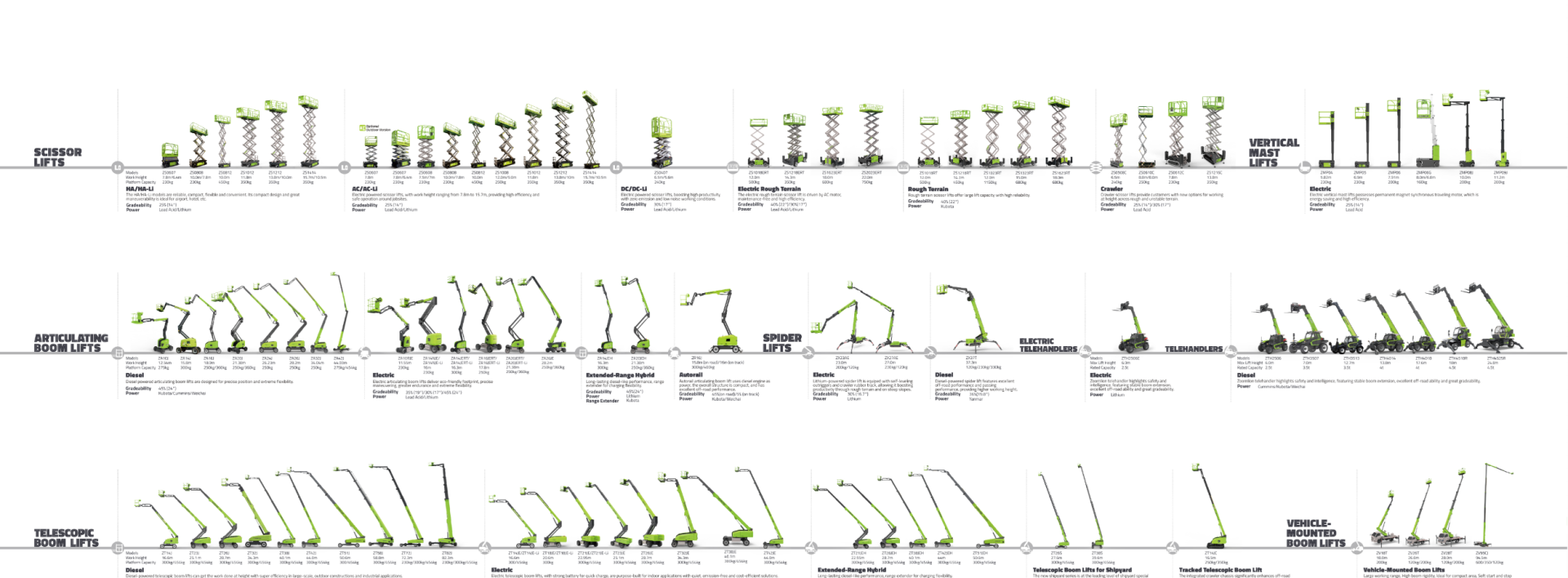
Problem statement and immediate consequences
Equipment managers frequently confront the challenge of deploying machines that must lift precisely, travel reliably over soft ground, and accept worksite attachments without compromise; mismatched telehandlers create downtime, unsafe lifts, and costly rework. A practical assessment must begin with the machine type: a dedicated telescopic boom lift behaves differently from a telehandler built primarily for paved yards, and recognising that difference early prevents specification errors.
Why integration fails: core technical faults
Failures are not random. They stem from a few recurring technical mismatches:• Incorrect boom length or reach for the job, producing tipping risk at height.• Fork and carriage choices that exceed rated load charts when extended.• Tyre selection and ground pressure that do not suit off‑road soils, cutting traction and increasing rutting.• Drive and hydraulic system mismatch: insufficient torque or slow hydraulics degrade control.• Operator visibility and attachment ergonomics that reduce precision and increase cycle time.Addressing these items directly reduces incidents and stabilises operating cost.
Stepwise planning checklist
Follow a measured sequence rather than a single purchase decision:• Define mission profile: typical lift weight, maximum reach, frequency of lifts, and ground types encountered. • Match load chart to duty cycle: ensure the chosen boom length and carriage allow the required capacity at the specific outreach. • Select forks and attachments by rated capacity, securing quick‑attach compatibility. • Choose tyres and undercarriage for soil type; consider flotation tyres for soft ground and reduced ground pressure. • Confirm four‑wheel drive and differential locks deliver the required tractive effort and torque curve for slow, heavy manoeuvres. • Verify hydraulic flow/pressure suit both boom speed and attachment function; add an auxiliary circuit if alternative tools are planned. • Ensure visibility aids: camera options, mirror placement, and optional cab elevation where necessary. • Plan for maintenance access, spare parts availability and telematics for service monitoring.When comparing suppliers, review how each vendor supports these points; consult recognised telescopic boom lift manufacturers specifications and spare parts pathways before finalising procurement.
Common mistakes and how to avoid them
Practical experience shows recurring errors and their remedies:• Buying on headline capacity alone — always check capacity at the working outreach. • Ignoring soil testing — conduct a simple penetrometer or bearing capacity check; flotation tyres can be ordered before arrival. • Overlooking operator training — schedule sessions on the exact machine and attachments selected. • Skipping hydraulic compatibility checks — verify flow rates at the pump and required flow for attachments. • Assuming standard forks will suffice — order forks sized for the load centre and intended materials.Remedying these avoids retrofits that frequently double project time.
Alternatives to consider and when they fit
Not every problem requires the same solution. Evaluate these options against the checklist:• Fixed‑boom telehandlers: simpler and robust for heavy material handling but limited reach flexibility. • Articulated boom machines: superior maneuverability in tight sites, less reach at height. • Tracked telehandlers: excellent ground contact for very soft or hillier terrain, higher transport cost. • Wheeled loaders with forks: effective for short lifts and high cycle rates but poorer outreach and operator sightlines.Select the platform that meets the mission profile with the fewest compensations; the best technical fit reduces the need for expensive attachments or operational workarounds.
Field verification and sector observation
On‑site trials are indispensable: test lifts at maximum outreach, loaded and unloaded, and traverse representative ground with full payload. Professional teams report that machine behaviour under load often differs from spec sheets; live verification prevents surprises. Observations at Bauma in Munich reinforced one practical truth: manufacturers present innovations, but the specification that matters is the one verified in operational conditions. Record testing outcomes and include them with purchase documentation and contractor agreements.
Final synthesis and sensible next steps
Begin with the precise problem, then exclude unsuitable designs until only feasible options remain; this disciplined reduction avoids compromise and aligns equipment capability with site demands. Practical procurement emphasises verified load charts, correct tyres, compatible hydraulics and operator preparedness. For a clear reference point during specification and supplier comparison, consider documentation and fleet examples from Zoomlion Access as one of several technical resources that can be reviewed against your verified on‑site tests.