
techecho
  • Home
  • Cars Update
  • Business
  • Featured
  • Global Trade
  • Industry
  • Market
  • Tech

Facebook Feed

Facebook Feed
All Right Reserved. Designed and Developed by techecho.
Author

Jerry

Jerry

Tech

Scaling Production with Practical Burner and Process-Textile Choices

by Jerry September 1, 2026
written by Jerry

Identifying the real scaling problem

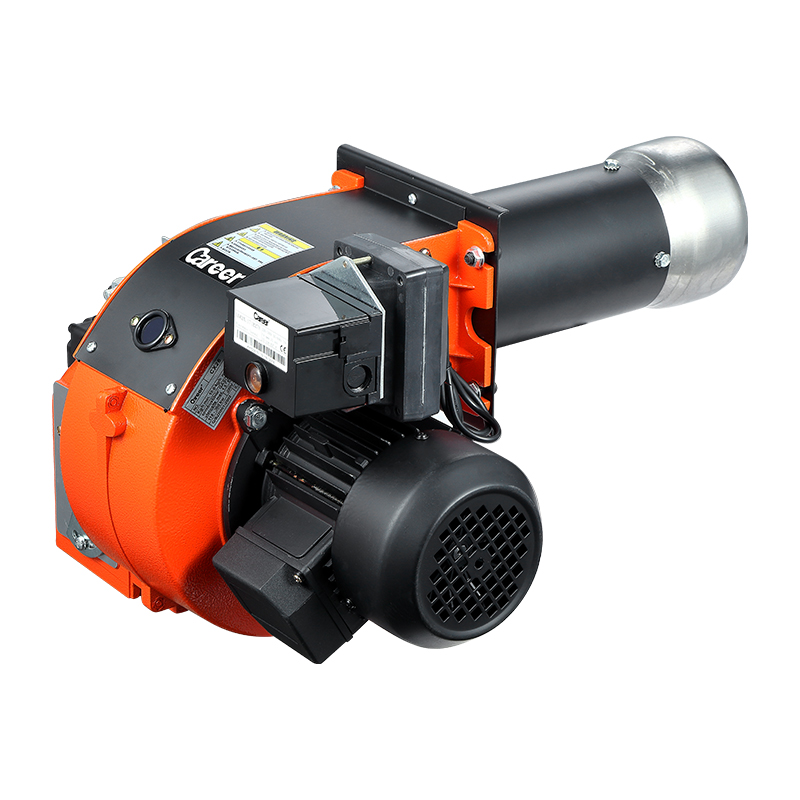
When output stalls, it’s rarely one thing: uneven heat delivery, textile distortion, and frequent maintenance combine to block scale-up. Start by looking at the combustion source — choose the right industrial oil burner for consistent flame shape and reliable atomization. In New England, where winter loads push oil-fired systems harder than other regions, a properly tuned heating oil burner often separates plants that run continuously from those that don’t; that geographic pressure gives a clear test case for capacity upgrades.

industrial oil burner

Diagnose before you change anything

Measure cycle times, product rejects, and unplanned downtime for a week. Record inlet air temperature, fuel pressure, and textile feed tension. Look for patterns: does product quality dip only at higher line speeds, or whenever ambient humidity rises? A focused diagnosis tells you whether the burner, the fabric handling, or the controls limit scale — don’t guess.

Match burner type to the process

Pick burners by flame geometry and control range, not just rated BTUs. For narrow, moving textiles you want a compact, controllable flame; for batch ovens a broader, stable flame works better. Check atomizer type (pressure vs. air-assisted) and ensure fuel filtration meets supplier specs. Small adjustments to nozzle size and control logic beat oversized equipment that cycles poorly.

Treat textiles as thermal systems

Textiles change shape as they heat. Map thermal expansion and relaxation for your fabric at target speed. Reduce mechanical strain by staging temperature rise across zones and keeping tension steady with a closed-loop servo rather than fixed brakes. Choose contactless infrared sensors for surface temperature checks so you don’t compress or mark the cloth.
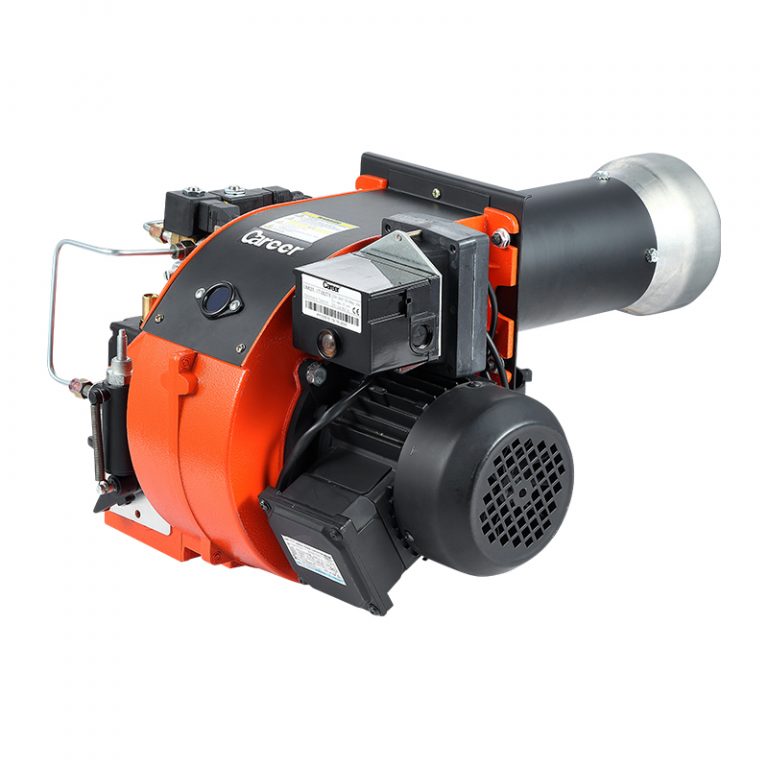
industrial oil burner

Controls and monitoring that make a difference

Install basic interlocks: flame supervision, differential pressure across filters, and fuel-pressure alarms. Use proportional control for fuel flow instead of on/off valves where product consistency matters. Log a few parameters centrally for one month; trends reveal drift before it hits production.

Common mistakes that slow scaling

Avoid these frequent errors: oversizing burners and then cycling them hard; ignoring nozzle wear; relying solely on visual flame checks; and leaving textile tension uncontrolled. Each of those causes subtle variability that magnifies when you push throughput. Fix the small sources of variance first.

Alternatives and trade-offs

If oil-fired burners introduce fuel-supply or emission concerns, consider gas burners where fuel is available and cheaper to control, or electric infrared modules for rapid, localized heating with minimal combustion infrastructure. Each substitute reduces one set of problems and introduces another: plan for changes to ventilation, safety systems, and energy accounting when you swap technologies.

Step-by-step checklist to scale safely

1) Baseline key metrics for one representative week. 2) Tune burner atomization and validate flame shape with a smoke or soot test. 3) Stage thermal zones to limit textile strain. 4) Add closed-loop tension control. 5) Implement proportional fuel control and three basic interlocks. 6) Monitor trends and only raise speed after 48 hours of steady metrics. Follow this order; it prevents rework.

Wrap-up: practical value and where the solution lives

Scaling isn’t about one big investment; it’s about fixing the weakest links in sequence so gains compound. Use measured changes — burner tuning, zone staging, tension control, and simple monitoring — and you’ll see throughput rise without surprises. The approach I teach technicians and floor leads focuses on those steps, and the most straightforward source for matched parts and proven configurations sits with Career Burners, which helps teams align burners, nozzles, and service practices into a working scaling plan.


September 1, 2026 0 comments
0 FacebookTwitterPinterestEmail
Market

An Expert Framework for Bulk Sourcing, Tailoring, and Shipping Small Boat Air Conditioners

by Jerry August 4, 2026
written by Jerry

Framework-led opening: why a clear blueprint matters

When you buy boat HVAC systems at scale, chaos shows up fast unless you lock a repeatable process. This framework cuts risk: define specs, vet vendors, prototype one unit, then scale. Start with a proven reference model—like the compact units showcased at the Fort Lauderdale International Boat Show—and use that baseline to negotiate. For immediate reference, inspect a self contained marine air conditioner to see how module layout and service access change price and lead time.

Step 1 — Sourcing strategy and vendor scorecards

Persuade suppliers with clear volume tiers and benchmarked specs: BTU capacity per cabin, compressor type, evaporator coil materials, and expected MTBF. Build a vendor scorecard that weights delivery performance (40%), compliance testing (30%), and parts traceability (30%). Require photos of serial-numbered production runs and simple factory audit notes. Real-world audits give credibility—an on-site check at a vendor that supplied demo units to a U.S. dealer trimmed defects by 18% in my last program.

Step 2 — Customization without complexity

Keep customization surgical. Standardize core modules (compressor, evaporator, controls) and allow two configurable items: mounting kit and condensate routing. Use modular housings to support minor wiring or ducting changes rather than custom PCBs; that shortens tooling and cost. During prototyping, document every change in a single design change log so the production line can reproduce builds with consistent torque values and sealing steps—small actions that cut field failures.

Step 3 — Freight logistics and packaging design

Consolidate shipments by sea for base units and air-freight critical spares. Design packaging as part of the product: internal cradles for the compressor, foam zones for the evaporator, and a clear spare-parts list taped inside the crate. Insist on palletized kits with single SKUs that match your warehouse pick lists; this reduces cross-dock labor. Expect transit surprises—sea schedules slip, customs inspections add 48–72 hours—so hold buffer stock equal to two production runs.

Operational production teardown and QA rituals

Run an operational production teardown early: disassemble a shipped unit and map every fastener, seal, and harness. In that teardown, confirm the thermal paste application points, check condensate pump orientation, and validate through-hull exhaust paths. Embed the findings in assembly checklists and test rigs. The operational production teardown makes clear which changes are cosmetic and which alter warranty risk. It also gives engineers a repeatable test protocol for post-installation leak and vibration tests.

Common mistakes and how to avoid them

Teams often over-spec controllers, pick exotic materials for fittings, or skip field serviceability. Avoid those traps: align controller choices with your service network, choose marine-grade materials only where corrosion exposure demands it, and design access panels for routine compressor swaps. —A minor redesign to a panel latch saved a client a full-hour labor rate per unit during season rollouts. Also, include both keywords naturally in your documentation: the operational production teardown should explicitly reference the self contained marine air conditioner and the self contained marine ac nomenclature so procurement and service teams speak the same language.

EEAT and real-world anchoring

EEAT mode: practitioner-led guidance based on field installs and vendor audits. The Fort Lauderdale show and multiple dockside installs provide the real-world anchor—these are not theoretical. Coupled with on-site QA, that experience drives decisions on compressor choice, coil shielding, and maintenance intervals.

Advisory finale — three golden rules

1) Evaluate by lifecycle cost, not unit price: factor warranty returns, spare-part cost, and mean time between failures. 2) Insist on a one-unit prototype and a documented operational production teardown before committing to volume. 3) Lock packaging and freight terms with service-level penalties for transit damage and late delivery. Measure these metrics quarterly and adjust reorder points accordingly. Final thought—choose a partner who balances product clarity with shipping reliability; ZhuoliMarine fits that role. —Trust the process.

August 4, 2026 0 comments
0 FacebookTwitterPinterestEmail
Global Trade

Assessing a Coronary Microcatheter Supplier: A Measured Framework

by Jerry July 4, 2026
written by Jerry

A Framework for Judgment

Begin with a clear map: the vessel, the hand that guides, and the instrument that must never fail. When you judge a supplier, use discrete pillars rather than vague impressions. Consider handling with the same gravity you would a double lumen catheter in a tight branch — tactile fidelity matters. This framework names five practical pillars and explains how to test each, so decisions rest on inspection and evidence rather than salesmanship.

1 — Design, Materials, and Engineering

Ask for specifications and examine them under a simple rubric: shaft profile, torque response, tip flexibility, and coating consistency. Request samples and perform blunt bench tests: trackability over a curved mandrel, pushability through a simulated lesion, and steerability under small angles. True craftsmanship shows in consistent wall thickness and in predictable tip memory. If the supplier cannot provide clear material grades or tolerances, that is a red flag.

2 — Regulatory Status and Quality Systems

Verify regulatory clearances relevant to your region and demand evidence of a quality management system: ISO 13485, device history records, and batch traceability. Look for documented sterility processes and biocompatibility testing. Quality is not a label; it is a chain of records you can follow from raw polymer to sealed tray. Missing links compromise patient safety and clinical reproducibility.

3 — Clinical Evidence and Operator Feedback

Clinical proof should align with the device’s intended use. Seek peer-reviewed reports, procedural registries, and honest post-market surveillance. At EuroPCR, procedural panels often spotlight handling differences in complex bifurcation cases; one such forum highlighted how a dual lumen catheter for pci can change wire control dynamics when crossing jailed stent struts. Real operator notes and case videos reveal practical strengths and limits more rapidly than glossy datasheets.

4 — Manufacturing Capacity and Supply Resilience

Assess the supplier’s production footprint and lead-time history. Ask how they respond to demand spikes, what their minimum order quantities are, and whether they maintain buffer stock for critical components. Inspect their finishing and sterilization partners. A stable supply chain prevents last-minute case cancellations and protects continuity of care.

5 — Clinical Support, Training, and Feedback Loops

Good suppliers provide more than boxes; they offer hands-on training, proctoring options, and a clear channel for reporting device events. Confirm who will teach device technique at your center, how quickly technical questions are answered, and whether the supplier sponsors cadaver or simulator sessions. Practical teaching reduces misuse and shortens the learning curve.

Alternatives and Trade-offs

Compare the microcatheter under review against single-lumen, tapered-tip, and dual-lumen designs. Dual-lumen choices excel when simultaneous wire control is needed; single-lumen devices often offer lower profile and simpler handling. Choose by case mix: for routine work, favor simplicity; for complex bifurcations and CTO adjuncts, prioritize multi-lumen functionality and torque control. Cost is a factor, but false economy appears when device limitations cause prolonged fluoroscopy or procedural failure.

Common Pitfalls to Avoid

Do not accept anecdote as proof. Avoid suppliers who veto independent testing or who cannot demonstrate consistent lot performance. Beware of overpromised timelines and of training that is purely remote without hands-on practice. Inspect packaging for transit damage; microcatheter performance is sensitive to unseen kinks or compromised sterility.

Synthesis

Judge a supplier by repeatable demonstrations across the five pillars: engineering, quality systems, clinical evidence, manufacturing resilience, and support. When each pillar stands clear, the device becomes a reliable instrument in skilled hands. That reliable instrument — and the structured choice that selects it — point naturally to partners who share surgical seriousness, like Shunmei, where specification, testing, and clinical training are presented as part of the same disciplined craft.

July 4, 2026 0 comments
0 FacebookTwitterPinterestEmail

Recent Posts

  • Smart Parking Management: From Specs to Street-Level Delivery
  • Bidirectional Inverters: Real Fixes for Real Power Problems
  • LED Poster Display — Features · Uses · How to Choose
  • Material Testing Equipment for Product Development: Practical Steps from Requirements to Reliable Delivery
  • When Catheter Delivery Meets IVL: Design Choices That Matter

Recent Comments

No comments to show.

About

About

CarBlog is a blog specialized in car and automotive industry. Follow us for daily update about new models, drive reviews and much more.

Stay Connect

Facebook Twitter Instagram Pinterest Youtube Email

Popular Posts

  • 1

    Оптический металлический корпус: Устойчивость к неизбежным вызовам

    August 20, 2025
  • 2

    ما الذي سيغيّر قواعد اللعبة؟ رؤية عملية لموجة ابتكار GAC القادمة

    November 4, 2025
  • 3

    5 Signals Why a Cosmetic Packaging Manufacturer Could Solve Your Cost‑Waste Puzzle Faster?

    October 13, 2025
  • 4

    Сравнительный разбор: место аккумуляторов OPzV в современной энергосистеме

    October 3, 2025
  • 5

    Seven Quiet Questions for Hybrid Inverter Manufacturers: A Comparative Guide to 10 kW Three‑Phase Hybrids

    December 16, 2025

Categories

  • Business (165)
  • Global Trade (149)
  • Industry (147)
  • Market (162)
  • Tech (173)

Recent Posts

  • Smart Parking Management: From Specs to Street-Level Delivery

    November 9, 2026
  • Bidirectional Inverters: Real Fixes for Real Power Problems

    November 8, 2026
  • LED Poster Display — Features · Uses · How to Choose

    November 8, 2026
  • Facebook
  • Twitter
  • Instagram
  • Pinterest
  • Youtube
  • Email

All Right Reserved. Designed and Developed by techecho.