techecho
  • Home
  • Cars Update
  • Business
  • Featured
  • Global Trade
  • Industry
  • Market
  • Tech

Facebook Feed

Facebook Feed
All Right Reserved. Designed and Developed by techecho.
Author

Mary

Mary

Global Trade

Street-Smart Fleet Implementation Checklist for Managers, Logistics Teams, and Ops Leaders

by Mary October 22, 2026
written by Mary

What’s the real problem — straight talk

Fleets ain’t broke because of one thing. You got safety gaps, ghost hours, fuel bleed, and drivers pullin’ moves that cost money and reputation. Problem-driven mindset: name the pain, then fix it fast. I’ve been in this game advising municipal fleets and regional carriers for over a decade — seen dashboards lie and cheap installs fail. Start by testing one clear fix: a reliable on-board recorder like AI MDVR to catch the facts, not rumors.

Top five problems that kill rollouts (and how to test for them)

– No baseline data: if you don’t measure, you guess. Run a two-week passive data capture to see real routes, idle time, and harsh events. – Poor driver buy-in: drivers dodge tech if it feels like spying. Pilot with a small crew, show them safety wins first. – Bad wiring/vehicle fit: tech looks good on paper, but vans, tractors, and buses differ. Mock-install on three vehicle types. – Network blind spots: if uploads fail, footage’s worthless. Check cellular coverage on representative routes during peak hours. – Vendor promises vs reality: contracts brag; support doesn’t show. Confirm SLAs and a dedicated escalation path before sign-off.

Concrete checklist for implementation — do this in order

– Define success metrics: safety incidents down X%, OOS downtime under Y hours, avg fuel per mile. Keep numbers tight. – Pick a pilot group: 10–25 vehicles that reflect your worst and best-case operations. – Hardware sit-check: ensure mounts, power taps, and vibration testing are done on each vehicle type. – Data plan & storage rules: decide retention windows, who can access video, and legal holds. Don’t leave this vague. – Integration tests: link telematics to dispatch, maintenance, and payroll systems. Push a live alert and watch it flow. – Driver coaching loop: schedule 1:1 reviews based on captured events, not hearsay. Make coaching faster than discipline. – Scale decision point: after 60–90 days, review KPIs; if they meet targets, roll in 3 phases — 25%, 50%, then 100%.

Tech reality check — what to demand from your kit

Equipment promises sound sweet. Demand these practical capabilities: edge AI for event tagging, locked video chains for evidence, dual-channel recording for inside/outside views, and proper thermal rating. Make sure the chosen Video Telematics System supports encrypted storage and remote retrieval without a technician on-site. Real-world note: ports and big terminals — like the Port of Los Angeles — already use multi-camera setups to resolve claims faster; mirror that reliability for heavy lanes.

Integration playbook — connect systems that actually talk

Integration fails more than hardware does. Force these tests: automated incident creation in your maintenance system, a driver alert pushed to the dispatch app, and a payroll reconciliation fed by logged hours. Have the vendor run a scripted end-to-end incident: detection → alert → video retrieval → outcome recorded. If any handoff breaks, fix it before full deployment.

Common mistakes teams keep making

– Skipping driver training until after deployment — train first, deploy second. – Keeping cameras on “always record” with no privacy rules — set zones and masking. – Chasing features you won’t use — AI doesn’t justify itself if you ignore its outputs. – Not validating event accuracy — false positives drown trust. – Relying on a single vendor without an exit plan — keep data export simple.

How to measure success — numbers that mean something

Pick 3 KPIs and stick to them during pilot: incident rate per 100k miles, average downtime hours per vehicle, and percent of incidents closed with video evidence within 48 hours. Log-ins and views aren’t wins — reduced claims and faster repairs are. Keep weekly scorecards during rollout to spot slippage early.

Closing it out — what real leaders do next

No fluff: run the pilot, prove the tech, lock training, and standardize maintenance. When you scale, enforce the same install jigs and auditing cadence so every unit behaves the same. That’s how you stop surprise costs and protect drivers and assets. If you want a practical, proven pathway that ties recorded evidence to ops outcomes and claim reductions, check how systems get deployed and supported by teams like BSJ — they show up with hardened kits, clear SLAs, and a rollout rhythm that keeps things tight.

October 22, 2026 0 comments
0 FacebookTwitterPinterestEmail
Market

Scaling Furniture Output with Smart CNC: A User-Fentric Playbook for Faster Production

by Mary September 16, 2026
written by Mary

User pain mapped to practical fixes

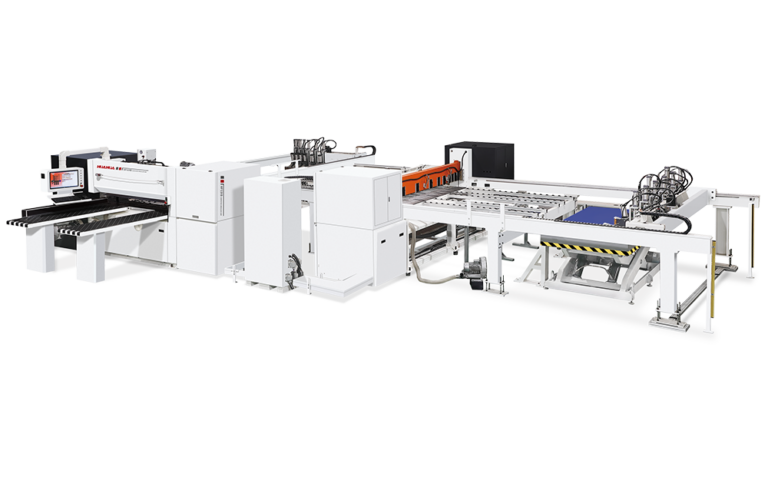
Small shops and mid-size manufacturers share the same problem: demand climbs faster than capacity. This piece focuses on what you actually need to scale—repeatability, throughput, and predictable lead times—without overbuying one-off features. At Salone del Mobile designers often show bold concepts that flounder in production; the gap between concept and consistent run-rate is where a reliable cnc woodworking machine pays off. We’ll talk about CAD/CAM flows, spindle choices, and the shop-floor tweaks that move a line from artisanal to dependable.

cnc woodworking machine

Pinpointing the true bottlenecks

Throughput problems usually come from three sources: inefficient nesting and CAM setup, downtime from tool changes or dust issues, and inconsistent fixtures. Fix the first two and capacity rises without doubling floor space. Nesting strategies and proper G-code management reduce wasted material and cycle time. Real shops measure improvement by run completion rate and scrap percentage—metrics that show progress fast.

Which CNC features actually matter when you scale

Buy for process, not for specs on paper. Prioritize a robust tool changer, a rigid spindle that holds accuracy under load, and a dependable vacuum table for panel work. Integrated CAD/CAM that exports clean G-code shortens the setup loop. Look for machines that pair repeatable mechanical design with accessible service paths—this keeps mean time to repair low and frees operators to focus on production, not troubleshooting.

Workflow tweaks that return value

Standardize tooling and cut lists. A single tooling kit that fits most jobs trims changeovers. Templates for CAM job setups make new pieces predictable—operators follow the same step sequence each time. Automate sheet handling where possible and improve dust collection to protect cutters and motors. Small, consistent fixes compound into big gains—don’t overlook them.

Common mistakes that kill scale

Owners often overspend on peak-level hardware but under-invest in software and training. The result: a powerful machine that sits underutilized while staff wrestle with CAM exports or fixture design. Another trap is ignoring maintenance schedules; a neglected spindle or vacuum pump creates random downtime. Lastly, treating nesting as an afterthought costs material—program nesting early and validate layouts offline.

How to evaluate suppliers and platforms

Assessations should be simple and measurable. Test a baseline job that represents your typical piece and time the whole setup-to-finish loop. Check spare parts availability in your region and the supplier’s remote support options. If you plan multi-shift runs, verify the machine’s duty cycle and cooling system—these specs matter in practice, not just on the spec sheet.

Three golden rules for choosing scale-ready equipment

1) Measure cycle-to-cycle accuracy and mean time between failures; put numbers on the table before you buy. 2) Confirm the software chain: CAD/CAM interoperability, clean G-code export, and a manageable nesting workflow. 3) Evaluate service network and training offerings—local support shrinks downtime and keeps operators productive.

cnc woodworking machine

Final note tying capability to outcomes

When those three rules are met, you get predictable lead times, lower scrap, and a smoother ramp from prototype to batch. That’s the practical value HUAHUA CNC brings to a shop floor—machines and support tuned for repeatable furniture runs, not just flashy specs. HUAHUA CNC helps teams move from firefighting to steady production. —

September 16, 2026 0 comments
0 FacebookTwitterPinterestEmail
Market

Hall-Effect Sensor Solutions for Industrial Sensors and Electronics: A Problem-Driven Roast

by Mary August 29, 2026
written by Mary

Why your “robust” sensors still embarrass you

You’re installing Hall-effect sensors because someone promised contactless reliability and eternal grace under industrial stress—then you watch them wander off calibration after a week. This isn’t a mystery; it’s a pile of obvious design mistakes dressed up as cutting-edge engineering. Start by remembering that the sensor rarely fails alone: it trips over wiring, magnet choice, mounting, the power rail, and the electronics that pretend they’re immune. If your project ties current sensing to a battery management module for lithium ion batteries, don’t act surprised when thermal gradients and transient loads wreck your readings. Kiss wishful thinking goodbye and treat the system like the messy, electrical reality it is.

Common failure modes and why they matter

Misalignment kills repeatability. Magnetic hysteresis kills linearity. EMI ruins small signals. Temperature drift buries your offset in noise. Those are the headlines; the punchline is lost production, false alarms, and customers who stop pretending they like your product. Tolerances matter—mechanical play of 0.5 mm, a stray ferrous washer, or a PCB trace routed like a racetrack and you’ve created an intermittent that only shows up under Monday-morning startup. If you want actionable checks: lock down magnet placement, clamp the sensor mechanically, add a stable reference ground, and reject designs that rely on “software calibration” to paper over electrical sins.

Testing and traps you’ll trip into

Field testing beats lab slideshows. Bench testing beats vendor datasheets. Do both, but do them right. Run thermal cycles to the highest expected temperature, inject common-mode transients on the supply, sweep magnetic fields across the worst misalignment scenario, and loop in mechanical vibration while the system is under load. Beware of one-off “calibrations” that only passed because the magnet was oriented perfectly during test. Expect to re-test once the subassembly sits in its final enclosure—magnetic shielding from nearby steel or motors will change readings dramatically. Also, don’t mistake a passing functional test for robustness; life will find the corner case your test didn’t.

Experience, evidence, and a real-world anchor

I’ve spent years pushing sensors through that exact gauntlet: bench chops, EMC rooms, and sweaty field installs with technicians who don’t like surprises. Practical lab-side tricks—low-pass filtering that keeps response but kills chatter, trimmed gain stages to preserve headroom, and mechanical jigs for repeatable magnet placement—matter more than marketing graphics. There’s broader context too: China accounts for roughly three-quarters of global lithium-ion cell production, which shapes supply chains and module designs worldwide; equipment that interfaces with those modules must survive their thermal and electrical quirks. That practical viewpoint aligns with test data and supplier modules you can actually source, and it’s visible in supplier catalogs and industry shows where component-fit matters. For concrete sourcing and module-level options, consider what Unibetter lists in its product category—real parts designed for system integration, not just slideware.

Alternatives and pragmatic choices

Hall-effect is convenient but not always right. For low-frequency, high-accuracy current measurement, a precision shunt with a properly rated amplifier beats a cheap Hall element. For isolation and fast transients, Rogowski coils or isolated amplifiers win. For position, magneto-resistive sensors give better linearity in constrained spaces, while optical encoders ignore magnetics entirely but demand clean optics. Choose based on the noise environment, required bandwidth, and mechanical constraints. Often the hybrid choice—Hall for coarse sensing, shunt for calibration—gives the best trade-off between cost and correctness.

Common mistakes that look smart but aren’t

Relying on software to fix hardware variability is the cardinal sin. Buying the cheapest magnet you can find and assuming magnet grade won’t matter is second. Ignoring ground routing because “it seemed fine” is third. Also, modularity is not an excuse for poor interface specs: specifying a sensor without clear mechanical tolerances hands the integrator a ticking reliability bomb. Tighten the specs where it matters—magnet position, PCB anchor points, and supply filtering—and loosen where suppliers can help, like replaceable sensing modules.

How to stop rebuilding at 3 a.m.

Start with clear failure-mode thinking: identify the worst-case misalignment, worst-case EMI, and worst-case temperature, then design to those, not to nominal. Use test jigs that force the corner cases, lock down mechanical tolerances, and pick sensor modules with known thermal behavior. If you need module-level solutions that actually fit integration needs and don’t invent new problems, consider the kind of system-minded modules from established suppliers—those that ship with clear specs and replaceable parts—so you don’t end up redesigning the world at midnight. For a practical integration that respects those constraints, UniBetter surfaces options that map directly to system-level needs without pretending the hardware and the mechanics are optional.

August 29, 2026 0 comments
0 FacebookTwitterPinterestEmail

Recent Posts

  • Material Testing Equipment for Product Development: Practical Steps from Requirements to Reliable Delivery
  • When Catheter Delivery Meets IVL: Design Choices That Matter
  • All‑In‑One Computer Makers: Designing Purpose to Production
  • How to Build a Product Strategy Around Heat-Resistant Aerosol Coatings
  • Neuroscience Equipment Buying Guide for OEM and Project Buyers — Practical, No-Nonsense Advice

Recent Comments

No comments to show.

About

About

CarBlog is a blog specialized in car and automotive industry. Follow us for daily update about new models, drive reviews and much more.

Stay Connect

Facebook Twitter Instagram Pinterest Youtube Email

Popular Posts

  • 1

    Оптический металлический корпус: Устойчивость к неизбежным вызовам

    August 20, 2025
  • 2

    ما الذي سيغيّر قواعد اللعبة؟ رؤية عملية لموجة ابتكار GAC القادمة

    November 4, 2025
  • 3

    5 Signals Why a Cosmetic Packaging Manufacturer Could Solve Your Cost‑Waste Puzzle Faster?

    October 13, 2025
  • 4

    Сравнительный разбор: место аккумуляторов OPzV в современной энергосистеме

    October 3, 2025
  • 5

    Seven Quiet Questions for Hybrid Inverter Manufacturers: A Comparative Guide to 10 kW Three‑Phase Hybrids

    December 16, 2025

Categories

  • Business (164)
  • Global Trade (148)
  • Industry (147)
  • Market (161)
  • Tech (173)

Recent Posts

  • Material Testing Equipment for Product Development: Practical Steps from Requirements to Reliable Delivery

    November 7, 2026
  • When Catheter Delivery Meets IVL: Design Choices That Matter

    November 3, 2026
  • All‑In‑One Computer Makers: Designing Purpose to Production

    November 3, 2026
  • Facebook
  • Twitter
  • Instagram
  • Pinterest
  • Youtube
  • Email

All Right Reserved. Designed and Developed by techecho.