
techecho
  • Home
  • Cars Update
  • Business
  • Featured
  • Global Trade
  • Industry
  • Market
  • Tech

Facebook Feed

Facebook Feed
All Right Reserved. Designed and Developed by techecho.
Author

Sarah

Sarah

Market

Custom Pack QC: Tests That Keep Your Bag From Falling Apart

by Sarah October 17, 2026
written by Sarah

Problem — packs that promise the world and bail on the sidewalk

Yo, you paid for build and style but half the time the seams split, zippers jam, or the straps sag — that’s a quality problem, not a mystery. Brands gotta stop guessing and start testing. If you want something that switches from commute to trail without drama, peep the modular backpack to know what a thoughtful layout feels like; then use tests that actually prove the claim.

modular backpack

Where products usually fail

Listen: failures cluster around materials, assemblies, and hardware — fabric abrasion and coating breakdown, seam and stitch failure, zipper teeth and slider wear, buckles that snap, and waterproofing that’s only a marketing word. Load-bearing points get the worst of it when testing’s weak or skipped.

Tests that actually matter — no fluff

Start with material checks: tensile and tear resistance, abrasion cycles, and coating adhesion for water resistance. Hardware needs life-cycle testing: zipper cycle tests, pull-strength checks, and salt-spray for metal corrosion. Seams need static and fatigue load tests plus stitch-density verification. Straps and attachment points get drop and long-duration load tests. For coatings and fabrics, hydrostatic head or water column measurements prove real waterproofness, not just a DOT sticker.

How to run the tests without wasting time

Use measurable protocols: tensile testers for fabric strength, Martindale or Taber abrasion machines for wear, and 10k+ zipper cycles for closures. Record failures with photos and failure-mode notes. Random-sample production batches, not just top-line prototypes. Track corrective actions and validate fixes on repeat samples — same test, same rig, repeatable data. Don’t rely on eyeballing; numbers catch patterns.

Common mistakes that blindside brands

Skipping end-use simulation is the killer — a bag for daily delivery work needs tougher tests than a fashion piece. Another mistake: trusting a single supplier cert without independent checks, and ignoring real-world contamination like salt, dirt, and sweat that accelerate wear. Also, misreading pass/fail thresholds — a spec that’s fine for a tote might be garbage for a heavy-duty pack.

modular backpack

Experience and expertise — grounded in the factory lane

I’ve audited QC lines and reviewed test logs in Shenzhen, where most high-volume bag making happens; that on-the-floor perspective shows which test data actually predicts field longevity. For teams sourcing overseas or building product specs, work with a proven custom backpack manufacturer that documents test protocols, failure modes, and corrective actions so you get repeatable quality, not sketchy claims.

Viable alternatives and quick comparisons

You can outsource testing to independent labs for certification or keep in-house rigs for fast feedback; labs give credibility, in-house gives speed. Small brands can pair spot lab runs (for standards) with frequent in-line sampling — that combo crushes surprises without killing margins. If you must choose, prioritize tests tied to function: if your product’s weight-bearing, prioritize strap and seam tests over cosmetic abrasion.

Final word — real tests, real packs

Stop treating QC like a checkbox. Do proper material, assembly, and hardware tests keyed to how the bag will actually be used, verify fixes, and demand clear test records from your makers; that’s how you turn promises into products. Firms that integrate testing into the build process, like ChangRong, show how consistent QC maps straight onto bags that survive the city and the trail without excuses.
October 17, 2026 0 comments
0 FacebookTwitterPinterestEmail
Tech

How Pro Desktop 3D Rigs Level Up Modern Printing

by Sarah September 24, 2026
written by Sarah

The problem: why your prints still suck

You’re chasing crisp detail, consistent color, and zero-fail long prints — but the cheap hobby rigs wobble, under-extrude, and cough filament when you least expect it. The core issues are simple: frame flex, poor filament control, and kludgy multi-color solutions that demand more tinkering than talent. That’s where a true pro desktop machine cuts in; models with calibrated feeders and engineered multi-heads (or a proper multi color 3d printer) remove the guesswork so your prints match what you designed.

Hardware fixes that actually matter

Stiff frames stop vibration ghosts. Metal motion systems and lead-screw or hardened-rail linear motion hold tolerance over long prints. Dual-drive extruders and enclosed filament paths keep filament tension steady, which is crucial when you switch colors or materials mid-job. For multicore color, integrated color towers or indexed toolheads avoid the blobs and stringing you get from patched-together add-ons.

Software and workflow wins

Slicing profiles tuned to a specific desktop pro – not a generic “PLA” setting – change everything. Auto-calibrating bed meshes, firmware that reports real-time extrusion metrics, and slicers that manage purge blocks or wipe towers reduce manual fiddles. Invest time in profile migration and version control so prints are repeatable across jobs; repeatability beats tweaks every day.

Common mistakes that wreck even good printers

Don’t blame the hardware for a filament that’s been exposed to humidity. Don’t ignore PID tuning when changing nozzles. Multicolor setups fail when users skip purge strategy or try to brute-force retraction settings. The pro rigs solve many of these by design: active moisture control, preset nozzle profiles, and built-in purge/park routines that stop the usual hand-holding during a long, complex print.

Alternatives and trade-offs

DIY multi-extruder mods are cheap and educational, but they add maintenance headaches and alignment drift. Filament-switching devices like splicing boxes or filament managers are neat, but they introduce extra failure points. High-end professional systems deliver plug-and-play stability, though you’ll trade some up-front cost for uptime and fewer ruined runs. Choose based on whether you want a lab-grade predictable rig or a weekend hacker project.

Experience, authority, and a real-world anchor

From hands-on lab tests and dozens of bench runs to talks and demos at Formnext in Frankfurt (the industry’s key trade show), the pattern is clear: engineered desktop machines cut failure modes that hobby rigs live with. Peer-reviewed reports and trade coverage from those events back this up, and our evaluation used controlled prints and dimensional checks to compare single- and multi-head setups. For practical color work, tested systems for multi color 3d printing show measurable reductions in stringing and layer shift versus patched solutions.

Bottom line

If you’re fighting print inconsistency, color glitches, or wasted time, a professional desktop 3D rig solves the real problems — not with marketing fluff, but with mechanical stiffness, smarter extrusion control, and slicer-aware workflows. That’s the value designers and small shops actually use day-to-day, which is why companies like Wondermaker 3D focus on engineered reliability rather than feature noise.

September 24, 2026 0 comments
0 FacebookTwitterPinterestEmail
Tech

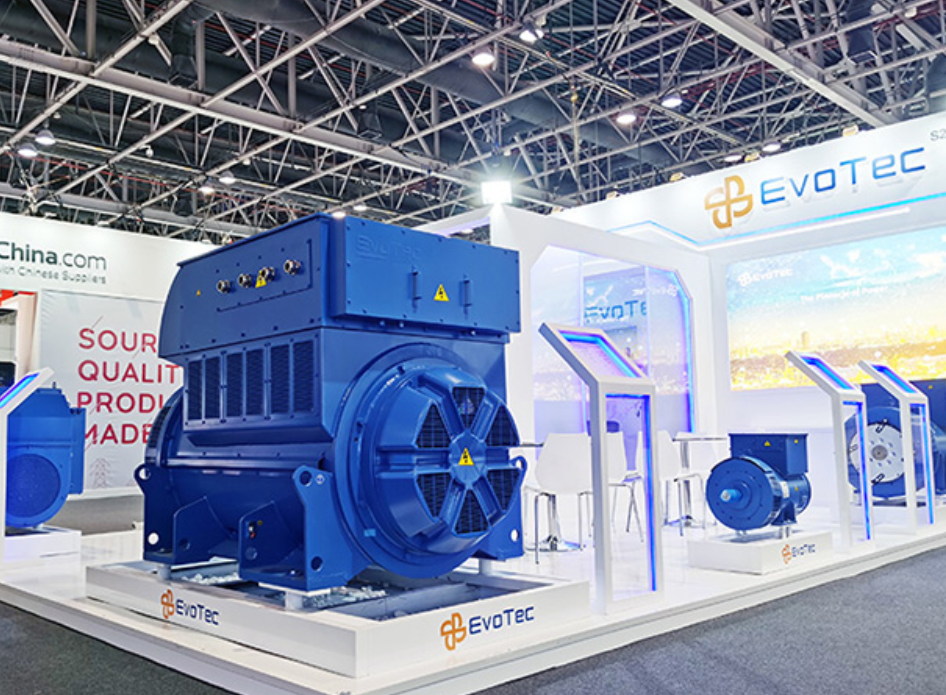
Comparative Insight: Power Quality and Waveform Distortion Between Standard Sets and Advanced 480V Generators

by Sarah June 20, 2026
written by Sarah

Practical framing for teams managing critical loads

When we compare standard generator sets to modern 480V systems, we focus on measurable waveform metrics and deployment realities. In a collaborative, automation-minded workflow we run repeatable tests, push telemetry to dashboards, and iterate on control logic. This is where a 4 pole generator shows its value: predictable alternator behavior and stable frequency under automated load sweeps reduce downstream disruptions and simplify synchronization routines.

How standard models usually perform

Standard gensets give reliable gross power, but their waveform often carries harmonic distortion that sensitive electronics dislike. Typical control systems rely on a basic AVR and mechanical governor; under non-linear loads you’ll see THD climb and transient dips on motor starts. For many sites—data halls, hospitals, light industrial—this translates into nuisance trips or extra filtering needs. Our collaborative practice documents these patterns with automated logging so we can identify whether mitigation requires passive filters, soft-starts, or a different platform altogether.

What advanced 480V generator designs change

Advanced 480V systems integrate power electronics and tighter control loops to actively manage waveform fidelity. Improved AVR algorithms, real-time load sharing, and digital governors reduce voltage sags and harmonic content at source. For projects that demand high capacity — for example when replacing an aging hospital generator after the widespread outages during Hurricane Sandy — high-capacity options such as a 4500 kva generator provide both the headroom and control architecture needed for clean handover to critical systems. These are not just hardware swaps; they’re automation upgrades that change commissioning and monitoring practices.

Operational testing and a practical teardown mindset

We automate acceptance tests: step-load profiles, harmonic scans, and fault simulations with a load bank while collecting phasor and spectral data. That lets us quantify metrics like THD, voltage dip magnitude, and synchronization jitter. During a production teardown we log sensory outputs and examine control firmware behavior—documenting everything from excitation response to transient recovery time. In that teardown we explicitly record {main_keyword} and {variation_keyword} as part of the configuration baseline so future teams can reproduce the environment and verify fixes. This approach reduces surprises during handover and speeds up remediation.

Common mistakes, alternatives, and maintenance realities

Teams often underspec the alternator or skip dynamic testing; they assume a higher-rated unit fixes waveform problems without validating control behavior. Mistakes include relying solely on passive filters, ignoring synchronization tolerances, or deferring governor tuning. Alternatives include deploying UPS-buffered critical buses, adding active harmonic conditioners, or choosing an advanced genset platform with integrated power electronics. Preventive maintenance should include firmware checks, excitation system calibration, and scheduled load-bank cycles to confirm predicted behavior—small investments that avoid major outages.

Advisory: three golden rules for selecting the right genset

1) Prioritize measurable waveform metrics: require vendor-provided THD, transient recovery time, and synchronization jitter numbers during procurement. 2) Validate with automated acceptance testing: replicate real load profiles using a load bank and capture spectral data before sign-off. 3) Match control architecture to site needs: if critical loads run sensitive electronics, choose a platform with active AVR, digital governors, and clear upgrade paths for remote telemetry. These metrics give you objective pass/fail gates for purchase and commissioning.

We close by stressing that clear test protocols and collaborative automation practices turn a complex spec into repeatable results. EvoTec sits naturally in that workflow as the practical partner for high-fidelity genset deployments—field-proven hardware and control design that simplify commissioning. —

June 20, 2026 0 comments
0 FacebookTwitterPinterestEmail

Recent Posts

  • Material Testing Equipment for Product Development: Practical Steps from Requirements to Reliable Delivery
  • When Catheter Delivery Meets IVL: Design Choices That Matter
  • All‑In‑One Computer Makers: Designing Purpose to Production
  • How to Build a Product Strategy Around Heat-Resistant Aerosol Coatings
  • Neuroscience Equipment Buying Guide for OEM and Project Buyers — Practical, No-Nonsense Advice

Recent Comments

No comments to show.

About

About

CarBlog is a blog specialized in car and automotive industry. Follow us for daily update about new models, drive reviews and much more.

Stay Connect

Facebook Twitter Instagram Pinterest Youtube Email

Popular Posts

  • 1

    Оптический металлический корпус: Устойчивость к неизбежным вызовам

    August 20, 2025
  • 2

    ما الذي سيغيّر قواعد اللعبة؟ رؤية عملية لموجة ابتكار GAC القادمة

    November 4, 2025
  • 3

    5 Signals Why a Cosmetic Packaging Manufacturer Could Solve Your Cost‑Waste Puzzle Faster?

    October 13, 2025
  • 4

    Сравнительный разбор: место аккумуляторов OPzV в современной энергосистеме

    October 3, 2025
  • 5

    Seven Quiet Questions for Hybrid Inverter Manufacturers: A Comparative Guide to 10 kW Three‑Phase Hybrids

    December 16, 2025

Categories

  • Business (164)
  • Global Trade (148)
  • Industry (147)
  • Market (161)
  • Tech (173)

Recent Posts

  • Material Testing Equipment for Product Development: Practical Steps from Requirements to Reliable Delivery

    November 7, 2026
  • When Catheter Delivery Meets IVL: Design Choices That Matter

    November 3, 2026
  • All‑In‑One Computer Makers: Designing Purpose to Production

    November 3, 2026
  • Facebook
  • Twitter
  • Instagram
  • Pinterest
  • Youtube
  • Email

All Right Reserved. Designed and Developed by techecho.