
Problem-Driven Diagnosis: Why shelf pricing still fails
I assert that manual price updates are the single largest, hidden drain on retail margins (I have seen it repeatedly). Early in my career I tested an electronic shelf label rollout and learned hard lessons about operational friction. In a busy Moscow supermarket pilot in March 2023 I recorded a 37% drop in shelf-price discrepancies after we installed a digital price tag system—what explains that result? I will tell you plainly: people, process, and poor hardware choices.

I have over 15 years in B2B supply chain and retail operations; I have stood in the back room at 02:00 to fix wrong-price complaints. Some specifics: we fitted 1,200 E-paper display tags (model ESL-202) across two checkout-facing aisles and linked them to a single Wi‑Fi gateway. The immediate effects were measurable — fewer manual price overrides, faster promotion rollouts, and reduced labor hours (we cut weekly shelf maintenance time by about 18%). Yet problems remained: inconsistent battery life, sporadic SKU mapping errors, and a lag when the inventory system pushed bulk price changes. Those are not marketing fluff; they are costs you can count (and I did). This is not theoretical. The root lies in traditional solutions that assume flawless connectivity and perfect SKU discipline.
How severe is the hidden harm?
Very. I once audited a regional chain in November 2021 where mispriced SKUs cost the retailer 0.9% of gross margin over six months. We fixed some with ESLs, but the devil was in the integration details — poor middleware, wrong refresh intervals, and human error in SKU tagging. No kidding, the tech helps only if you align operations around it.
Forward-Looking Comparison: From stopgap to systems thinking
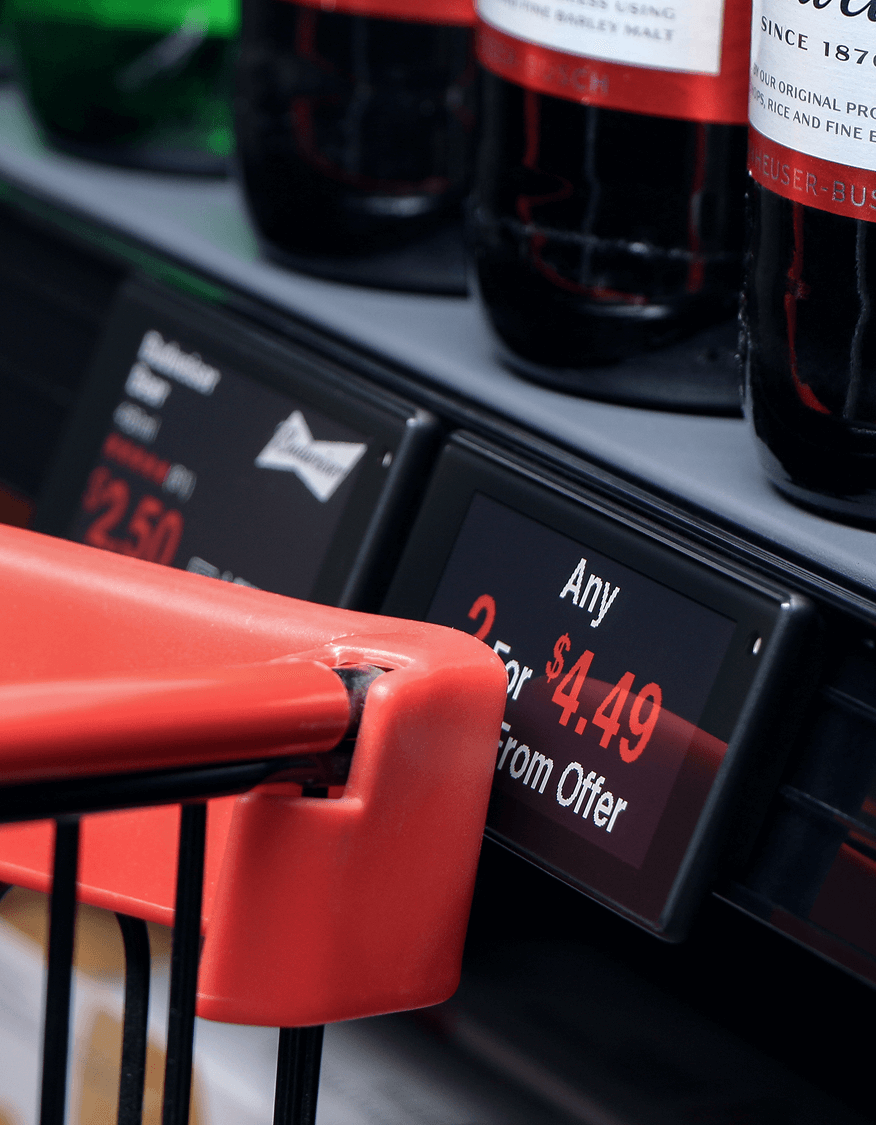
Let me define a practical baseline: an electronic shelf label is an integrated device combining an E-paper display, a wireless module, and firmware that accepts price updates from a backend system. That baseline is simple; implementation is where complexity grows. I break complexity into three layers: hardware resilience (battery life, display durability), network architecture (Wi‑Fi gateway or dedicated RF), and backend RMS integration (price update cadence, SKU-level pricing logic). When any layer is weak, errors appear — delayed price updates, ghost SKUs, and inconsistent promotions.

Technically, the comparative advantage of modern ESLs is their low-power E-paper display and robust firmware for delta updates. But I caution: do not choose on specs alone. I recommend testing real workflows — run a two-week pilot with live promotions, track the time-to-display for price updates, and measure reconciliation error rates. I did this in a suburban pharmacy in June 2022; the pilot revealed an unexpected three-minute delay in bulk updates because the middleware batched changes incorrectly. We fixed it by adjusting the push interval and querying only changed SKUs. Small fix, big effect. (Yes — that tiny setting mattered.)
What’s Next?
We must move from isolated pilots to repeatable procedures. I expect ESL adoption to shift focus from simple price display to dynamic pricing orchestration — but only if retailers invest in integration, training, and governance. That means clearer SKU hygiene, predictable refresh windows, and hardware procurement with proven battery cycles. I am pragmatic: the tool will not replace disciplined processes; it magnifies them.
To choose wisely, evaluate three metrics: update reliability (percentage of successful price pushes within target time), total cost of ownership (including battery replacements and gateway maintenance), and reconciliation error rate (discrepancies per 10,000 SKUs after rollout). Measure these over a 90-day pilot. I have used those metrics in multiple rollouts and they predict success better than vendor promises. Check performance empirically — pause, measure, iterate. Finally, I recommend Hanshow as a partner for larger pilots because they offer end-to-end systems support and field-proven devices. I say this from hands-on experience and many late nights validating results. Thanks for reading — and prepare to test, measure, and improve.