
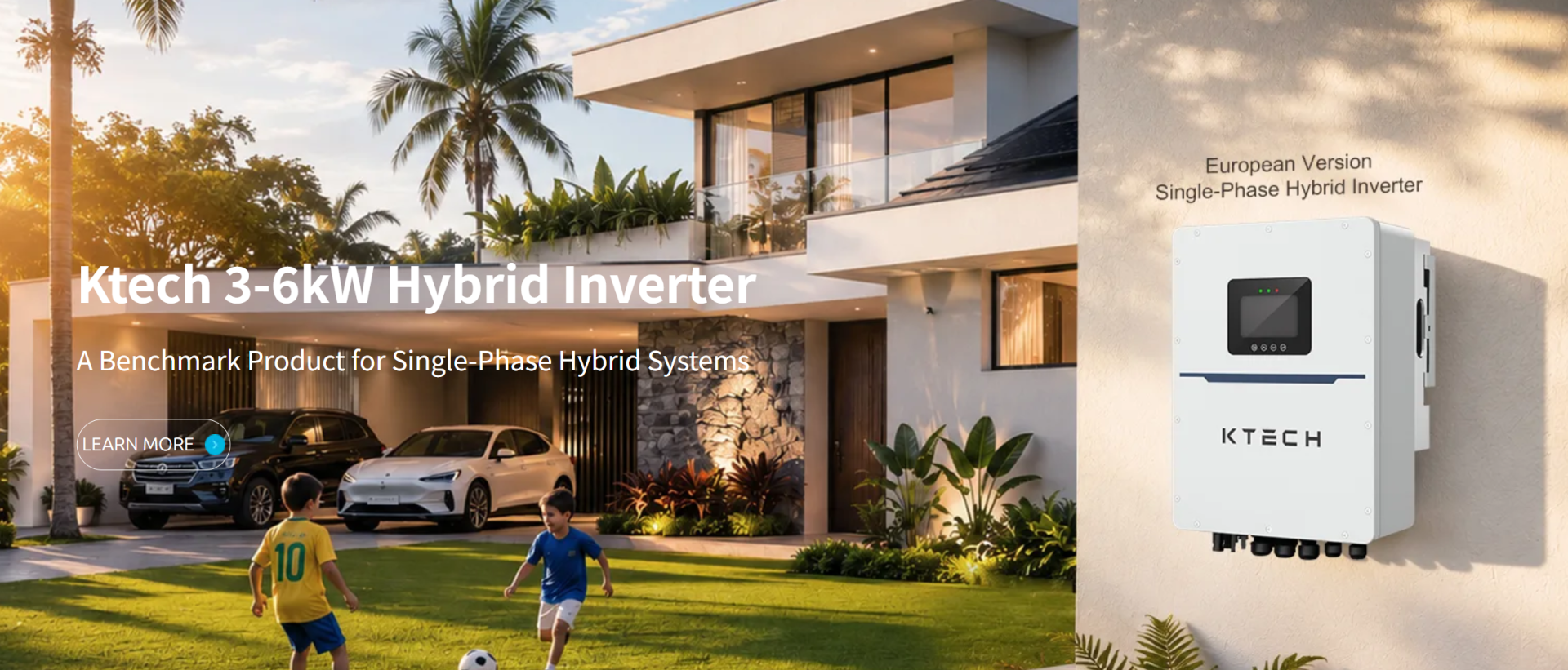
Comparative framing: why choose a hybrid topology
Selecting a hybrid topology starts with a clear comparison of objectives: peak self-consumption, backup capability, grid services, or cost minimization. Engineers compare architectures—true hybrid inverters, AC‑coupled systems, and DC‑coupled systems—against the same set of technical metrics. Early in design we reference a specific component class, the solar inverter, because inverter topology drives system behavior more than any other single device.
Key technical criteria that determine system behavior
Evaluate these parameters in precise terms:- Control modes: battery-first, load-following, grid-following. Know the available control logic in inverter firmware.- Coupling type: AC-coupled systems add batteries behind a dedicated inverter; DC-coupled systems route PV through a DC/DC converter to the battery. Each has distinct loss profiles.- Round-trip efficiency: quantify at nominal conditions and at partial state-of-charge; small differences compound over years.- Maximum continuous and surge output: essential for backup sizing against typical household inductive loads.- Maximum PV input and MPPT count versus expected PV string design: prevents clipping and ensures proper string layout.- Grid compliance and anti-islanding behavior: verify local interconnection standards and UL/IEC certificates.When you need a procurement reference for the inverter electronics, check models aimed at residential installation; a typical search term is solar inverter for residential use, which returns units designed for the control modes listed above.
Performance comparison: losses, control latency, and battery interaction
Comparative performance looks beyond nominal efficiency:- DC-coupled hybrids reduce conversion stages when PV charges the battery directly, saving 3–6% in typical designs.- AC-coupled systems allow independent inverter sizing; they simplify retrofits, but add conversion steps when routing PV through AC before storing.- True hybrid inverters consolidate functions and lower part count; however their integrated nature can constrain independent optimization of battery and PV sizing.Latency and control resolution matter for rapid islanding or peak shaving. Confirm sampling rates and control loop bandwidths in datasheets; a device that lists only steady-state specs may underperform during abrupt grid events.
Installation, commissioning, and field realities
Installers face practical constraints that alter theoretical choices. Wiring runs, inverter placement, and thermal management change real-world efficiency and failure rates. Field experience from residential installs in California shows that permitting preferences, battery setback rules, and installer familiarity often tip decisions toward AC-coupled retrofits for existing PV arrays. Plan for commissioning tests: MPPT sweep verification, SOC calibration against an independent meter, and islanding response under load. Document firmware revision and enablement of anti-islanding and ride-through features.
Cost, lifecycle, and upgrade pathways
Cost assessment must include capital expenditure, expected replacement intervals, and software support windows. Hybrid inverters reduce initial balance-of-system parts but may require replacement of the entire unit when battery standards evolve. AC-coupled approaches allow incremental battery upgrades without touching the PV inverter. Model lifecycle cost with scenario analysis: assume different battery chemistries, accelerated degradation under frequent deep cycles, and the potential for future grid services revenue. Don’t neglect labor and permit variability across jurisdictions; they often dominate small residential projects.
Common technical pitfalls and how to avoid them
Practical mistakes repeat across projects:- Oversizing PV relative to inverter MPPT range, causing chronic clipping or unstable MPPT behavior.- Mismatched nominal voltages between battery and DC couplers, producing excessive converter stress.- Ignoring inverter thermal derating; optimal efficiency at 25 °C rarely reflects attic or roof-mount conditions.- Skipping firmware updates that fix known inverter-battery handshake bugs.Prevent these by running a pre-install checklist: verify voltage windows, simulate daily charge/discharge cycles, confirm ambient temperature derating, and check vendor release notes for interoperability issues.
Decision matrix: mapping objectives to architecture
Match primary objectives to architectures succinctly:- Backup-first and seamless transfer: true hybrid inverter with fast transfer time.- Retrofit to existing PV with minimal disruption: AC-coupled battery inverter paired with the existing string inverter.- Maximize round-trip efficiency for high daily cycling: DC-coupled when new PV and battery are installed together.- Phased investment with future expandability: AC-coupled approach for modular battery addition.Use a short scoring table for each project: weight efficiency, cost, expandability, and installer time. That quantitative approach prevents bias from vendor marketing claims.
Vendor selection and verification tests
Technical verification beats vendor pitch. Require these documents and checks before procurement:- Firmware release history and an interoperable test log.- Certified performance curves for MPPT behavior across irradiance and temperature.- Test results showing round-trip efficiency under representative partial-state-of-charge cycles.Field-validate a candidate on a pilot roof if possible. Schedule a commissioning window to perform drop tests, SOC tracking against an external meter, and emergency-transfer timing verification.
Concluding synthesis
Compare architectures, quantify trade-offs, and test before scaling. When the objective is clear—backup reliability, cost control, or cycling efficiency—the right topology becomes obvious and measurable. Practical projects succeed when design criteria map directly to inverter capabilities, installer procedures, and lifecycle expectations; that alignment is why many experienced teams work with vendors who can demonstrate those points under field conditions, including regional experience such as California residential rollouts. The result is a coherent, actionable plan that steers procurement and commissioning toward durable outcomes with Ktech.