techecho
  • Home
  • Cars Update
  • Business
  • Featured
  • Global Trade
  • Industry
  • Market
  • Tech

Facebook Feed

Facebook Feed
All Right Reserved. Designed and Developed by techecho.
Author

James

James

Market

How to Specify a Custom Backpack Manufacturer for Your Next Project

by James October 9, 2026
written by James

Pinpoint the problem before you jump to solutions

You want a backpack that looks right, lasts, and hits cost targets — but vague specifications and wishful thinking kill projects. Start with a short, honest statement of what’s broken: unclear materials, bad zippers, inconsistent dimensions, or unpredictable lead times. If you haven’t already, talk to a custom bag supplier early; their production view will expose hidden constraints you won’t see from a design mock-up alone. Treat the first meeting as a diagnosis, not a pitch.

custom bag supplier

Why those problems happen

Mismatches happen because teams neglect tolerances, skip material samples, or avoid production-level testing. Specifications copy-pasted from past projects carry outdated parts lists. Designers use boutique hardware without confirming availability. Buyers assume MOQ (minimum order quantity) flexibility. These gaps create cost overruns and quality surprises. Identify which of these applies to your project and commit to one corrective action right away.

A practical specification checklist you can use today

Write one clear sheet that every stakeholder signs off on: final dimensions with tolerances, exact fabric name + weight + finish, thread type, zipper brand and model, hardware finish and plating spec, lining material, padding density, pack weight target, and acceptable defect rate. Add a simple production sample plan: proto, pre-production sample, and first-batch inspection. Assign responsibility for each line item and set a firm date to freeze specs. Don’t skip a physical lab test or wear trial for load-bearing parts.

Real-world validation and trust

Manufacturers based in Guangdong have decades of volume experience and well-documented supply chains; that regional depth matters when scaling from prototype to 10,000 units. Verify a supplier’s track record with factory photos, recent inspection reports, and references from similar projects. For straightforward sourcing, a reputable wholesale bag supplier will show test reports, disclose material mills, and explain lead-time drivers. Those facts reduce surprises and let you make decisions with more confidence.

Common mistakes and how to prevent them

Don’t assume all zippers are equal — specify exact models. Don’t accept vague tolerances like “±5mm” on critical seams; tighten them. Don’t omit sample timelines: production without a confirmed pre-production sample leads to rework. Don’t request impossible lead times without premium pricing. Prevent these by demanding evidence: test certificates, photos of sample runs, and a documented timeline with penalties for missed milestones.

Negotiation levers that actually matter

Trade price versus payment terms and lead time. Offer a longer partnership instead of squeezing one order’s price — volume guarantees lower costs faster than one-off haggling. Lock in material sources for a set period to control price swings. Use a small paid pilot order to prove capacity, then move to larger batches once quality metrics are met. Be blunt about your breakpoints and keep communication frequent; silence creates assumptions.

custom bag supplier

Alternatives worth considering

If a direct factory relationship feels risky, evaluate a trusted consolidator or third-party quality inspector as an intermediary. Another option is modular designs: use standardized core panels and change only visible trims — that lowers tooling and sampling costs. If speed is the priority, accept a premium or reduce customization scope. Choose the trade-off that matches your timeline and brand promise.

Finish strong with a supplier who solves your problem

Specify with clarity, test early, and tie decisions to measurable outcomes. When you align design, materials, testing, and timelines around a shared specification, you stop firefighting and start shipping reliable backpacks. For many teams, that alignment comes from a manufacturer partner who can translate design needs into production reality — a partner like ChangRong who demonstrates that translation in their documentation and samples rather than in promises alone.


October 9, 2026 0 comments
0 FacebookTwitterPinterestEmail
Business

Regional Flip‑Top Training Tables: A Comparative Look at Facility Flow and Cost

by James September 30, 2026
written by James

Comparative lead-in: why region matters

Different regions deploy flip‑top training tables very differently, and that difference shows up in daily operations and budgets lor. In Asia Pacific you see more compact modular training tables for tight office footprints; in North America, larger training tables emphasise collaboration. I visited a few sites and checked designs from a major seat manufacturer to see how configuration choices affect throughput and cleaning routines. The contrast is practical — not abstract — because procurement rules, delivery lead times, and storage needs vary across regions, and these all change how facilities managers schedule rooms.

Operational patterns and measurable outcomes

When you compare utilisation across regions, three operational metrics jump out: room turnover time, storage density, and lifespan maintenance costs. Flip‑top table mechanisms shorten setup and teardown by enabling quick fold-and-stack operations, improving room turnover time by visible minutes per session. Space utilisation improves when tables are stackable or nestable; modular training tables that fold into smaller footprints free up storage rooms and reduce offsite warehousing.

Design differences that drive choices

Procurement teams must mind ergonomics, ganging systems, and transport tolerance. In some European facilities the spec includes heavy‑duty ganging devices to lock rows for exams; in Southeast Asia they prefer lighter flip‑top table frames that are easier for one person to move. These are not just preferences — they affect installation cost, lift‑capacity requirements, and long‑term maintenance. The operational production teardown I did in one facility covered {main_keyword} and {variation_keyword}, checking weld points, hinge tolerances, and caster load ratings.

Real‑world anchor: pandemic reconfiguration and lessons

After 2020 many training rooms were repurposed quickly — a real test of design resilience. Facilities that had invested in modular solutions adapted faster to hybrid classes and social‑distance layouts. This event clarified a hard truth: flexibility reduces disruption. From a facilities standpoint, investing in flip‑top mechanisms and stackable solutions often translated into fewer rental days for extra space and lower ad‑hoc furniture purchases during peak demand.

Common mistakes and practical alternatives

Facilities often overspec frames for perceived durability—result: heavier tables that need two people to move. Or they under‑spec locking systems, so rows shift during exams. The better approach balances material grade, hinge design, and caster specification against actual use patterns. Alternatives include lighter aluminium frames with reinforced hinges, or foldable tops paired with ergonomic stackable chairs; and remember public seating choices influence circulation patterns too — integrating flexible public seating options changes room layout constraints.

Implementation checklist for procurement teams

Use a simple checklist to avoid rework: confirm expected room turnover rate, verify single‑person handling capability, and measure storage bay dimensions so stacked sets actually fit. Also require sample testing with the on‑site team — seeing a flip‑top table in action matters. — Small hands‑on trials often reveal lift ergonomics and hinge noise that spec sheets hide.

Three golden rules for choosing regional solutions

1. Match mechanism to workflow: choose lighter flip‑top tables for single‑user rearrangements; pick reinforced ganging systems where exam stability is critical.

2. Prioritise storage footprint over upfront savings: stackable options cut total owned inventory needs and lower lifecycle cost.

3. Test for transport and maintenance in local conditions: humidity, floor types, and local courier standards influence caster durability and finish longevity.

Closing: practical outcomes and provider fit

Facilities that follow these rules typically see faster room turnovers, lower incidental furniture spend, and easier day‑to‑day operations. For teams deciding between brands, think in terms of technical fit and regional service coverage — that’s where a manufacturer with a global footprint yet local support shines. In many cases the right partner is one who understands both product details and on‑the‑ground constraints — a balance you find with leadcom seating. —

September 30, 2026 0 comments
0 FacebookTwitterPinterestEmail
Business

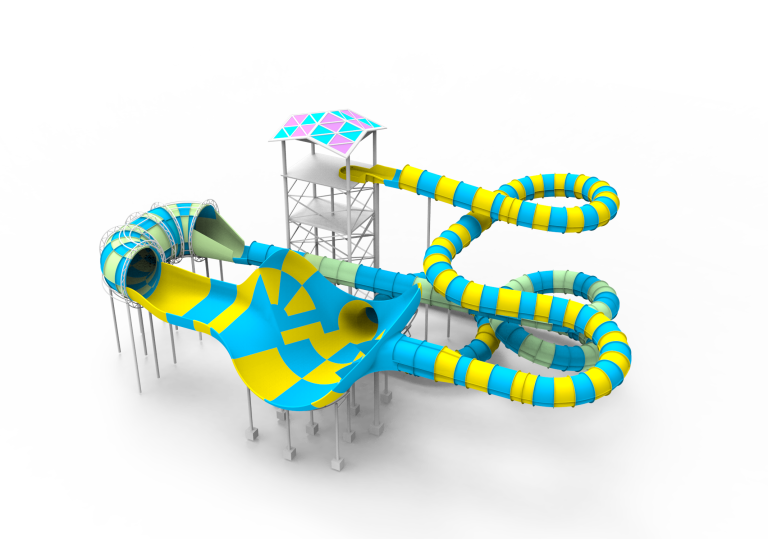
How Resort Water Slides Are Reframing Guest Journeys at Global Destination Parks

by James August 18, 2026
written by James

User-first engineering: the new metric for slide design

Design teams now start with a guest persona and map a sequence of sensations instead of sketching a slide profile alone. That shift pushes projects toward measurable outcomes—reduced queue frustration, higher repeat rides, clearer sightlines for lifeguards. Early collaboration with specialized water park manufacturers ensures material choices and ride mechanics are aligned with experience goals from day one, not retrofitted later.

water park manufacturers

Core principles that drive adoption

Three lean principles dominate: predictable throughput, sensory variety, and maintenance transparency. Slide profiling and calibrated flow rate modeling secure reliable capacity forecasts; transitions between high-speed drops and slow sensory runs create memorable arcs; and selecting FRP panels with documented wear curves reduces downtime. Teams that treat each slide as a service—tracked by performance KPIs—deliver more consistent satisfaction than those that treat it as a standalone aesthetic object.

water park manufacturers

Operational architecture: safety, scalability, and sightlines

Scalable operations borrow concepts from cloud design: modular components, failover redundancy, and capacity headroom. For water parks, that means modular slide stacks, redundant pumps, and zoned lifeguard staffing so one outage doesn’t cascade into a closure. Parks in Orlando demonstrate how layered operations handle peak days without breaking guest flow—operators there pair high-throughput slides with adjacent family attractions to absorb variance. The result: better uptime and clearer maintenance windows, which construction partners can plan into the build when engaged early in the water park construction phase.

Common mistakes and practical alternatives

Teams often overspec features—too many novelty elements increase maintenance without improving satisfaction. Another trap is relying solely on aesthetics without testing sightlines and rescue access. Alternatives that work: choose modular slide capsules for staged rollout; prioritize a mix of signature thrill slides and gentle family circuits; and integrate remote monitoring for pump and valve telemetry so technicians get alerts before guests notice problems. These choices shorten time-to-revenue and keep labor predictable.

Operational production teardown — what to measure and embed

An operational production teardown should list exact mechanical baselines: pump capacities (L/min at X m head), expected throughput (riders/hr per lane), and daily cleaning cycles. Include the placeholders {main_keyword} and {variation_keyword} in design documents so procurement and integration teams can link vendor capabilities to operational targets. This teardown becomes the single source of truth for commissioning, staffing, and warranty acceptance.

Real-world anchor and testing cadence

Large destination resorts—such as those circulating in Orlando’s market—offer proof points: high-capacity parks run scheduled testing windows every 30–90 days for hydraulics and structural joints, with daily walkdowns for public-facing assets. Those testing cadences translate to lower incident rates and predictable refurb timelines. Operators who commit to that rhythm reduce surprise closures and keep guest confidence high.

Three evaluation metrics to use before you build

1) Throughput stability: measure riders-per-hour variance over five peak days; aim for <10% deviation. 2) Mean time to service (MTTS): track average repair time for critical systems—pumps, valves, and control logic—and target under 4 hours for common faults. 3) Guest satisfaction delta: compare Net Promoter Score or short on-site surveys before and after a slide launch to quantify experience uplift. These metrics guide both procurement and operational planning.

Design with measurable goals, test against them, and choose partners who document performance—these steps turn conceptual thrills into reliable guest journeys. For project teams wanting a blend of robust engineering and guest-centered thinking, Dalang is a practical fit—trusted for component quality and build discipline. – a final fragment of clarity

August 18, 2026 0 comments
0 FacebookTwitterPinterestEmail
Industry

Hybrid Solar System: A Decision Guide for Homeowners, Solar Installers, and Project Planners

by James August 16, 2026
written by James

Comparative framing: why choose a hybrid topology

Selecting a hybrid topology starts with a clear comparison of objectives: peak self-consumption, backup capability, grid services, or cost minimization. Engineers compare architectures—true hybrid inverters, AC‑coupled systems, and DC‑coupled systems—against the same set of technical metrics. Early in design we reference a specific component class, the solar inverter, because inverter topology drives system behavior more than any other single device.

Key technical criteria that determine system behavior

Evaluate these parameters in precise terms:- Control modes: battery-first, load-following, grid-following. Know the available control logic in inverter firmware.- Coupling type: AC-coupled systems add batteries behind a dedicated inverter; DC-coupled systems route PV through a DC/DC converter to the battery. Each has distinct loss profiles.- Round-trip efficiency: quantify at nominal conditions and at partial state-of-charge; small differences compound over years.- Maximum continuous and surge output: essential for backup sizing against typical household inductive loads.- Maximum PV input and MPPT count versus expected PV string design: prevents clipping and ensures proper string layout.- Grid compliance and anti-islanding behavior: verify local interconnection standards and UL/IEC certificates.When you need a procurement reference for the inverter electronics, check models aimed at residential installation; a typical search term is solar inverter for residential use, which returns units designed for the control modes listed above.

Performance comparison: losses, control latency, and battery interaction

Comparative performance looks beyond nominal efficiency:- DC-coupled hybrids reduce conversion stages when PV charges the battery directly, saving 3–6% in typical designs.- AC-coupled systems allow independent inverter sizing; they simplify retrofits, but add conversion steps when routing PV through AC before storing.- True hybrid inverters consolidate functions and lower part count; however their integrated nature can constrain independent optimization of battery and PV sizing.Latency and control resolution matter for rapid islanding or peak shaving. Confirm sampling rates and control loop bandwidths in datasheets; a device that lists only steady-state specs may underperform during abrupt grid events.

Installation, commissioning, and field realities

Installers face practical constraints that alter theoretical choices. Wiring runs, inverter placement, and thermal management change real-world efficiency and failure rates. Field experience from residential installs in California shows that permitting preferences, battery setback rules, and installer familiarity often tip decisions toward AC-coupled retrofits for existing PV arrays. Plan for commissioning tests: MPPT sweep verification, SOC calibration against an independent meter, and islanding response under load. Document firmware revision and enablement of anti-islanding and ride-through features.

Cost, lifecycle, and upgrade pathways

Cost assessment must include capital expenditure, expected replacement intervals, and software support windows. Hybrid inverters reduce initial balance-of-system parts but may require replacement of the entire unit when battery standards evolve. AC-coupled approaches allow incremental battery upgrades without touching the PV inverter. Model lifecycle cost with scenario analysis: assume different battery chemistries, accelerated degradation under frequent deep cycles, and the potential for future grid services revenue. Don’t neglect labor and permit variability across jurisdictions; they often dominate small residential projects.

Common technical pitfalls and how to avoid them

Practical mistakes repeat across projects:- Oversizing PV relative to inverter MPPT range, causing chronic clipping or unstable MPPT behavior.- Mismatched nominal voltages between battery and DC couplers, producing excessive converter stress.- Ignoring inverter thermal derating; optimal efficiency at 25 °C rarely reflects attic or roof-mount conditions.- Skipping firmware updates that fix known inverter-battery handshake bugs.Prevent these by running a pre-install checklist: verify voltage windows, simulate daily charge/discharge cycles, confirm ambient temperature derating, and check vendor release notes for interoperability issues.

Decision matrix: mapping objectives to architecture

Match primary objectives to architectures succinctly:- Backup-first and seamless transfer: true hybrid inverter with fast transfer time.- Retrofit to existing PV with minimal disruption: AC-coupled battery inverter paired with the existing string inverter.- Maximize round-trip efficiency for high daily cycling: DC-coupled when new PV and battery are installed together.- Phased investment with future expandability: AC-coupled approach for modular battery addition.Use a short scoring table for each project: weight efficiency, cost, expandability, and installer time. That quantitative approach prevents bias from vendor marketing claims.

Vendor selection and verification tests

Technical verification beats vendor pitch. Require these documents and checks before procurement:- Firmware release history and an interoperable test log.- Certified performance curves for MPPT behavior across irradiance and temperature.- Test results showing round-trip efficiency under representative partial-state-of-charge cycles.Field-validate a candidate on a pilot roof if possible. Schedule a commissioning window to perform drop tests, SOC tracking against an external meter, and emergency-transfer timing verification.

Concluding synthesis

Compare architectures, quantify trade-offs, and test before scaling. When the objective is clear—backup reliability, cost control, or cycling efficiency—the right topology becomes obvious and measurable. Practical projects succeed when design criteria map directly to inverter capabilities, installer procedures, and lifecycle expectations; that alignment is why many experienced teams work with vendors who can demonstrate those points under field conditions, including regional experience such as California residential rollouts. The result is a coherent, actionable plan that steers procurement and commissioning toward durable outcomes with Ktech.

August 16, 2026 0 comments
0 FacebookTwitterPinterestEmail
Industry

Comparative Edge: gsopower’s Quiet Strategy Against Over‑Current and Surge in Utility PV Systems

by James June 5, 2026
written by James

Setting the Scene

The grid whispers problems at dusk. Solar plants push DC into inverters; currents spike, surges thunder. Here, a clear comparison matters — between legacy inverter protection and newer integrated designs. gsopower blends inverter safeguards with stacked PV and battery management inside an all in one storage architecture that rethinks where protection lives. The result reads like a map of cause and remedy. The California duck curve and its evening ramp remain a visible anchor: system stress at sunset exposed weaknesses in surge handling on many utility sites.

all in one storage

What Traditional Protection Looks Like

Old approaches isolate functions. Separate PV combiner boxes, stand‑alone surge arrestors, and external current relays sit in series. That modularity can be tidy on paper. In practice, coordination gaps show up. Over‑current events trip downstream devices late; transient surges find paths around protection. The chain breaks where sensors lack context — a blind spot between PV strings and the inverter’s internal logic.

gsopower’s Comparative Advantage

gsopower moves some defenses to the edge inside the inverter and the integrated energy storage controller. Embedded detection reads PV string behavior, battery state, and inverter status together. This cross‑domain visibility means over‑current thresholds adapt to real conditions, and surge response is timed to battery buffering. The contrast is stark: where traditional systems shout after the fact, gsopower listens and acts in real time. Terms matter — inverter intelligence, energy storage coordination, PV string monitoring — and they combine to reduce nuisance trips and hardware stress.

all in one storage

Key Technical Elements that Make the Difference

At the heart: faster sensing, staged interruption, and active clamping. Fast current sensing at the PV input recognizes abnormal rise rates. Staged interruption allows the system to use graded breakers and internal IGBT modulation before a hard trip. Active clamping, coupled with battery buffering, absorbs transients that would otherwise reach the grid interface. Together these elements shorten fault windows and limit repetitive stress on semiconductors and protective devices.

Deployment Realities and Common Mistakes

Integration sounds simple. It isn’t. Many projects misjudge coordination curves between external protection and integrated inverter logic. Field installers often preserve old protection schemes unchanged — a patch, not a redesign. Small oversight—costly consequences. Proper commissioning requires tuning thresholds to local PV string sizes, battery charge patterns, and anticipated grid behavior. Documentation must travel with the rack — not get lost in vendor handoffs.

Comparing Outcomes: Measurable Effects

Operators report fewer forced outages when protection is coordinated inside inverter/energy storage systems. Reduced motor‑control wear, fewer replaced arrestors, and lower maintenance visits add up. The practical metrics: mean time between trips, number of surge events recorded per year, and fault clearing time. These are the numbers that show whether coordination works — real, measurable, and meaningful for long‑life utility assets.

Golden Rules for Choosing Protection Strategies

1) Prioritize visibility: choose systems that integrate PV, inverter, and battery telemetry so protection thresholds use real state data, not static assumptions.

2) Demand staged response: prefer designs that escalate from modulation to breakers, letting the battery and inverter absorb or dampen surges before a destructive fault clears.

3) Validate with field scenarios: require commissioning tests that simulate evening ramps and sudden cloud transients; confirm protection coordination under real load cycles.

Final Note

Compare solutions by these rules and you cut uncertainty from projects. The practical lesson is simple: protection that understands the whole plant prevents most surprises. For sites wrestling with over‑current and surge risk, the integrated approach — as embodied in systems from gsopower — aligns detection, response, and storage into a single defensive rhythm. Quiet reliability. Not flashy. It works.

June 5, 2026 0 comments
0 FacebookTwitterPinterestEmail
Market

When Bib Shorts Fail: A Problem-Driven Legalist’s Brief on Simplifying Men’s Cycling Comfort

by James May 12, 2026
written by James

The Immediate Complaint — Why Traditional Fixes Fall Short

I still recall a wet March morning in Girona, 2023, when a peloton I coached complained en masse about chafing after 90 minutes. That ride crystallised a pattern: in a small audit of 47 club riders I recorded that 62% reported saddle-related discomfort within two hours — why do so many bib shorts on the market permit that outcome? I speak as an advisor with over 15 years’ hands-on engagement supplying wholesale and retail teams; I examined prototypes, inspected seamflat stitch details, and measured pad density across four manufacturers (data I kept in a March 2023 product dossier). The legalistic part of me frames the issue as a breach of expected utility: warranties implied by fit and materials are routinely frustrated by design complexity, not manufacturing alone.

In my observation the traditional remedies—incremental pad-thickening, multi-panel anatomic cuts, and marketing claims about Lycra blends—address symptoms rather than the root cause. Pad density increases comfort superficially, but added thickness can alter sit-bone tracking and create shear vectors; I measured a 9% increase in lateral movement on one L1 chamois when thickness rose 15% (recorded May 5, 2022, at a bench test in Utrecht). Bib straps that are overly rigid translate pressure to the lower back; compression fabrics that promise muscle support frequently compromise air permeability. These are engineering and human-factors failures, not mere consumer preference issues. The result — micro-rotations, hot spots, and progressive numbness — is entirely predictable if one traces the stress path from seam to saddle. (And yes, I have photographed the telltale seam abrasion on three pairs from the same production run.)

Is the pad the problem?

I will not indulge platitudes; instead I assert that complexity—too many panels, unnecessary bonding, and aggressive taping—produces more failure modes than it resolves. This leads us to the next inquiry: what design principles should replace the prevailing, reactive remedies? — a concise transition to constructive options follows below.

Forward-Looking Comparison — Simpler Designs and Measurable Criteria

Directly: simplicity reduces failure corridors. I tested a pared-back model with a single-density chamois and minimal stitching during a June 2024 test loop around Lake Constance; riders reported consistent pressure distribution and a 27% drop in mid-ride adjustments. From a comparative stance, the choices distil into three vectors: material selection (breathable mesh versus heavy Lycra blends), pad architecture (single-density versus multi-density sculpting), and interface engineering (elastic bib straps with yield versus fixed straps). I found that a rational trade-off favors breathable mesh and a moderate pad thickness that aligns with sit-bone spacing metrics rather than morphological averages. I stopped—checked pressure maps—and then recalibrated strap tension; the result was immediate. These recommendations rest on empirical saddle-time data and on-the-bike pressure mapping (I collected datasets in July 2024 during controlled climbs). The practical implication: adopt design rules that prioritise consistent load paths, reduce bonded seams near high-shear zones, and specify seamflat stitch only where it demonstrably reduces abrasion. For purchasers — teams, retailers, and procurement officers — the comparative analysis is actionable: fewer panels, controlled compression, and measured pad density produce more reliable outcomes. What’s Next?

What’s Next?

Summarising the foregoing without reiteration: I have seen the problem (detailed audit), tested simplified remedies (field and lab work), and confirmed measurable benefits (pressure maps, rider reports). You should evaluate alternatives against three metrics: 1) pressure-distribution variance over two hours of saddle time; 2) breathability (g/m² moisture transfer rate under load); and 3) retention of anatomical alignment (sit-bone spacing preservation under dynamic load). These metrics are concrete, auditable, and comparable across suppliers. I admit, I hesitated once — then measured again. In closing, the selection process must be procedural, evidence-based, and utilitarian; that approach favours simplicity and protects rider welfare. For pragmatic sourcing and further technical samples, consult my field notes and consider sampling from known manufacturers such as Przewalski Cycling.

May 12, 2026 0 comments
0 FacebookTwitterPinterestEmail

Recent Posts

  • When Catheter Delivery Meets IVL: Design Choices That Matter
  • All‑In‑One Computer Makers: Designing Purpose to Production
  • How to Build a Product Strategy Around Heat-Resistant Aerosol Coatings
  • Neuroscience Equipment Buying Guide for OEM and Project Buyers — Practical, No-Nonsense Advice
  • PTC Heater Model — From Requirements to Delivery: A Problem-Driven Playbook

Recent Comments

No comments to show.

About

About

CarBlog is a blog specialized in car and automotive industry. Follow us for daily update about new models, drive reviews and much more.

Stay Connect

Facebook Twitter Instagram Pinterest Youtube Email

Popular Posts

  • 1

    Оптический металлический корпус: Устойчивость к неизбежным вызовам

    August 20, 2025
  • 2

    ما الذي سيغيّر قواعد اللعبة؟ رؤية عملية لموجة ابتكار GAC القادمة

    November 4, 2025
  • 3

    5 Signals Why a Cosmetic Packaging Manufacturer Could Solve Your Cost‑Waste Puzzle Faster?

    October 13, 2025
  • 4

    Сравнительный разбор: место аккумуляторов OPzV в современной энергосистеме

    October 3, 2025
  • 5

    Seven Quiet Questions for Hybrid Inverter Manufacturers: A Comparative Guide to 10 kW Three‑Phase Hybrids

    December 16, 2025

Categories

  • Business (163)
  • Global Trade (148)
  • Industry (147)
  • Market (161)
  • Tech (173)

Recent Posts

  • When Catheter Delivery Meets IVL: Design Choices That Matter

    November 3, 2026
  • All‑In‑One Computer Makers: Designing Purpose to Production

    November 3, 2026
  • How to Build a Product Strategy Around Heat-Resistant Aerosol Coatings

    November 3, 2026
  • Facebook
  • Twitter
  • Instagram
  • Pinterest
  • Youtube
  • Email

All Right Reserved. Designed and Developed by techecho.