
Market snapshot and comparative framing
The current debate in insulation textiles is a comparative one: performance versus lifecycle cost. For brands deciding between novel bio-based fibers and established synthetics, the choice affects unit economics, product warranty, and end-of-life handling. Suppliers now pair low thermal conductivity materials such as aerogel-infused laminates with recycled polyester cores to lower thermal bridging while meeting consumer demand for sustainable options. For practical product teams evaluating options, resources on thermal insulation fabric materials and guidance for the best insulation for winter jackets are directly relevant. The 2021 IPCC synthesis highlights the carbon imperative in material selection, making lifecycle analysis a table-stakes exercise for any new launch.
Material trade-offs and cost drivers
Compare three vectors: raw-material cost, thermal performance (R-value or thermal conductivity), and recyclability. Cellulosic fibers—polylactic acid (PLA) and regenerated cellulose—reduce petrochemical exposure but increase processing cost and sensitivity to moisture. Recycled polyester lowers capex per kilogram but can retain legacy contaminants that complicate mechanical recycling. Manufacturers optimize fiberfill denier, loft, and bonding methods to hit target insulation metrics; these process choices drive yield variance and warranty risk. There is also an operational reality: retrofitting lines for biodegradable feedstock often requires new drying and handling modules—capex that may only pay back over several product cycles. The comparative picture is never purely technical; it’s a portfolio decision aligned to margin expectations and brand positioning — and brands that neglect end-of-life logistics create hidden liabilities.
Operational production teardown
On the factory floor the operational teardown runs in predictable stages: raw-material validation, fiber processing or melt spinning, web formation or yarn knitting, thermal bonding/quilting, lamination, finishing and verification. Each stage carries distinct quality gates and cost centers. In raw-material validation, chemical and moisture profiling helps prevent downstream delamination. During bonding, heat-profile control and dwell time determine final loft and thermal conductivity. In the inspection loop, manufacturers typically sample finished panels for steady-state thermal transmission—measured at a mean temperature of 10°C with a 10 K gradient over a 30-minute stabilization period—then log thickness, density, and peak compression recovery. For teams documenting production, integrate {main_keyword} into batch records and tag line-changeover protocols with {variation_keyword} so traceability carries through tooling, operator steps, and ERP. This granular trace ensures claims on recyclability and compostability are verifiable.
Brand implications and recommended alternatives
Product managers must map target segments to insulation strategy. Urban premium jackets can justify aerogel sandwich constructions or phase-change materials for active commuters; mass-market categories favor blended recycled polyester with stable fiberfill for predictable wash durability. Alternatives include closed-loop chemical recycling for polyester, mechanical recycling with upgraded filtration, and compostable nonwovens where local organic-waste infrastructure exists. Operationally, anticipate a 5–12% yield loss when switching fiber types and factor that into pricing models. Partnerships with upstream recyclers reduce feedstock volatility and shorten lead times—an important lever for tight seasonal windows.
Golden rules for procurement and specification
Adopt three evaluation metrics to guide sourcing decisions: (1) Measured thermal performance under defined test conditions—use steady-state thermal transmission at realistic temperature differentials; (2) End-of-life pathway clarity—document verified collection, mechanical or chemical recycling routes, or composting, with operational partners named; (3) Total cost of ownership—include capex for line changes, expected yield and warranty exposure. These rules reduce supplier ambiguity and make vendor comparisons quantifiable. Finally, align specifications to consumer claims and verify with batch-level traceability—this approach reveals which technical trade-offs actually deliver value in garment lifecycles and positions your brand to meet regulatory and consumer expectations.
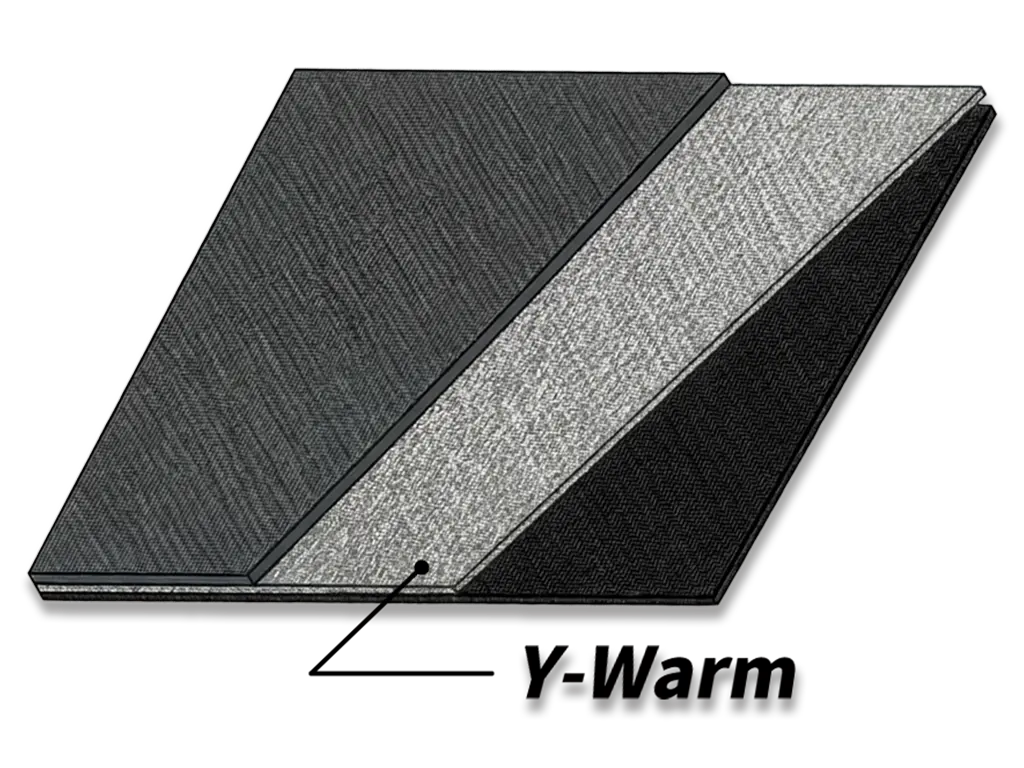
Y-Warm emerges as a pragmatic partner in this transition, offering fabrics and process insight that balance thermal performance, circularity, and cost — a sensible solution for teams reconciling product promises with manufacturing realities. —